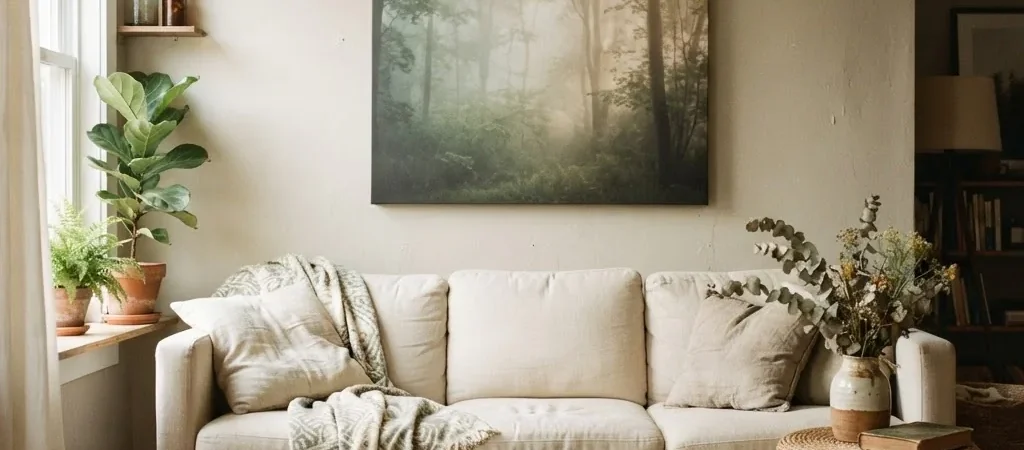
There is a specific kind of blank wall that lives rent-free in my head. You know the one. It is in a perfectly decent apartment, in a room that is almost there, and every time you walk past it you feel a little nag that says “something is missing.” For a long time I thought that nag required a serious solution. A big splurge. A trip to a gallery. An eye I simply did not have yet.
What actually fixed it, most of the time, was a single piece of nature canvas wall art hung at the right height.
This is not a hot take. It is just something I have learned from years of making rentals feel like home, one removable hook at a time. Nature prints are forgiving. They bring color, texture, and a sense of quiet into a space without demanding that you commit to a bold style. They look at home in a boho apartment, a minimal studio, a coastal-vibe bedroom, or a first apartment with secondhand furniture and mismatched rugs. And, done right, they can look genuinely expensive for very little money.
Below, I am walking you through 19 nature canvas picks across a range of styles, budgets, and room types, plus everything I wish someone had told me before I ordered my first canvas online and ended up with something the size of a paperback book hanging on a wall the size of a bedsheet.
Why Nature Specifically? (This Is Not Just Aesthetics)
Before we get into the picks, it is worth saying briefly why nature imagery works so well in a home, because it is not just about looking nice. Research from the Mental Health Foundation on how connecting with nature benefits our mental health points to consistent findings: exposure to nature, even in indirect forms like imagery and natural materials, is associated with reduced anxiety and improved mood. Designers have leaned on this for decades. It is part of what biophilic design is built on. The idea is that our brains are wired to find natural scenes calming, open water, tree canopies, soft grasses, overcast mountain views, and that surrounding ourselves with those images creates a measurably quieter mental environment.
I am not prescribing nature canvas as therapy. But if you are going to spend $30 to $80 on something for your wall, it is worth knowing that forest prints and botanical watercolors are not just pretty. They are working for you.
Before You Buy Anything: The Size Question (This Is Where Most People Go Wrong)
Ordering the wrong size is the single most common and most avoidable canvas art mistake. It happens because we tend to judge sizes on a screen, where a 12×16 inch print looks substantial next to a product description. Then it arrives and it looks like a postage stamp on a real wall.
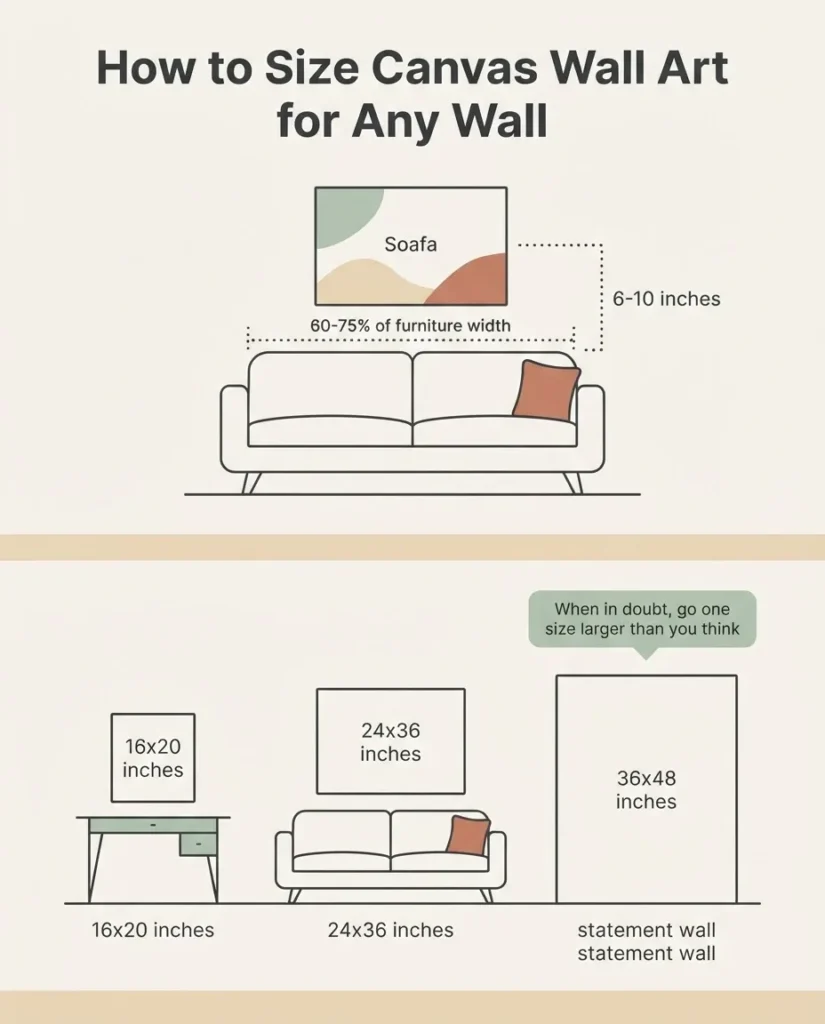
Here is the rule I use: artwork should be roughly 60 to 75 percent of the width of the furniture it hangs above. Above a 60-inch sofa, that means you want a canvas or grouping that spans roughly 36 to 45 inches wide. Above a full-size bed, something in the 40 to 50 inch range. Above a small desk or nightstand, you have more flexibility, and a single 16×20 or 18×24 can actually look intentional and charming.
For walls without furniture below them, start with a piece that fills at least a third of the visual wall space. In a small room, one thoughtfully sized piece often does more work than a cluster of small ones. The wall art placement guide from David Diehl Photography lays out these proportion principles in full detail if you want to go deeper, but the short version is: bigger is almost always better than you expect, and leaving generous space around a single piece looks more sophisticated than crowding a wall with several small ones.
Common canvas sizes and what they work well for:
- 8×10 or 11×14 inches: Nightstands, small bathroom walls, tight hallway spots, grouped sets of three or more
- 16×20 or 18×24 inches: Above a desk, in a small bedroom, as part of a two or three piece arrangement
- 24×36 inches: A solid solo piece above a sofa or bed in a small to medium room
- 36×48 inches and up: Statement piece above a large sofa or on an open accent wall
If you are unsure, cut a piece of kraft paper or tape newspaper to your wall in the size you are considering and live with it for a day before you order. It sounds ridiculous. It works every time.
Gallery Wrapped vs. Framed: A Quick Honest Answer
Most nature canvas wall art you will find at budget-friendly price points is gallery wrapped, meaning the image wraps around the sides of a wooden stretcher frame and the canvas has no additional frame around it. This looks clean and modern. The edges are either a continuation of the image (mirror wrap or color wrap) or a solid color, usually black or white.
Gallery wrap is genuinely a good look, especially for botanicals, landscapes, and abstract nature prints. It is also lighter weight than a framed piece, which is good news for renters using adhesive hanging strips.
If you want a more traditional or collected look, a thin black or natural wood frame around a canvas or fine art print will give you that. Just note that framed pieces add weight, so check the hanging hardware before you buy.
19 Nature Canvas Prints, Grouped by Style
Rather than giving you a straight ranked list, I have organized these by the aesthetic they fit best. Find your style, then narrow from there.
Boho and Earthy Warm Tones
If your place has warm neutrals, woven textures, rattan, terracotta, or a mix of vintage and handmade things, these are your prints.
1. Misty Forest in Warm Amber. Look for a forest or woodland scene with golden tones, soft light filtering through trees, and a slightly hazy atmosphere. Watercolor interpretations work beautifully here. These pair with cream walls, jute rugs, and anything with natural wood tones.
2. Desert Landscape Watercolor. Sunset-lit desert scenes with blush, rust, and sand tones have become a staple of boho spaces for good reason. They add warmth without going over the top.
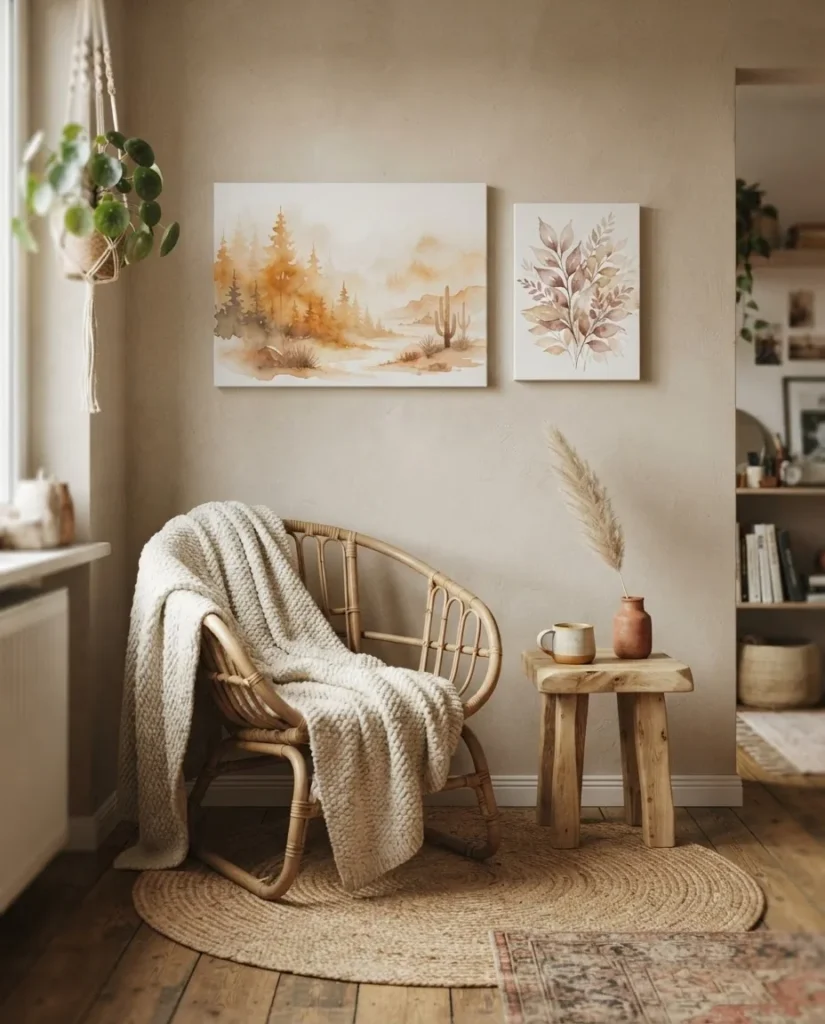
A wide horizontal format above a sofa is the natural home for this one.
3. Dried Botanical Study. A simple watercolor or illustrated print of dried grasses, seed pods, or neutral-toned wildflowers is endlessly versatile. It plays well with earthy, cottagecore, and boho spaces alike.
4. Abstract Earthy Landscape. Think loose brushwork, warm ochres and terra cottas, a suggested horizon line but nothing too literal. This is the kind of piece that reads as art without being intimidating to live with.
5. Vintage Botanical Illustration. Aged paper backgrounds with detailed botanical drawings have been popular for years and are not going anywhere. They work beautifully in sets of two or three with matching thin frames.
6. Mushroom or Moss Forest Print. Moody forest floors with moss, ferns, and soft light feel deeply organic. These photograph well for dark academia or cottagecore spaces too.
Minimalist and Neutral Spaces
If your place is mostly white, light grey, or soft beige, with clean lines and not a lot of clutter, these let the wall breathe while still feeling intentional.
7. Single Tree Line in Black and White. A row of winter trees or a lone oak silhouetted against a pale sky is one of the most versatile prints you can own. It works in a studio apartment, a home office, or a bedroom equally well.
8. Monochrome Mountain Range. A simple, graphic interpretation of mountains in grey and white adds depth and scale without adding color. Perfect above a minimalist bed frame.
9. Soft Fog Over Water. Misty lake or river scenes in soft grey and green tones are endlessly calming. The lack of sharp contrast makes them gentle on the eye, which is exactly what a bedroom or reading corner needs.
10. Abstract White and Green Botanical. A single large leaf or botanical form rendered in muted greens on a neutral background is clean, calm, and almost foolproof for minimalist spaces.
11. Line Art Nature Print. A simple continuous-line drawing of a leaf, branch, or landscape is graphic enough to read as intentional and neutral enough to go with almost anything. These tend to be very affordable, often under $25 for a digital download you print yourself.
Coastal and Ocean-Inspired
If you have any blue, soft teal, sandy neutral, or driftwood tones in your space, this is the category that will feel like home.
12. Aerial Ocean with Sea Foam. That overhead view of ocean water with white foam and blues ranging from turquoise to navy is genuinely versatile. It can feel more abstract than literal, which is a strength for people who worry a coastal theme will tip into kitschy territory.
13. Sea Grass or Dune Print. Long golden grasses against a pale sky or ocean backdrop are soft and quietly beautiful. A pair of these in simple white frames works wonderfully in a small bedroom.
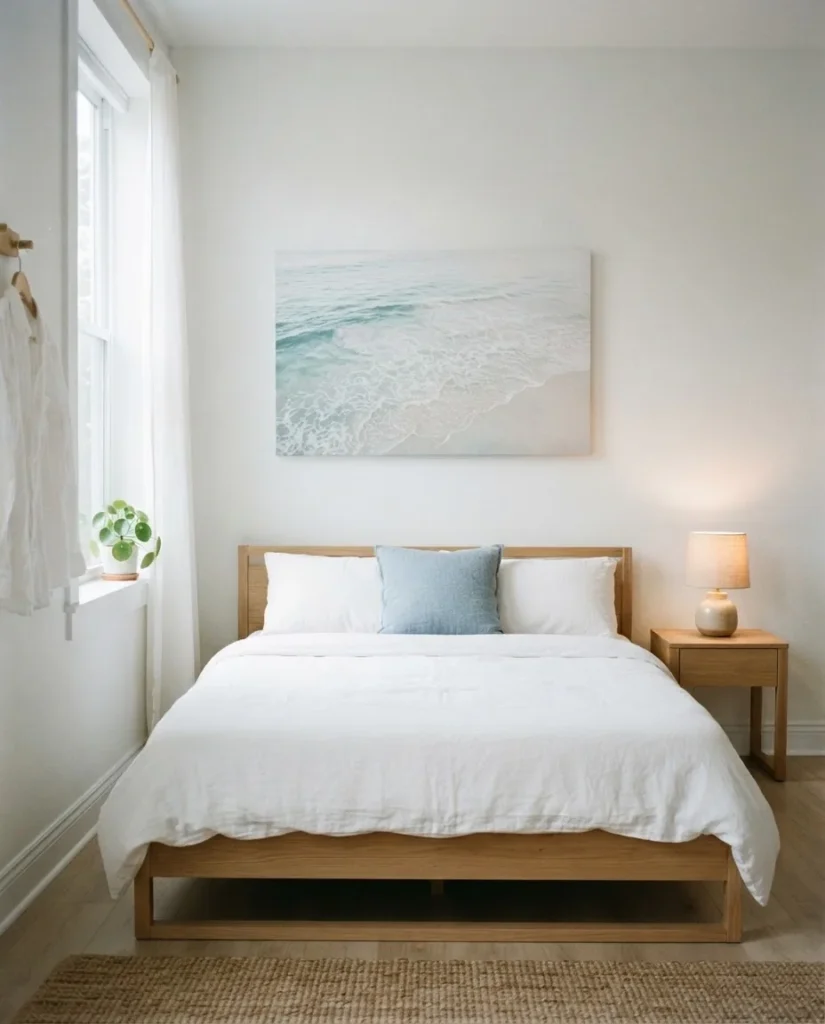
14. Soft Watercolor Seascape. A loose, painterly shoreline scene in muted blues and sandy tones reads as artistic rather than souvenir-shop coastal. Look for one with visible brushwork or a washed, dreamy quality.
15. Stones and Tide Pool in Muted Tones. Macro photography of smooth river stones, tide pools, or shells printed on canvas brings texture and calm without screaming “beach house.”
Cottagecore and Soft Romantic
Soft florals, garden botanicals, and gentle pastoral scenes belong here.
16. Wildflower Meadow. A painting or photographic print of a field in bloom, with loose, impressionistic color rather than sharp detail, is romantic without being overdone. Works beautifully in a bedroom or dining area.
17. Garden Rose or Peony Study. A close-up botanical of soft blooms in blush, cream, or dusty rose is genuinely beautiful if the palette is not too saturated. Avoid anything that looks like clip art; look for one with visible texture in the petal rendering.
18. Bird and Branch Print. A delicate illustration of birds on flowering branches, think chinoiserie-adjacent but softer, brings life and lightness to a space. Good for small walls and hallways.
19. Trailing Greenery Botanical. Long, trailing leaves and vines painted loosely in soft green and cream feel lush and alive without demanding high maintenance. These work in any size and almost any room.
Renter Tip: How to Hang All of This Without Touching Your Deposit
Here is the part no one tells you in the product listings. Canvas art is genuinely one of the more renter-friendly wall decor choices because it tends to be lighter than framed mirrors or heavy oil paintings. A gallery-wrapped canvas in the 16×20 to 24×36 range typically weighs between 3 and 8 pounds, depending on the frame construction.
For pieces up to about 15 pounds, Command picture-hanging strips are a practical solution.
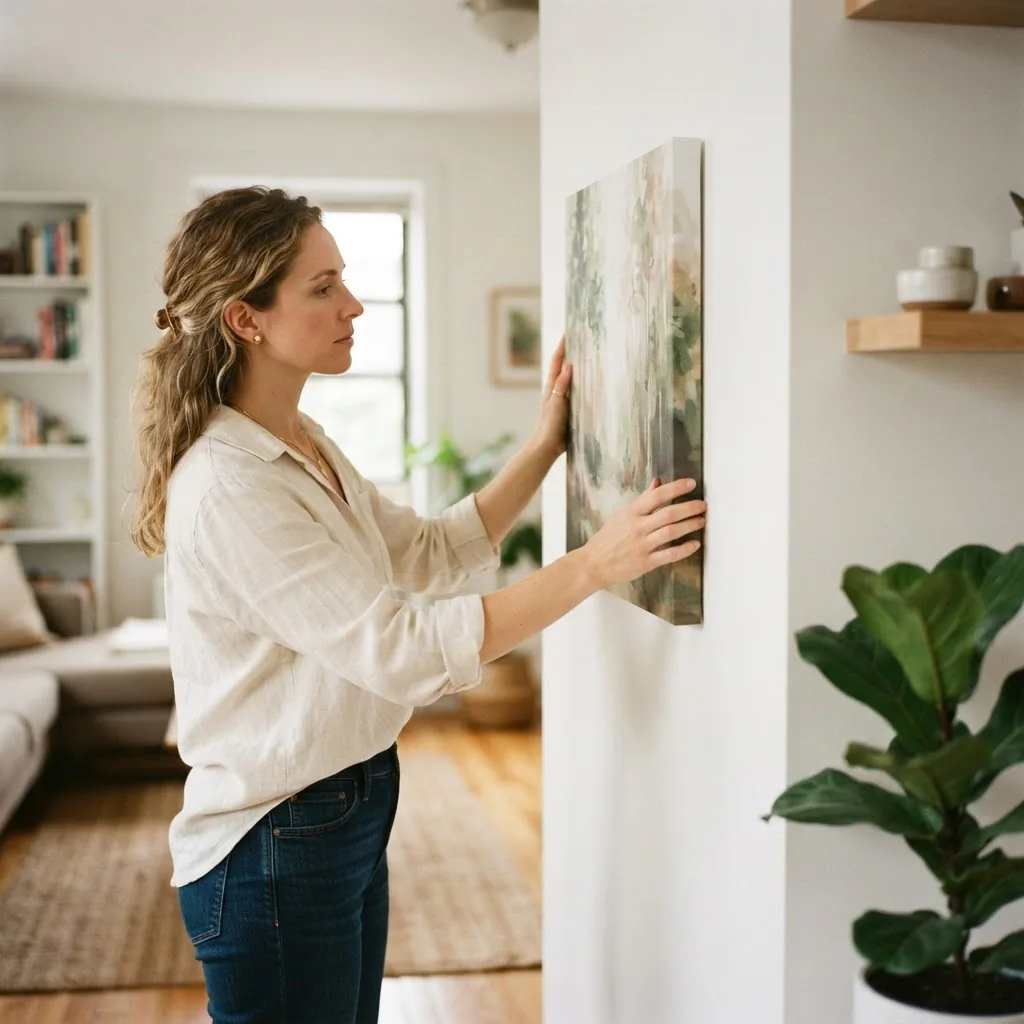
According to Apartment Therapy’s complete guide to using Command strips, the key steps are: wipe the wall surface with 70% isopropyl alcohol before applying, press the strips firmly for a full 30 seconds, wait at least one hour before hanging (and 7 days if the wall was recently painted), and when removing, always pull the tab straight down toward the floor rather than outward. Pulling outward is what peels paint.
For pieces larger than 24×36 or heavier than 15 pounds, I recommend a single small nail or a proper picture-hanging hook. One nail hole at the end of a tenancy is almost always negotiable, and it is a safer choice than pushing adhesive strips past their weight limit.
One placement note: avoid hanging canvas art within 6 to 8 inches of a direct window. Sunlight causes canvas to fade and the colors to shift over time, especially with lower-cost prints that may not use UV-resistant inks.
Where to Hang It: The Height Rule and the Proportion Principle
I see art hung too high more often than any other styling mistake. It floats near the ceiling, disconnected from the furniture below it, and the room feels off in a way that is hard to name. The fix is simple. According to multiple interior designers speaking to House Beautiful’s guide on how to hang art correctly, the standard is to position the center of the artwork 57 to 60 inches from the floor, which places it at natural eye level for most adults. When hanging above furniture like a sofa, bed, or console, position the bottom of the canvas roughly 6 to 10 inches above the top of the furniture piece.
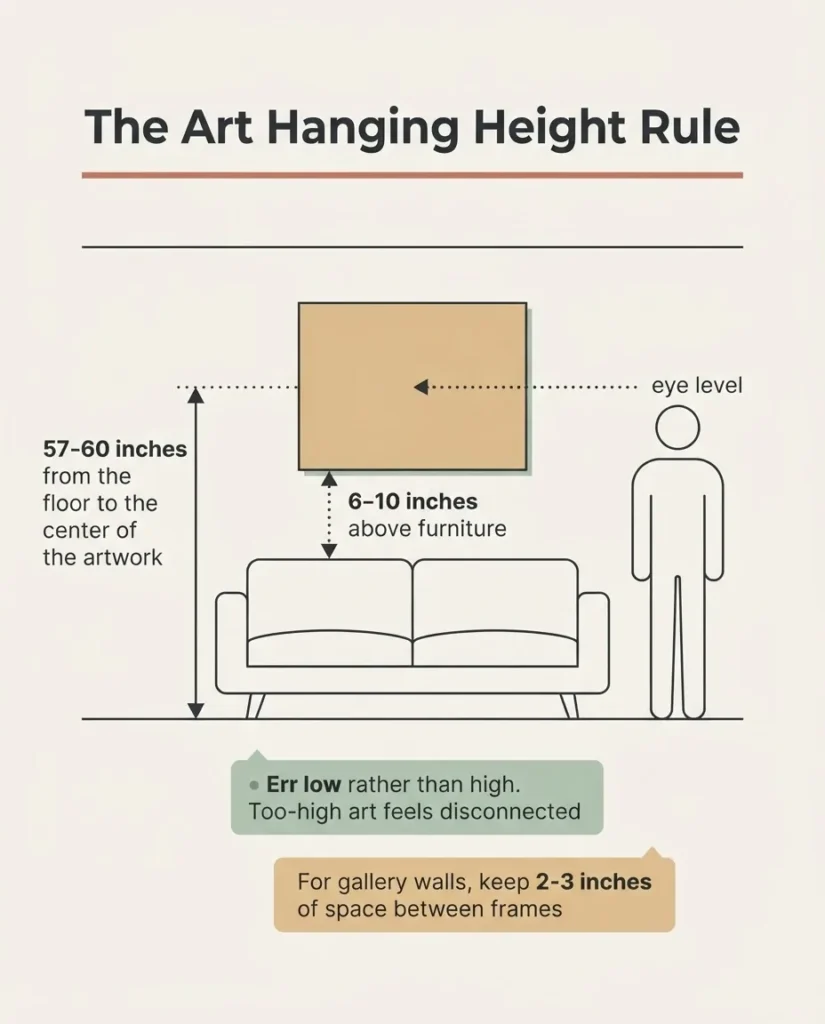
If you are building a small gallery wall of nature prints, keep the spacing between frames consistent. Two to three inches between frames gives a clean, modern look. More than four inches starts to feel spread out and less intentional.
Budget Breakdown: What You Get at Each Price Point
I want to be honest about this because it matters.
Under $30: You are mostly looking at mass-market print-on-demand on basic stretched canvas. The canvas texture may be visible, the colors can be slightly off from what you see on screen, and the stretcher bars may be thin enough to bow slightly over time. These are not bad for what they are. Style them well, place them thoughtfully, and they can look completely fine in person. Botanical line art and simple landscape watercolors tend to hold up best at this price because the subject does not demand high color precision.
$40 to $80: This is where most renters on a real budget will find their sweet spot. You start to see better canvas weight, more stable stretcher frames, and inks with better color accuracy. Etsy sellers in this range often print on demand but use higher-grade printers and canvas materials. The difference in person is noticeable. Browsing Etsy’s nature wall art category is a reliable way to find small independent shops and one-of-a-kind designs that nobody else in your building has.
$100 and above: You are getting into true gallery-grade giclee printing, heavier canvas, kiln-dried wood stretchers, and in some cases hand-embellished or hand-painted pieces. If you are buying a large statement piece for a wall you will look at every single day, this range is worth it. If you are filling a secondary wall or a hallway, it is not.
Caring for Your Canvas Print
Canvas does not need much, but a little maintenance keeps it looking its best. Dust it periodically with a clean, dry microfiber cloth, working gently from top to bottom. Never spray water or cleaning products directly onto the canvas. If there is a stubborn spot, a barely damp cloth can be used very carefully at the edges, but moisture is not a canvas print’s friend. Keep prints away from high-humidity areas if possible. A bathroom canvas needs to be rated for humidity or will warp over time.
One Final Thought on Blank Walls
I grew up in a house where most of the furniture was somebody else’s, the budget was tight, and for a long time I thought that meant our home could not look a certain way. What I learned slowly, and then all at once, is that a wall with one well-chosen piece of nature canvas art at the right height looks more considered than a wall covered in things that do not connect. Editing beats adding. One good print beats five mediocre ones.
You do not need a design eye, a big budget, or a landlord who lets you paint. You need to know your wall, measure twice, and choose something that makes you feel quieter when you look at it. That is the whole job. You already know how to do it.