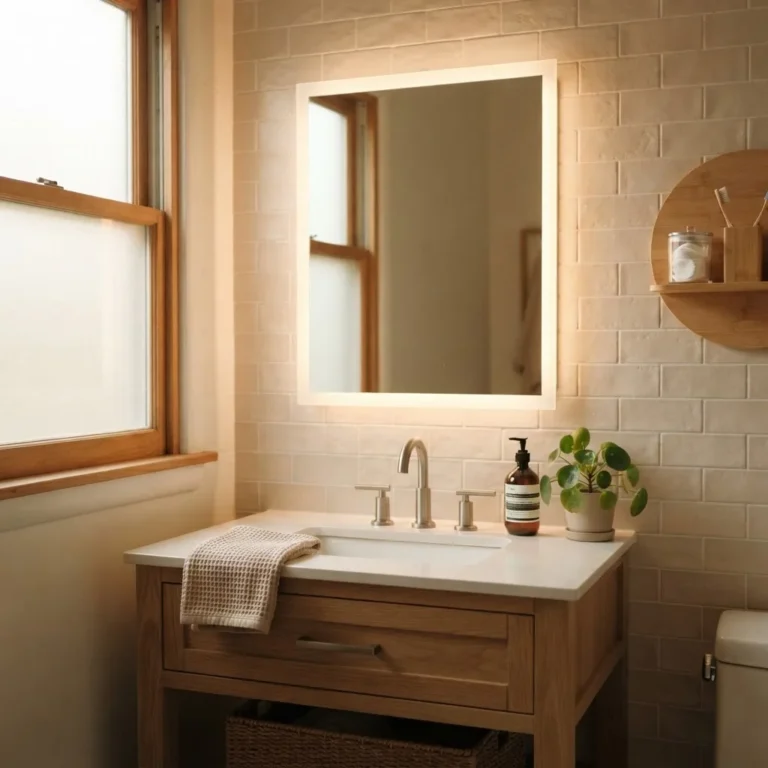
19 Smart Ways to Use Mirrors to Make a Room Look Bigger

There is a reason mirrors show up in nearly every small-space makeover you have ever seen. They actually work. Not in a vague, “it creates an illusion” sort of way, but in a real, measurable way that you notice the moment you walk into the room. When a mirror is placed right, it reflects light back into the space, pushes the visual boundaries of the room outward, and makes the whole place feel like it has more air in it.
I have decorated a lot of rentals. Small ones, dark ones, rooms with one window and no natural light to speak of. A mirror, hung in the right spot, has done more for those spaces than any furniture refresh ever did. The trick is that placement matters enormously, and most people get it slightly wrong, not because they are careless, but because the advice they find is vague. “Hang it opposite a window” only gets you so far if you don’t know what size to use, how high to hang it, or what it should actually be reflecting.
This guide is the longer version of that advice. Nineteen ways, in plain language, with real measurements and honest notes on what to spend and what to skip.
Why Mirrors Work (The Short, Useful Version)
Before we get into placements, it helps to understand what is actually happening. Mirrors do not create light, they redistribute it. When a mirror faces a window, it catches the incoming natural light and bounces it across the room, reaching corners and walls that the window itself cannot touch directly. This is specular reflection, and as the design faculty at RMCAD explain, mirrors extend a room’s visual boundaries by reflecting the surrounding environment, which makes the space read as deeper and more expansive than it physically is. Your brain interprets the reflected depth as real depth, and the room feels bigger.
The second thing mirrors do is reflect the room back at itself. That sounds obvious, but it matters because it doubles what the eye sees. A well-placed large mirror on one wall can make a room look nearly twice as wide. A poorly placed one can double a cluttered shelf or a boring beige wall, which helps nobody.
So the goal is not just to hang a mirror. The goal is to hang a mirror that reflects something worth reflecting, usually light, a window view, or a styled corner of the room you actually like looking at.
How to Think About Size Before You Buy Anything
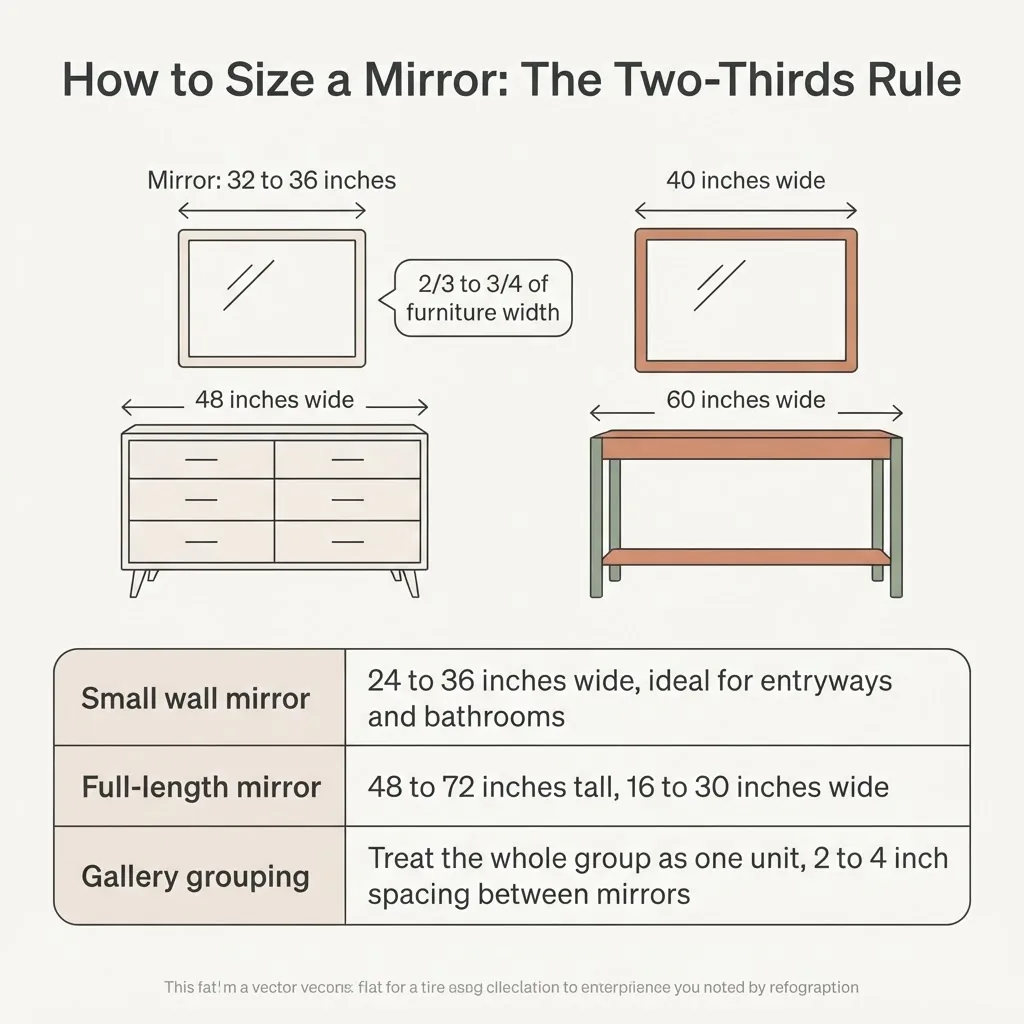
The single most common mirror mistake is buying one that is too small. A tiny mirror on a large wall does not create any illusion of space. It just floats there, looking uncertain. The general sizing rule, which holds up across virtually every room type, is that a wall mirror should be roughly two-thirds to three-quarters the width of the furniture it hangs above. So if your dresser is 48 inches wide, you are looking for a mirror somewhere between 32 and 36 inches wide. If your console table is 60 inches, a 40-inch mirror will feel appropriately proportioned.
For walls without furniture beneath them, a good starting point is for the mirror to fill roughly two-thirds of the available wall width. Standard decorative wall mirrors tend to run 24 to 36 inches wide for small to medium spaces, while full-length mirrors typically range from 48 to 72 inches tall and 16 to 30 inches wide.
The wall mirror sizing reference at Dimensions.com is a useful bookmark if you want to visualize standard proportions before you shop.
The frame matters for proportion too. A thick, heavy frame eats into the reflective surface and makes a mirror read smaller. If your space is tight and you want maximum visual expansion, a thin frame or a frameless mirror will do more work for you.
The 19 Ways
1. Hang a Large Mirror Opposite Your Window
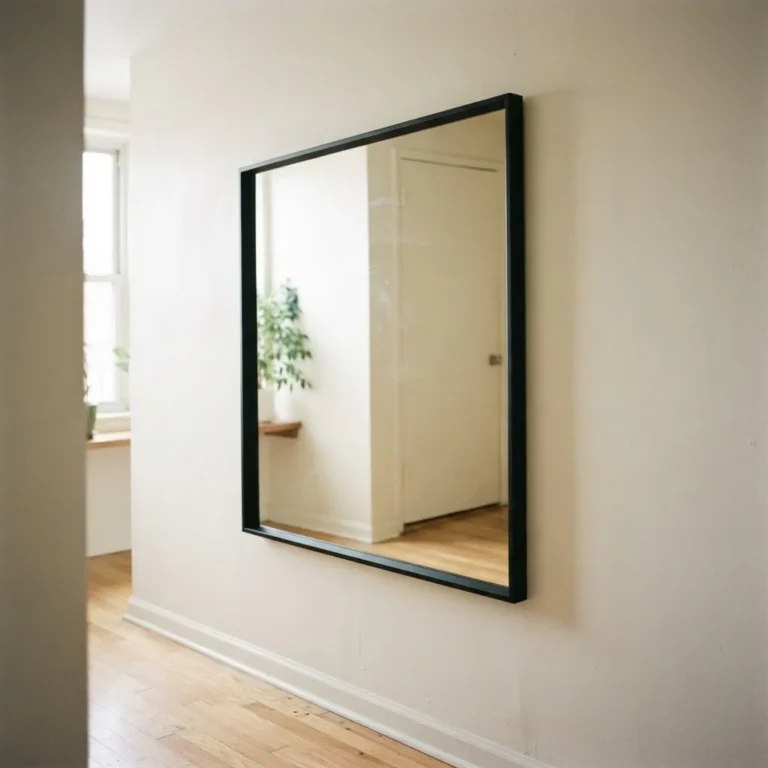
This is the classic for a reason. A mirror placed directly across from a window catches the full incoming light and throws it back across the room. The bigger the mirror, the more light it captures. Aim for a mirror that is at least as tall as the window it faces, and hang it so the center of the mirror sits at roughly 57 to 65 inches from the floor, which is the standard eye-level range for most adults. This placement is effective in living rooms, bedrooms, and dining rooms where one wall has a window and the opposite wall is otherwise bare.
2. Try the Perpendicular Wall Instead
If you cannot place a mirror directly opposite your window, hanging it on a perpendicular wall (the side wall adjacent to the window) is almost as effective. The mirror catches the light at an angle, which spreads it differently across the room and can feel more atmospheric than a direct reflection. This is particularly useful in rooms where the wall opposite the window is taken up by furniture or a door.
3. Use a Full-Length Leaning Mirror in a Corner
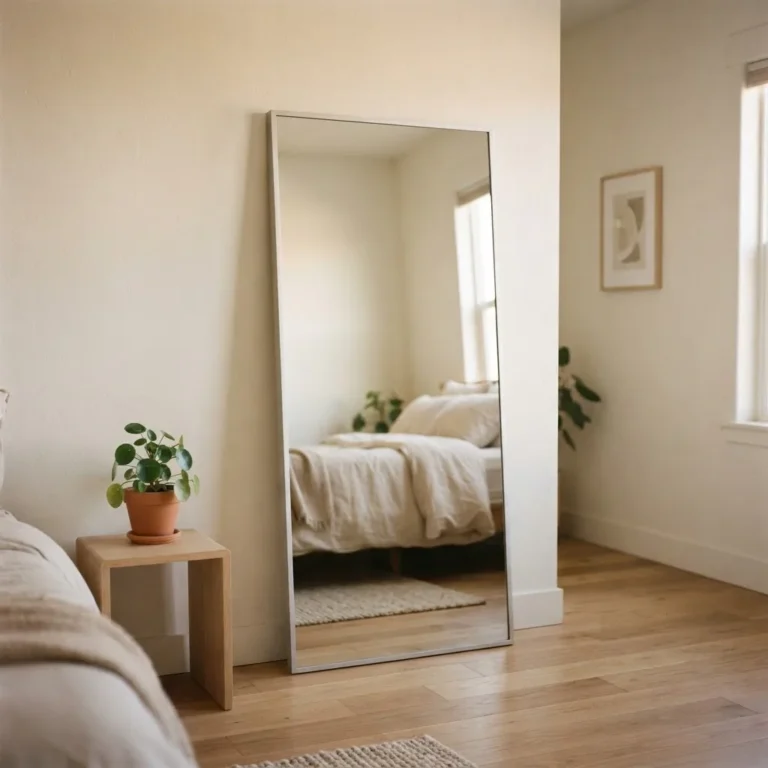
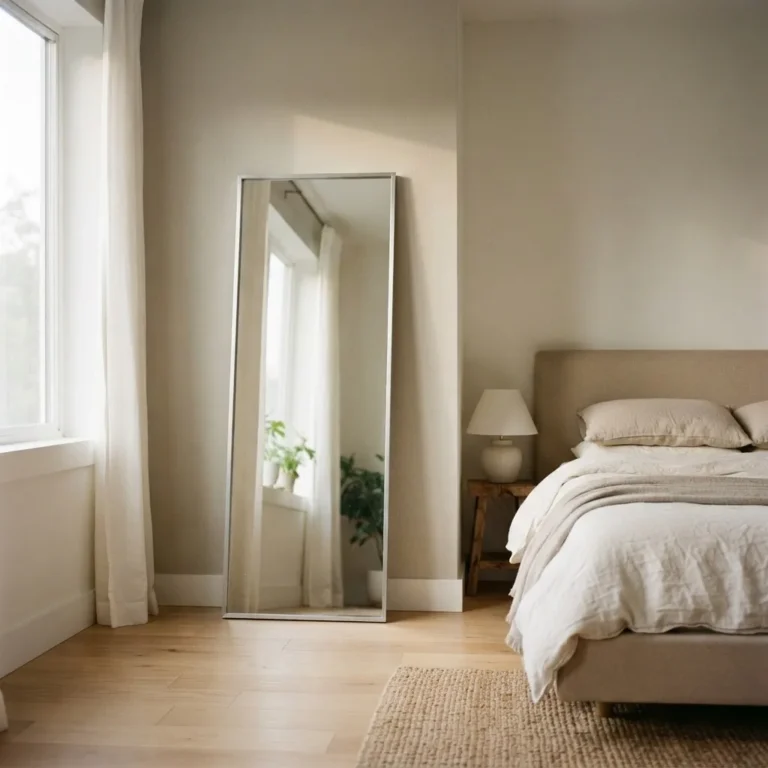
A large leaning mirror in the corner of a bedroom or living room is one of the highest-impact moves available to renters because it requires no hardware at all. A full-length mirror, typically 60 to 72 inches tall, propped in a corner reflects the room at a slight angle, which creates the illusion of an entirely separate space behind it. It also makes the ceiling look higher. For safety, lean it against a solid wall rather than a hollow one, and if you have small children, anchor it with a furniture safety strap looped to a wall hook.
4. Place a Mirror Above the Dresser or Console
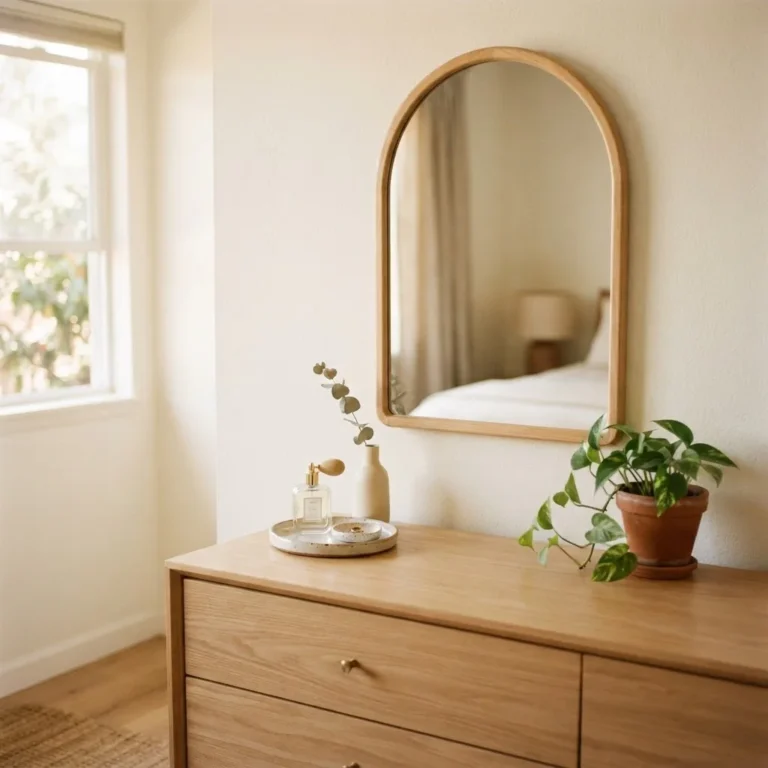
This is one of the most functional placements in a small bedroom or entryway. A mirror above a dresser serves double duty: it gives you a place to check your reflection, and it draws the eye upward, making the wall feel taller. Use the two-thirds rule here. If your dresser is 36 inches wide, a 24 to 28 inch mirror is the sweet spot. Hang it so there is roughly 6 to 8 inches of space between the top of the dresser and the bottom of the mirror. According to Homes & Gardens’ designer placement guide for small bedrooms, above a dresser is one of the most consistently effective spots for a mirror in a compact bedroom because it combines visual function with practical use.
5. Hang One at the End of a Hallway
If you have a narrow hallway, a mirror at the far end is one of the best tricks in the small-space playbook. It visually extends the corridor, eliminates the “dead end” feeling, and bounces light back down the length of the hallway. A full-length mirror or a tall rectangular one works best here. This is also an excellent spot for a frameless or thin-framed mirror, since the plain surface reads as a continuation of the wall rather than as a decorative object hung on it.
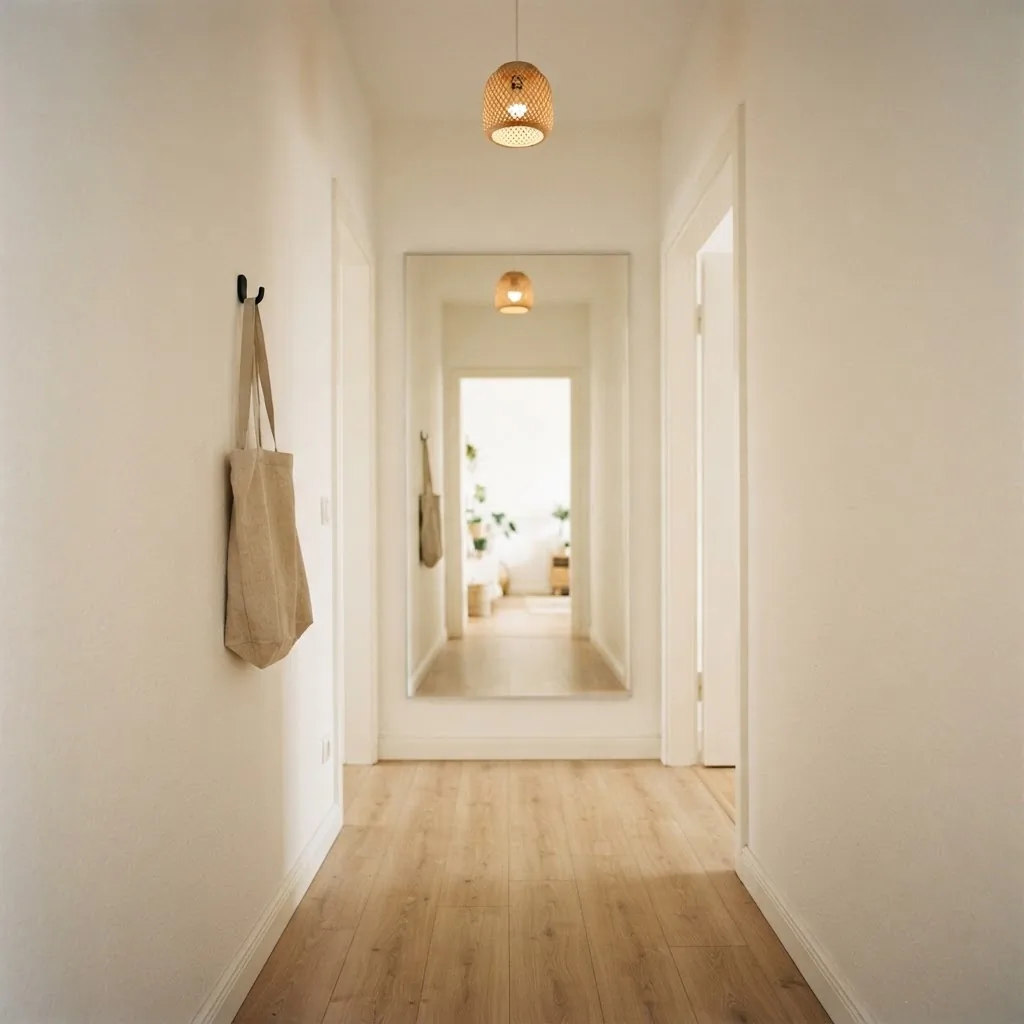
6. Use a Mirror to Reflect Your Best Light Source
This is the principle that ties all placement decisions together. Before hanging any mirror, stand in the spot where you plan to put it and look at what it will reflect. If it reflects a window, natural greenery, or a well-lit corner of the room, great. If it reflects a dark closet door, a stack of boxes, or a wall with nothing on it, rethink the placement. The mirror is going to double whatever it faces, so make sure that thing is worth doubling.
7. Go Over-the-Door for Zero Commitment
An over-the-door mirror is genuinely one of the most underrated tools for renters. It requires no hardware, no holes, and no landlord conversation. A standard over-the-door full-length mirror fits most interior doors and gives you a head-to-toe view while visually expanding the space when the door is open. In a small bedroom, hanging it on the back of the bedroom door means you get the benefit of a large mirror without losing a single inch of wall space.
8. Create a Mirror Gallery Wall
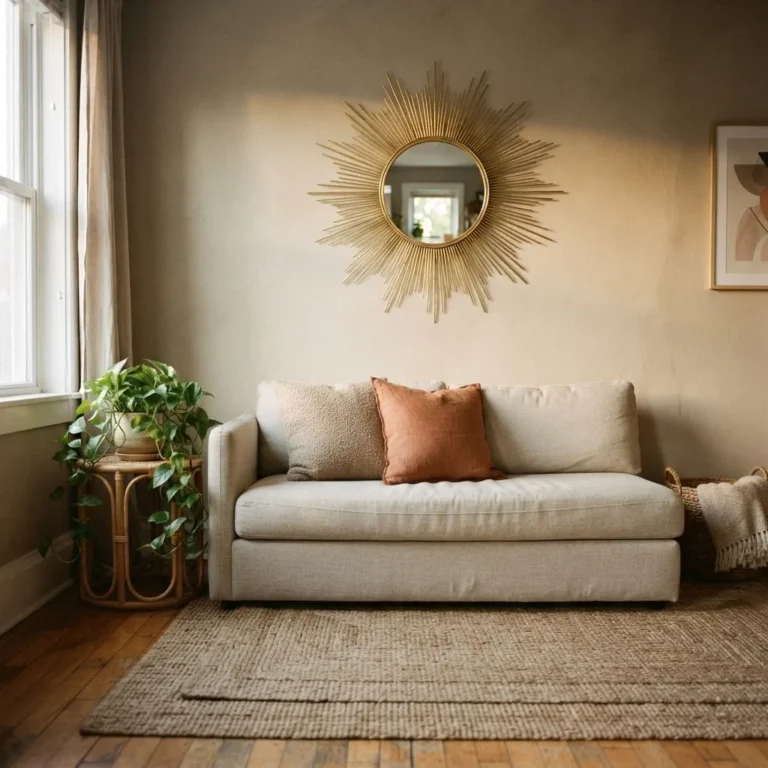
Instead of one large mirror, grouping several smaller mirrors together on one wall can have a similar space-expanding effect while adding texture and visual interest. The key is consistency in one element: same frame finish, same shape, or same size. Mixed mirrors with wildly different frames in different finishes tend to look cluttered rather than curated. A gallery of three to five round mirrors in brass frames, for example, reads as intentional and adds warmth. Spacing between mirrors should be consistent, typically 2 to 4 inches, and the overall grouping should be treated as one visual unit when thinking about sizing relative to the wall.
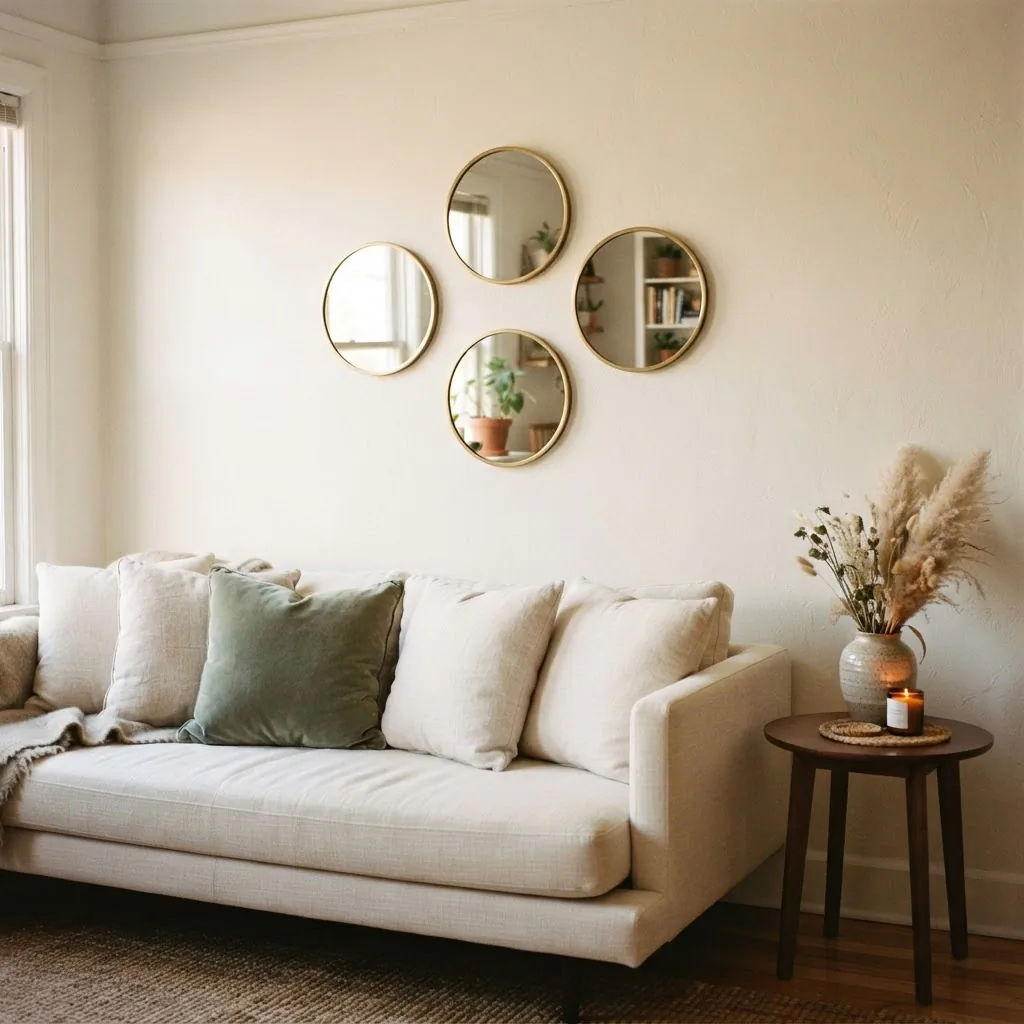
9. Lean a Mirror Behind a Sofa
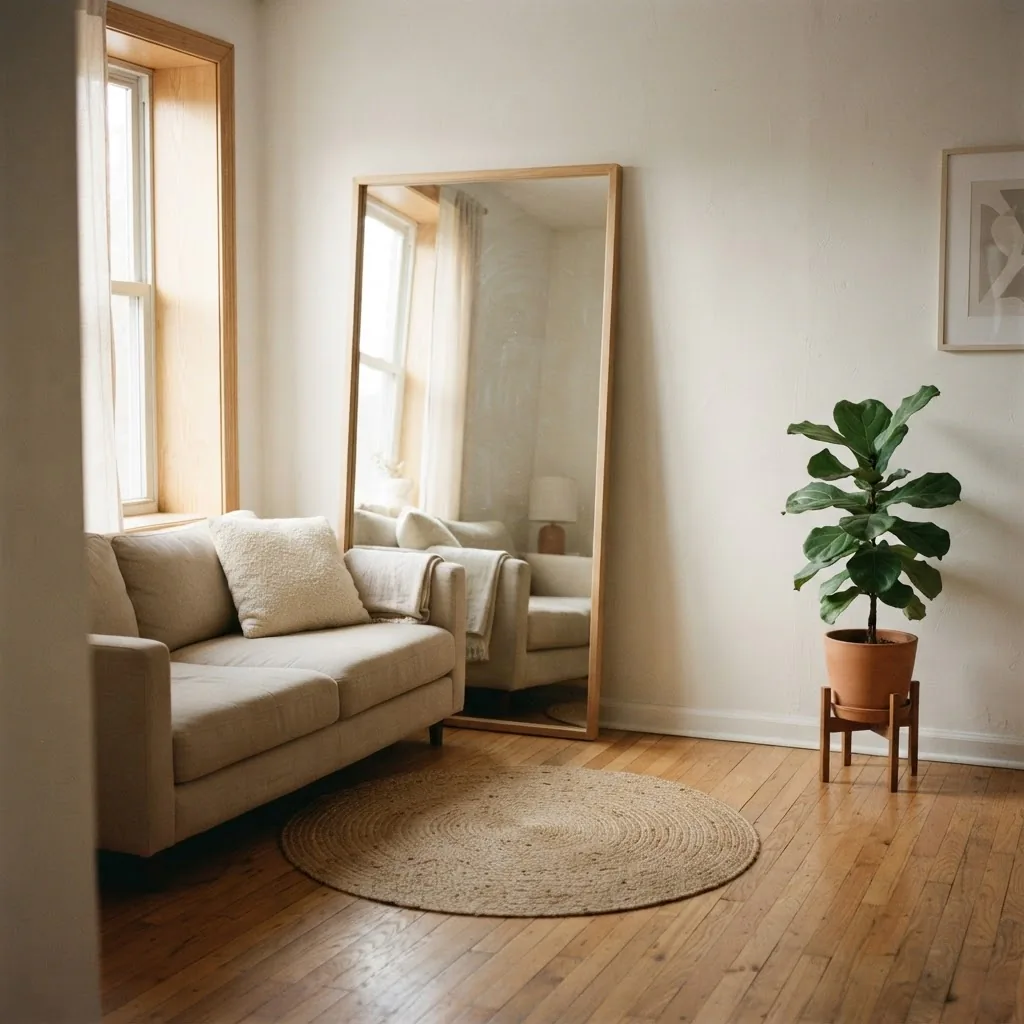
Placing a large leaning mirror behind or beside a sofa creates the illusion of depth and makes the living room feel like it extends further back than it does. This works especially well in narrow living rooms where one long wall is dominated by the sofa. A wide rectangular mirror, leaning slightly forward, reflects the room at an angle that suggests space behind the furniture. This is a popular move in small apartments because it requires no drilling and can be moved any time.
10. Add Mirrored Furniture
Mirrored furniture, a mirrored coffee table, nightstand, or side table, is a specific strategy that works by making the furniture itself visually disappear into the room. Because mirrored surfaces reflect the floor, rug, and surrounding objects, the piece takes up less visual weight than a solid table would. This is particularly useful in very small rooms where every piece of furniture competes for visual space. It is not everyone’s style, but in a small living room or a tight bedroom, it genuinely reduces visual clutter.
11. Use Mirror Tiles as a Backsplash in a Small Kitchen
In a small kitchen with no room for a large decorative mirror, peel-and-stick mirror tiles used as a backsplash behind the stove or counter can brighten the space significantly. They reflect the overhead light, make the kitchen feel wider, and are fully removable for renters. From what renters consistently find with this approach, the effect is most successful when the tiles are cut to a uniform size and applied in a clean grid pattern rather than a mosaic. Irregular placement tends to look fragmented rather than expansive.
12. Hang a Mirror Perpendicular to a Lamp
This works anywhere you have a floor lamp, table lamp, or wall sconce. Placing a mirror on the wall beside or across from a lamp source reflects the artificial light into the room in the evening hours, making your space feel warmer and better lit without adding another fixture. In a small bedroom or living room with limited overhead lighting, this is a low-cost way to make the whole room feel brighter after dark.
13. Try Arch Mirrors for Height
Arch-top mirrors are having a long moment in home decor, and there is a practical reason beyond trend. An arch mirror draws the eye upward along its curved top, creating the visual suggestion of height in a room with low or average ceilings. A tall, narrow arch mirror in a corner adds height without taking up much floor space. In a small bedroom or entryway, an arch mirror on a blank wall is often the simplest possible way to make the ceiling feel higher.
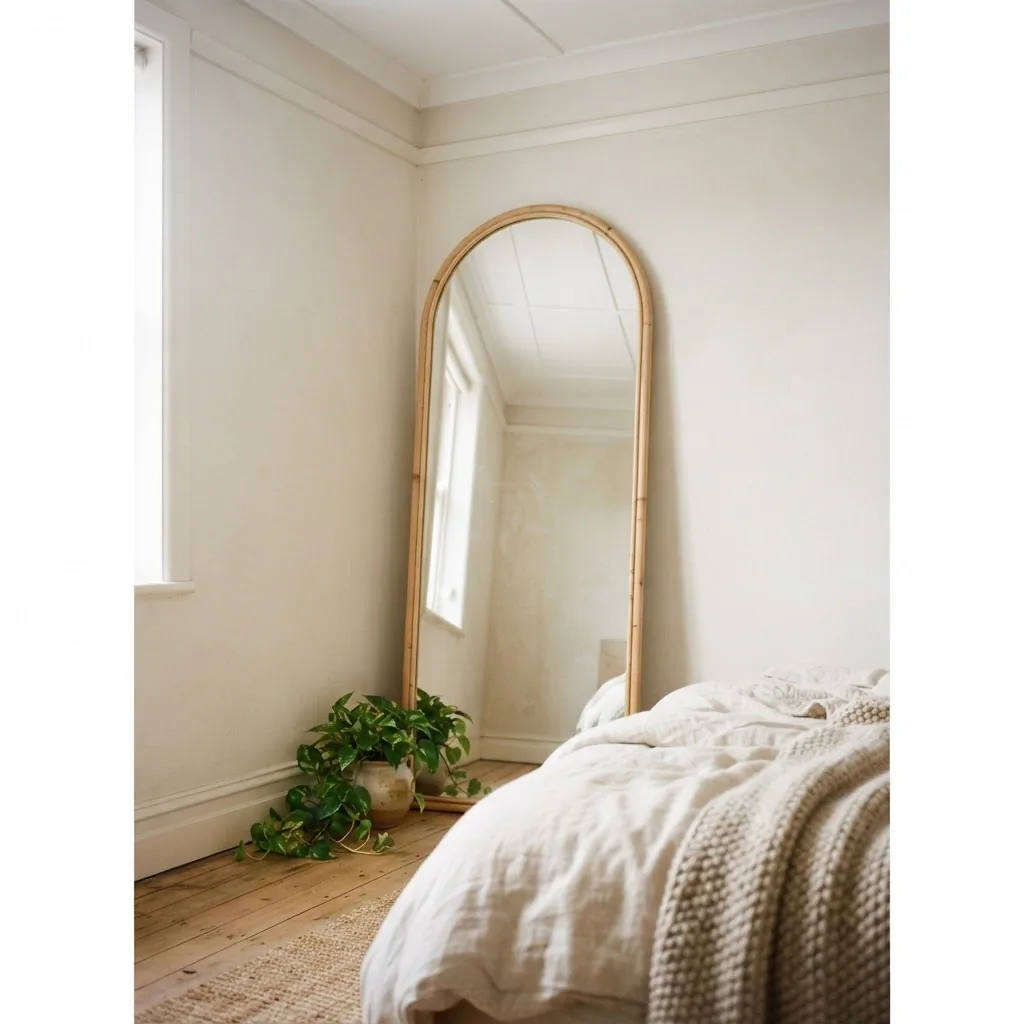
14. Place a Mirror in a Dark Corner
Any corner of a room that feels dim, dead, or forgotten benefits from a mirror. A round or rectangular mirror on the wall of a dark corner reflects whatever ambient light exists in the room, brightening the corner and giving it a sense of purpose. This is especially useful in rental apartments where you cannot add recessed lighting or repaint a dark wall. Pair it with a small table lamp or a plug-in wall sconce nearby and the corner transforms completely.
15. Hang a Mirror Above the Fireplace Mantel
If you have a fireplace, the mantel is one of the best spots for a large mirror in the room. The standard guideline is to leave 4 to 6 inches of space between the bottom of the mirror and the top of the mantel, and to size the mirror to roughly two-thirds the width of the fireplace opening. A round or arched mirror above a mantel tends to balance the strong horizontal line of the shelf beneath it. This placement turns the fireplace wall into a proper focal point and reflects light from the room back toward you.
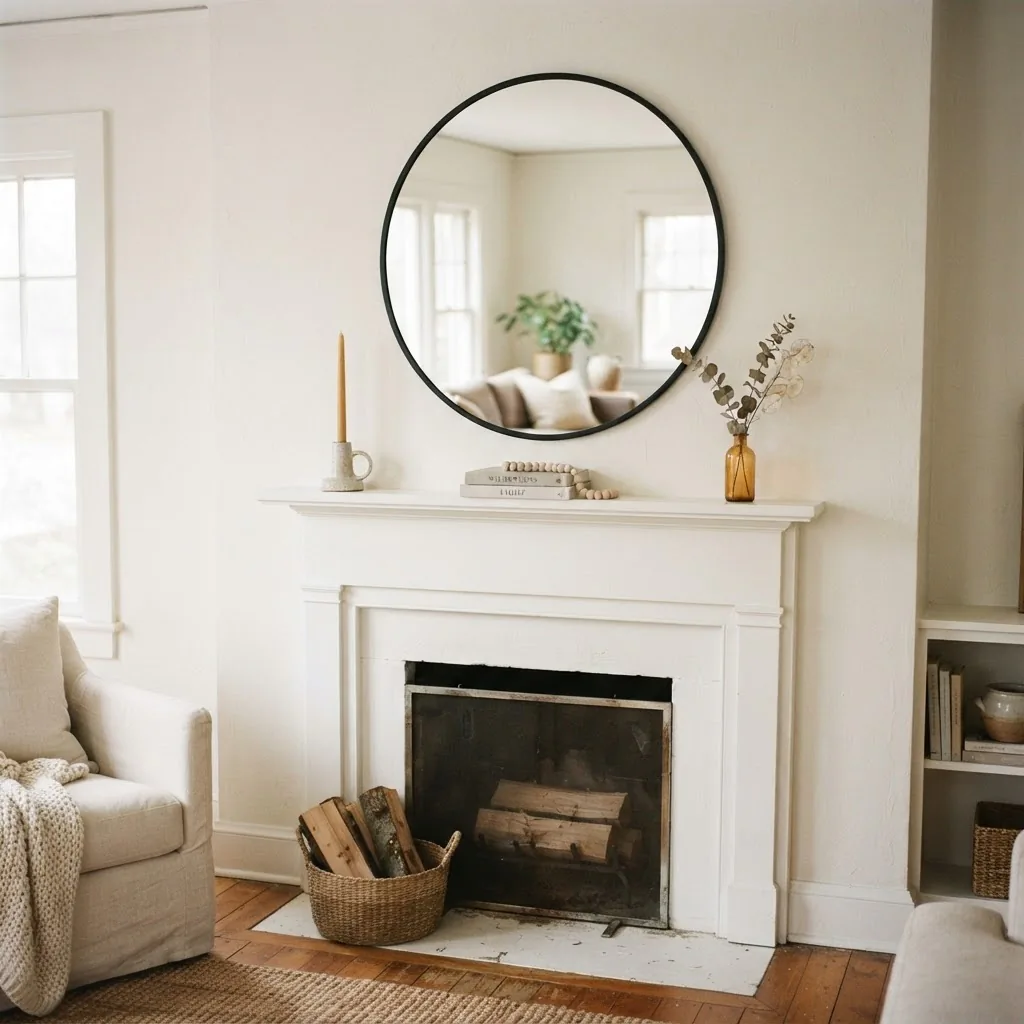
16. Use a Mirror to Make a Small Dining Room Feel Larger
A large mirror on the main wall of a small dining room is a classic restaurant trick for a reason. It makes the room feel twice as big and reflects the warmth of candlelight or pendant lighting beautifully in the evening. In a small apartment dining space, even a leaning floor mirror propped against the wall behind the table can have the same effect. The small-space design resource Never Too Small regularly documents this approach in micro-apartment designs, where mirrored surfaces in dining and living areas are used to push visual boundaries in spaces under 500 square feet.
17. Replace a Cabinet Door with a Mirror Panel
In a small bedroom or bathroom, swapping one standard cabinet door panel for a mirror insert can add a large reflective surface without adding any furniture or taking up any floor space. This is more of a DIY approach, but many renters find that inserting a cut-to-size mirror (available at most hardware stores) into an existing cabinet frame is fully reversible and does not require any permanent modification.
18. Think About What Not to Reflect
This is probably the most practical piece of mirror advice I can give, and it is almost never in any article on this topic. Before you commit to a placement, stop and look at what the mirror will actually show. A mirror that reflects a pile of stuff on the floor, a cluttered countertop, or a boring stretch of empty wall is not going to help your room feel bigger or calmer. It is going to double the mess or the blankness. Audit your intended reflection first. If the view is not good, either clean it up or move the mirror.
19. Hang It Right (and Keep Your Deposit)
The hanging question is where a lot of renters get stuck, and rightly so. A large mirror done wrong is both a safety hazard and a deposit risk. Here is where I always start: check the mirror’s weight before you buy any hardware. Command Picture Hanging Strips are genuinely excellent for lighter mirrors, officially rated for mirrors up to 24×36 inches and up to 20 pounds per the 3M Command official weight limits guide. For anything heavier than that, use a proper wall anchor or find a stud. If your mirror is very heavy and you are in a rental with thin or plaster walls, a leaning mirror is almost always the smarter choice.
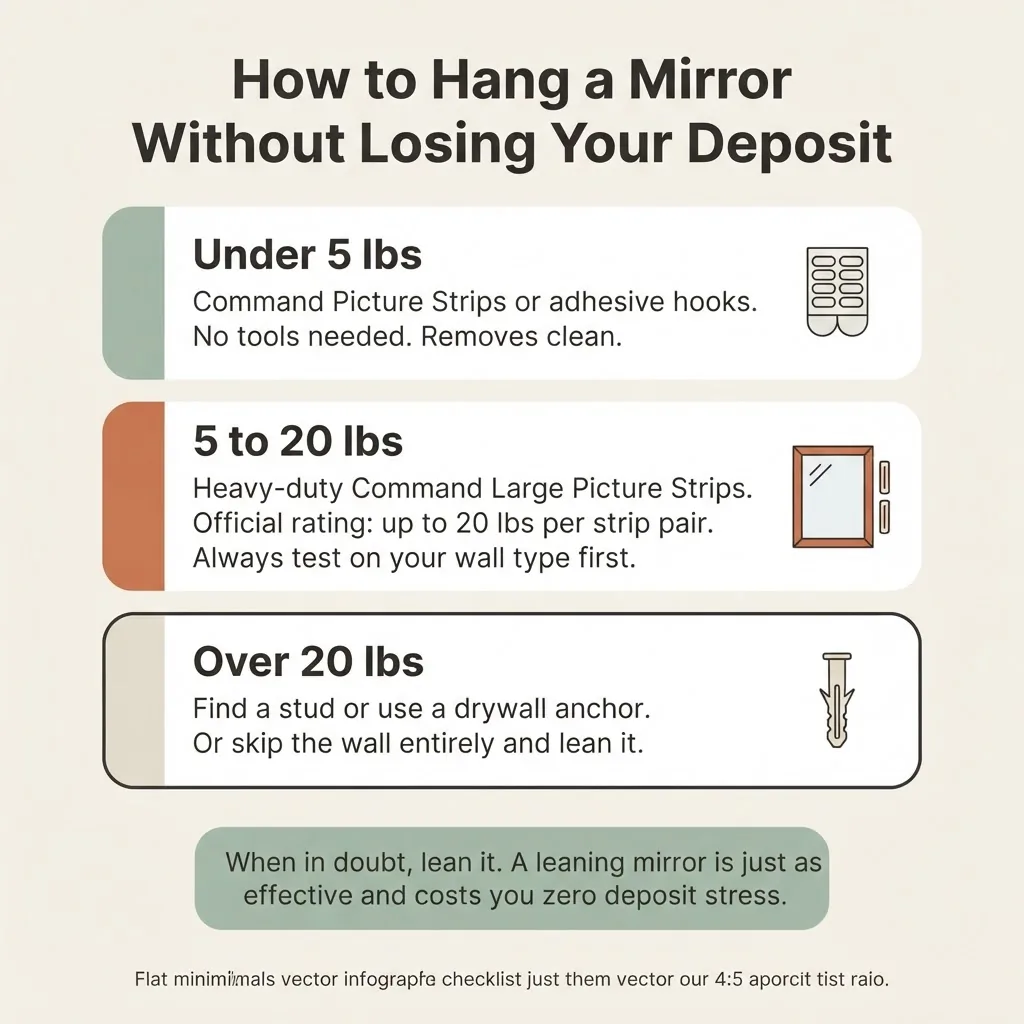
It requires no hardware, creates the same visual effect, and keeps your security deposit intact.
Worth It vs. Skip It: A Quick Budget Guide
For budget, here is how I think about it. The mirror itself is worth spending on if it is going to be a focal point, because a cheap frame in the wrong finish can cheapen an otherwise well-styled room. However, the frame finish matters more than the brand name. A simple brass or natural wood frame from a budget retailer can look just as good as a designer version in the right context.
Where you can go cheap: mirror tiles, over-the-door mirrors, basic frameless leaning mirrors. These do not need to be beautiful objects in themselves because they are working tools.
Where it is worth spending a little more: a large wall mirror that will be the main feature of a room, an arch mirror in an entryway that will be the first thing you see when you walk in, or any mirror that needs a specific finish to work with your existing furniture.
A Few Honest Notes on What Does Not Work
Too many small mirrors scattered around a room creates visual noise rather than visual space. If your mirrors are not reading as a cohesive grouping, they are probably working against you. One good-sized mirror almost always beats three small ones in separate locations.
Hanging a mirror too high is the single most common mistake. A mirror that reflects the ceiling is not helping anyone. The center of a decorative wall mirror should sit at roughly 57 to 65 inches from the floor for most people, which is the same standard used for hanging art.
A mirror that faces the bed directly can disrupt sleep for some people and is generally something feng shui principles advise against if that matters to you. On a practical level, a mirror catching light from outside at 5 a.m. is annoying. Keep bedroom mirrors on side walls rather than directly facing the bed.
Finally, resist the urge to cover an entire wall in mirror tiles unless you are going for a very specific, deliberate look. A single well-chosen mirror almost always does more for a small room than a full wall of fragmented tiles.
Start With One
You do not need all 19 of these ideas. You need one good mirror in one good spot, and you need to know what it is going to reflect. Most of the time, that means a large-ish mirror on the wall opposite or beside your main window, hung at eye level, sized to about two-thirds the width of the wall or furniture below it. That single decision, done right, will change how the room feels more than most other decorating choices you can make.
Start there. Add more if you want to. The room will tell you what it needs.