Statement Mirror Decor: Size, Placement, and Styling Tips

There is a moment in decorating a rental when you realize you have rearranged everything you own and the room still feels flat. Not bad, just kind of unfinished. Like it is waiting for something. A statement mirror is often that something.
I have spent years decorating rentals, and a good mirror is one of the highest-return pieces you can add to a room. One well-chosen, well-placed mirror can make a small room feel twice as large, bounce light into a corner that never sees sun, and give a blank wall an actual personality. And unlike almost everything else in decor, a mirror works in every room, every budget, and every style.
This guide covers everything I wish someone had told me earlier: how to pick the right size, which shapes work where, how to style what is around and in front of the mirror, and how to hang the whole thing without touching your deposit. Let’s go room by room and style by style.
Why a Statement Mirror Works So Well in Rental Spaces
Most of the things that make a rented space feel more like home require permission: paint, wallpaper, built-ins, new fixtures. A statement mirror requires none of that. It is freestanding or hung, removable, and purely additive.
But the practical argument is only half of it. A mirror changes the actual light quality in a room. Hang one opposite a window and you have essentially doubled the natural light in that space. Hang one in a dark hallway and the whole entry opens up. I have walked into rooms with almost nothing in them, just a great mirror on the right wall, and thought they looked beautiful. That is how much the right piece in the right spot matters.
There is also the focal point problem that every rental has. Renters cannot usually add architectural character: no built-in shelving, no shiplap, no painted accent wall in most leases. A statement mirror creates a focal point that does all of that work without any of the permanence.
Getting the Size Right Before You Buy Anything
This is where most people go wrong, and it is almost always in the direction of going too small. A mirror that is undersized for its wall or for the furniture beneath it does not look minimal. It looks lost. The room’s proportions read as off, and you will spend the next year rearranging things around it trying to figure out why the space never settles.
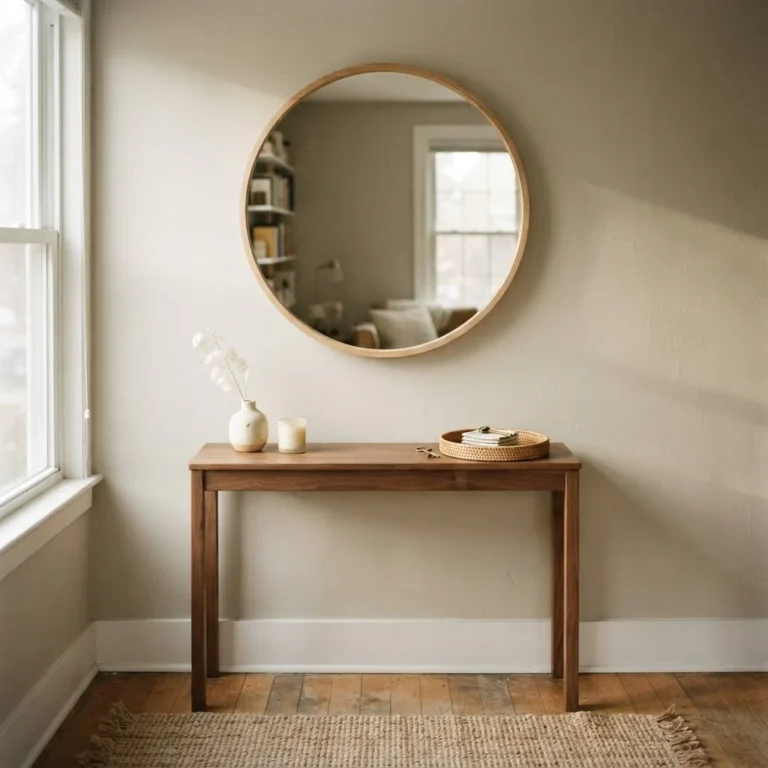
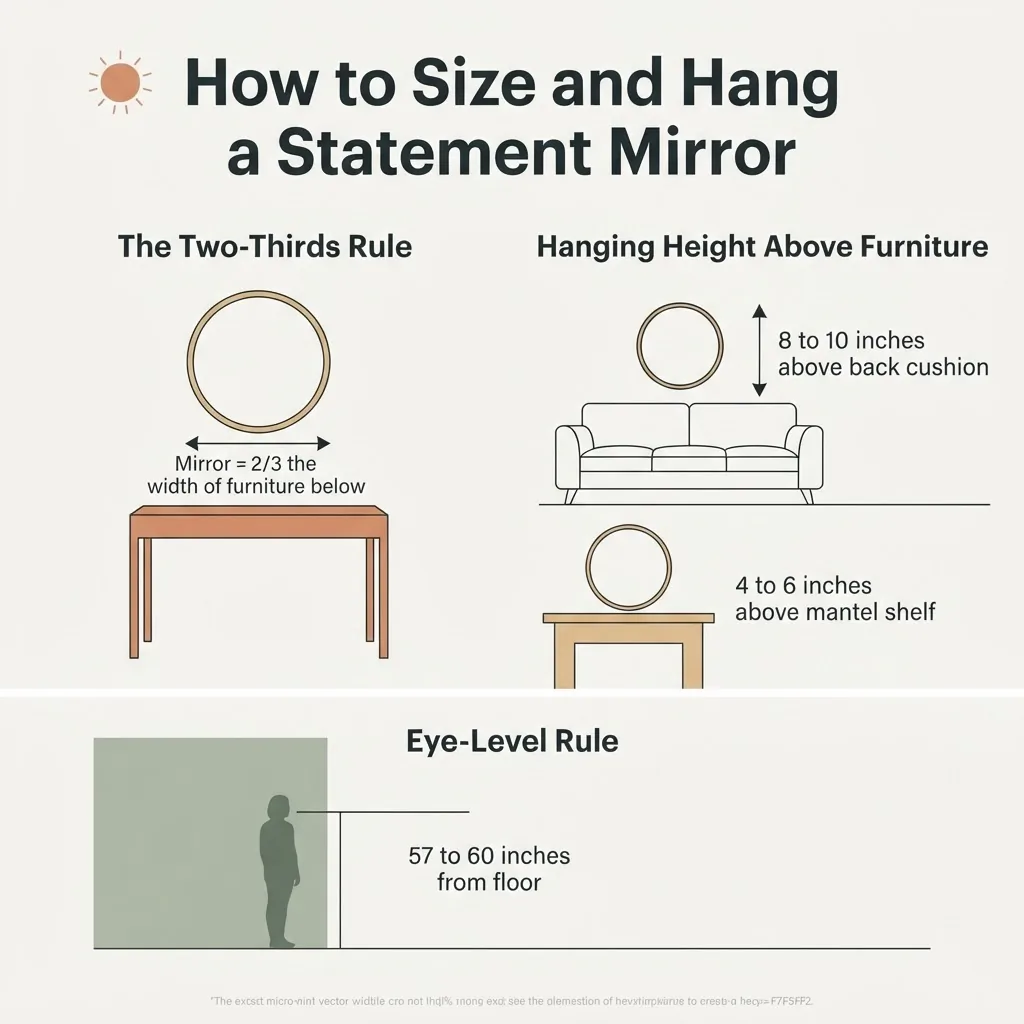
The most reliable sizing rule is the two-thirds rule. A mirror hung above a piece of furniture, a dresser, a console table, a sofa, a sideboard, should be roughly two-thirds to three-quarters the width of that piece. So if your console table is 48 inches wide, you want a mirror somewhere in the 32 to 36 inch range. Not a perfect match to the furniture width (that can feel stiff and mechanical), but close enough to feel intentional. According to Castlery’s mirror sizing guide, the goal is a mirror that feels like part of the composition rather than an afterthought, and that ratio is what creates it.
For sunburst and starburst mirrors specifically, keep in mind that the spikes or rays extend beyond the mirror glass itself. A sunburst listed as 28 inches is measured tip-to-tip, so the actual reflective surface in the center might only be 10 or 12 inches across. When you are sizing a sunburst, think of the full tip-to-tip diameter as the mirror’s presence on the wall, and size it accordingly. A 23-inch sunburst is a nice accent piece above a small nightstand or in a tight powder room. A 36 to 40-inch sunburst reads as a genuine statement piece in a living room or above a console.
For walls with no furniture underneath, aim for a mirror that fills roughly two-thirds of the wall’s width, with at least 4 to 6 inches of breathing room on each side. Too much blank wall around a small mirror and the whole thing floats awkwardly.
A quick size cheat sheet:
- Small accent (18 to 23 inches): nightstand, powder room, small hallway, above a stack of books on a shelf
- Mid-range statement (28 to 36 inches): above a dresser, console, or small sofa, entryway focal point
- Large statement (36 to 48+ inches): above a long sofa, living room feature wall, dining room, above a full mantel
Sunburst Mirror Styles by Aesthetic: Finding Your Match
Sunburst mirrors have been around long enough that they appear in almost every style category now, and that is actually a great thing for decorating purposes. The shape is classic and playful at once, which is why it works from midcentury modern to cottagecore to coastal. The finish and material are what shift it from one aesthetic to another.
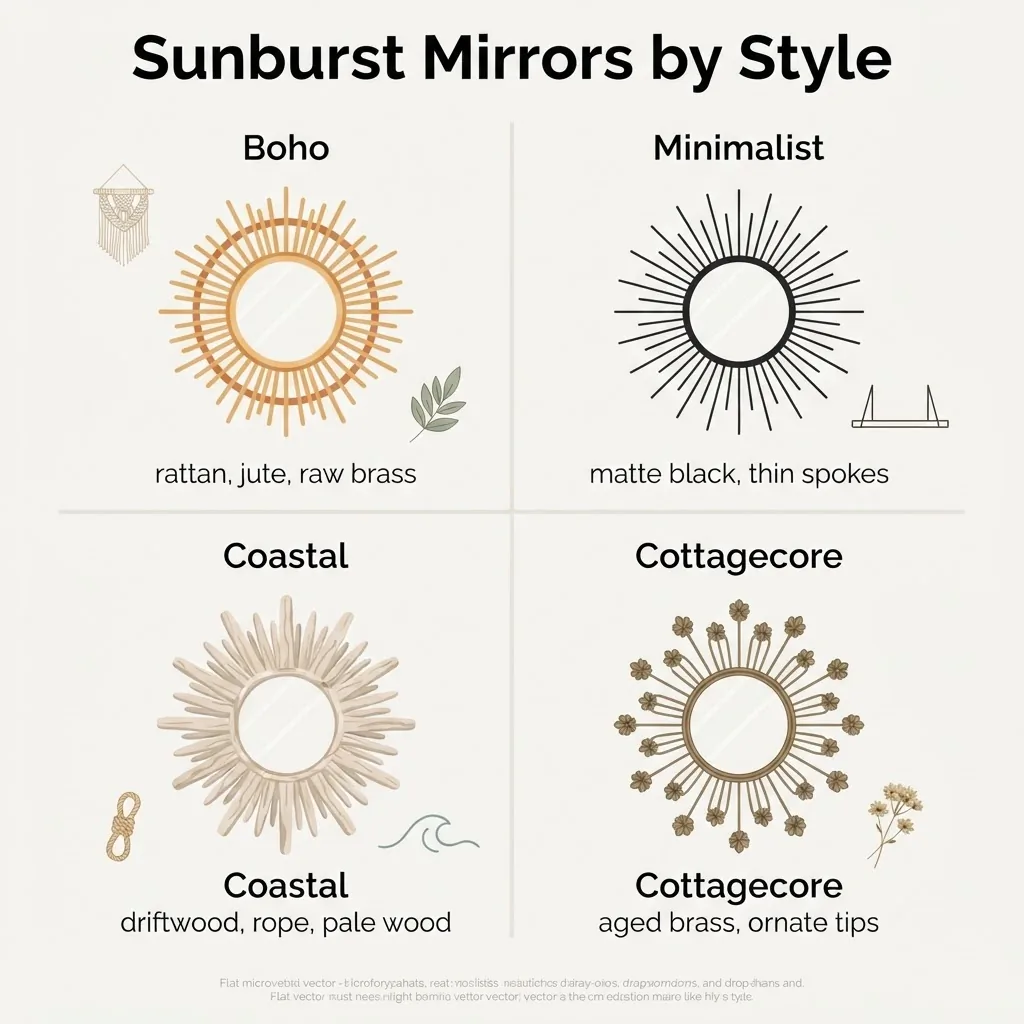
Boho and Organic: Look for sunburst mirrors made with natural materials, rattan rays, woven jute around the frame, driftwood spokes, or raw wood. These have a warm, handmade quality that pairs beautifully with linen throws, macramé, layered rugs, and baskets. The gold-toned versions in a raw brass or brushed brass finish also read as boho when surrounded by natural textures.
Minimalist and Modern: A metal sunburst with thin, clean spokes in a matte black or brushed nickel finish feels graphic rather than ornate. These work especially well above a simple floating shelf, in a neutral room where the shape itself is allowed to be the single decorative gesture.
Coastal: Driftwood sunbursts, rope-wrapped frames, and sun-bleached wood finishes all read as coastal. A gold or brass sunburst over a linen sofa with some woven texture nearby also hits that sun-and-sea feeling without being on-the-nose about it.
Cottagecore and Vintage: Ornate, slightly aged-looking metal frames with a patina finish, or sunbursts with a more floral or sculptural quality, work well here. These pair beautifully with dried flowers, soft warm lighting, and vintage-looking fabrics.
Maximalist Glam: A large gold sunburst with bold, dramatic spokes is one of the easiest single-piece ways to add glamour to a room without committing to a full maximalist scheme. Hang it alone on a dark or jewel-toned wall and let it be the entire statement.
Room by Room: Where to Hang a Statement Mirror and How
Living Room
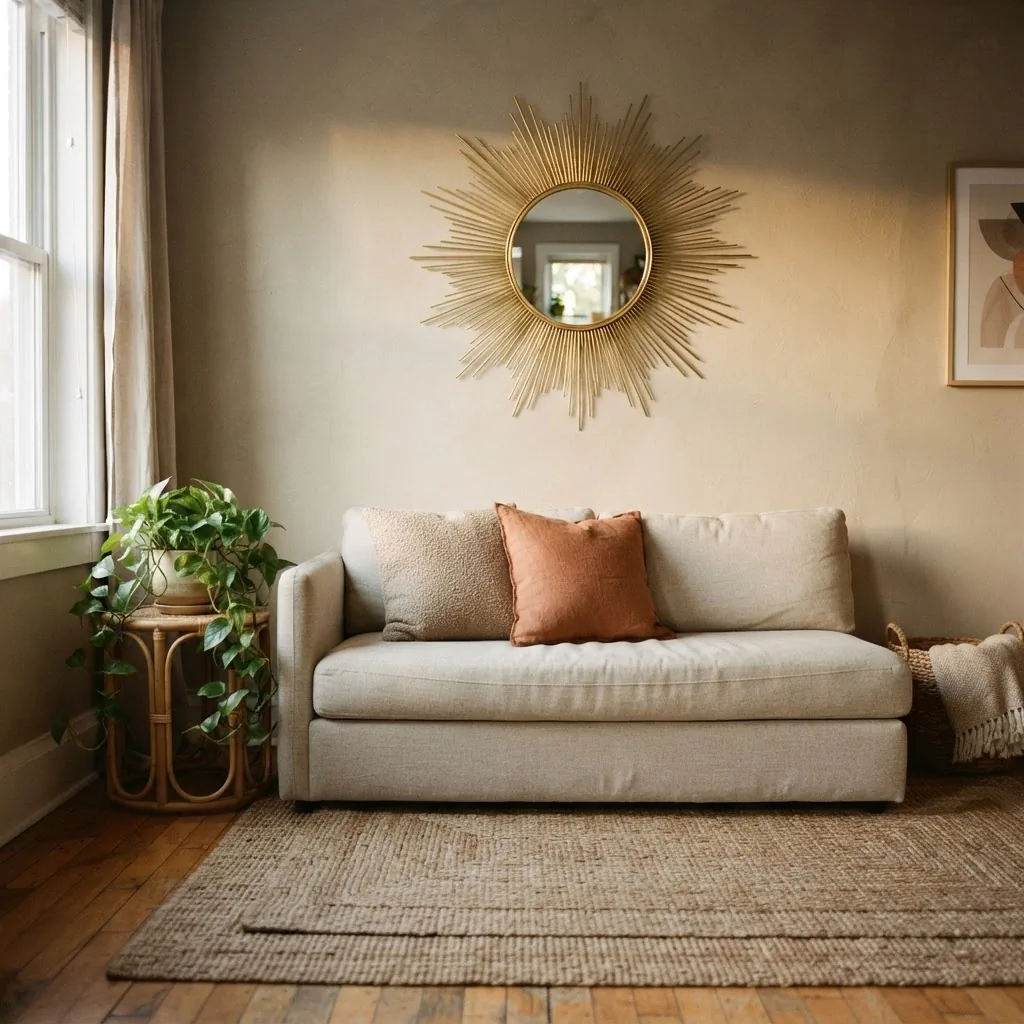
The classic placement is above the sofa, and it works because the sofa is usually the largest horizontal surface in the room, giving the mirror something substantial to anchor to. The key measurement: hang the mirror so its bottom edge sits 8 to 10 inches above the top of the sofa’s back cushions. Any lower and it reads as crowded. Any higher and it starts to float away from the furniture and look unrelated.
A large round or sunburst mirror above a sofa is one of the most reliable combinations in decor. The round shape contrasts against the rectangular sofa line, which adds visual interest without any extra effort.
Another approach I love in small living rooms is hanging a large mirror on the wall directly opposite the main window. The mirror reflects the light back into the room, making the whole space feel brighter without touching a single fixture.
Entryway and Hallway
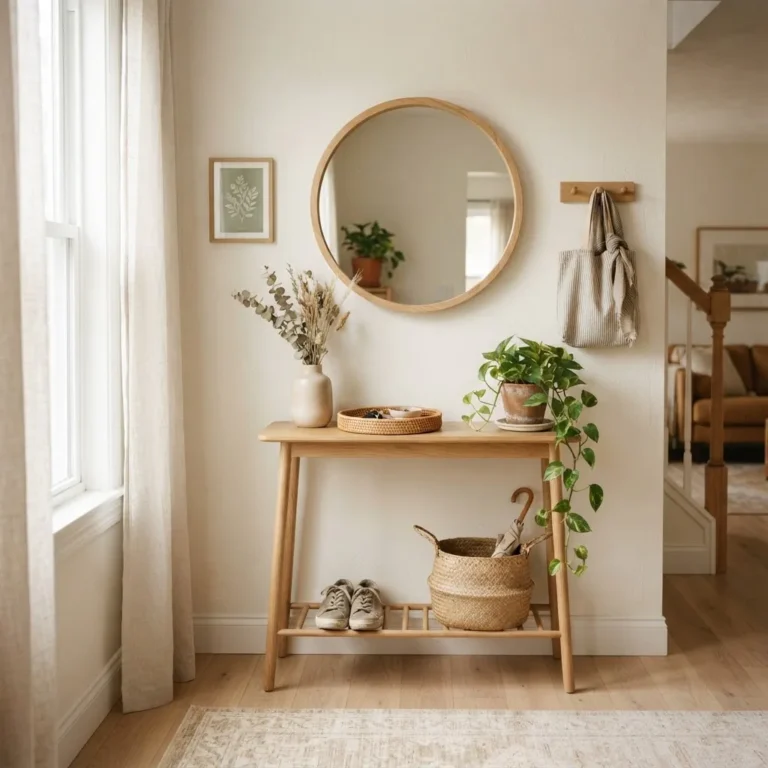
This is arguably the best room for a statement mirror in a rental. You usually have one fairly narrow, featureless wall and a door. A mirror instantly makes the entry feel larger, adds light, and gives you a practical place to check your reflection before leaving. Hang the center of the mirror at approximately 57 to 60 inches from the floor, which is the standard eye-level hanging height that works for most adults and mirrors the gallery-style convention used in art hanging.
For very narrow hallways, a vertically oriented mirror is your best friend. It elongates the wall and does not compete with traffic flow. For a wider entry, a round sunburst or a substantial arched mirror both make excellent focal points.
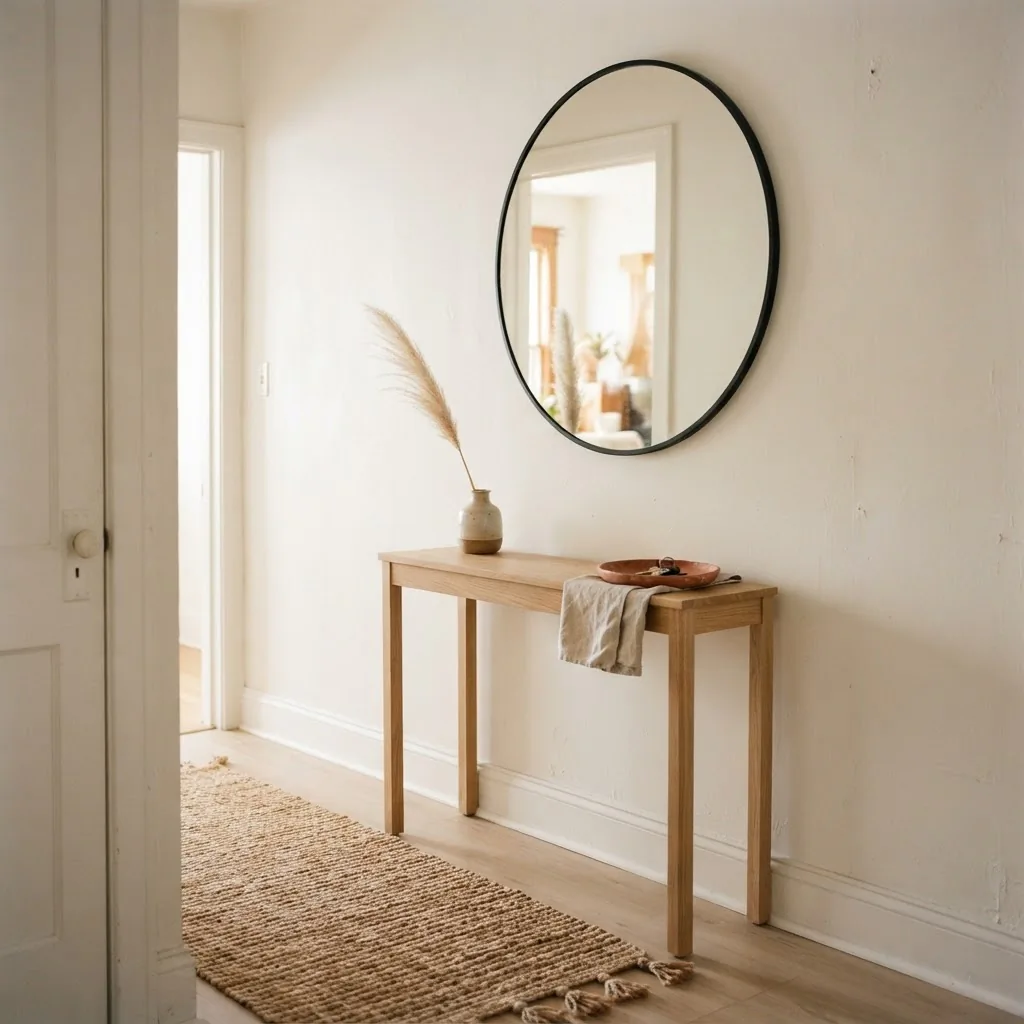
One thing to be mindful of: feng shui practitioners and many interior designers advise against hanging a mirror directly across from the front door, as it can feel visually jarring to walk in and immediately see your own reflection, and according to MyDomaine’s feng shui mirror guide, many experts suggest a perpendicular wall placement instead, like above a console table on the side wall. That placement is also just more comfortable to live with.
Bedroom
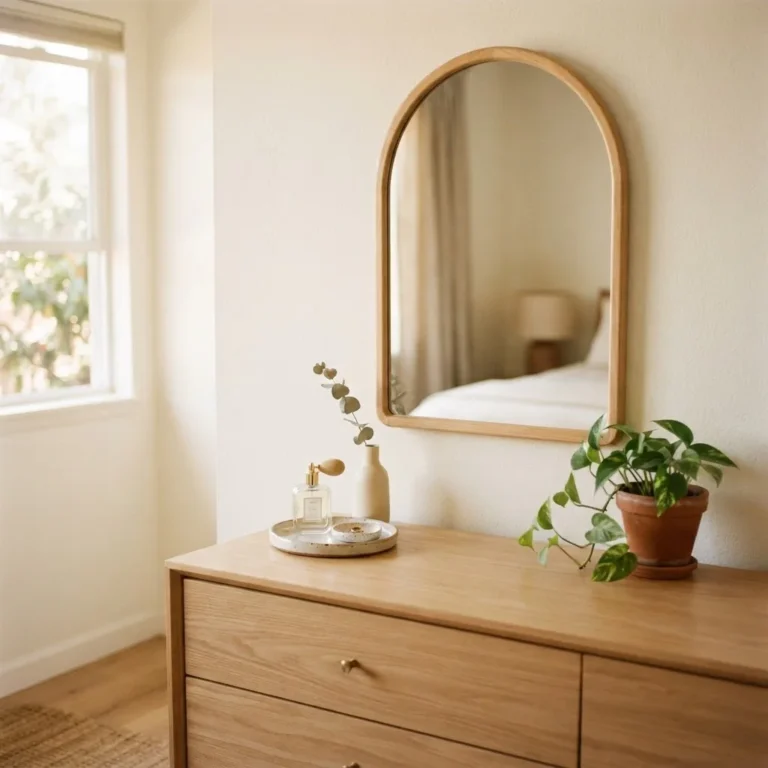
Above a dresser is the most functional bedroom placement: the mirror serves a practical purpose every morning and visually fills what is often the largest bare wall in a bedroom. Use the two-thirds rule for sizing relative to the dresser width.
One thing I would honestly steer you away from: a mirror positioned directly facing your bed from across the room. It can make sleep feel unsettling for some people, and in smaller bedrooms it just creates an odd visual dynamic every time you wake up. On a side wall, or inside a closet door, works much more peacefully.
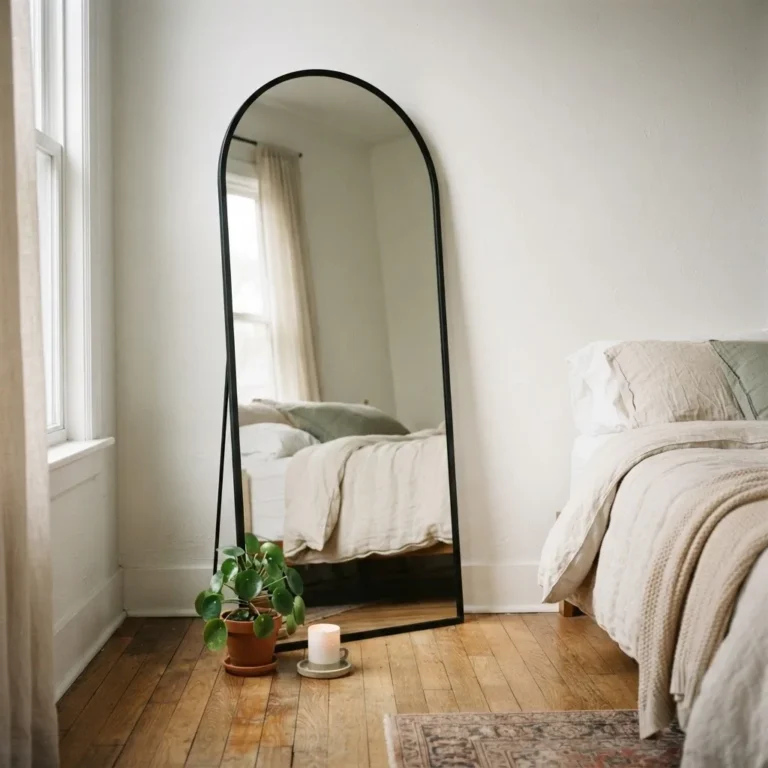
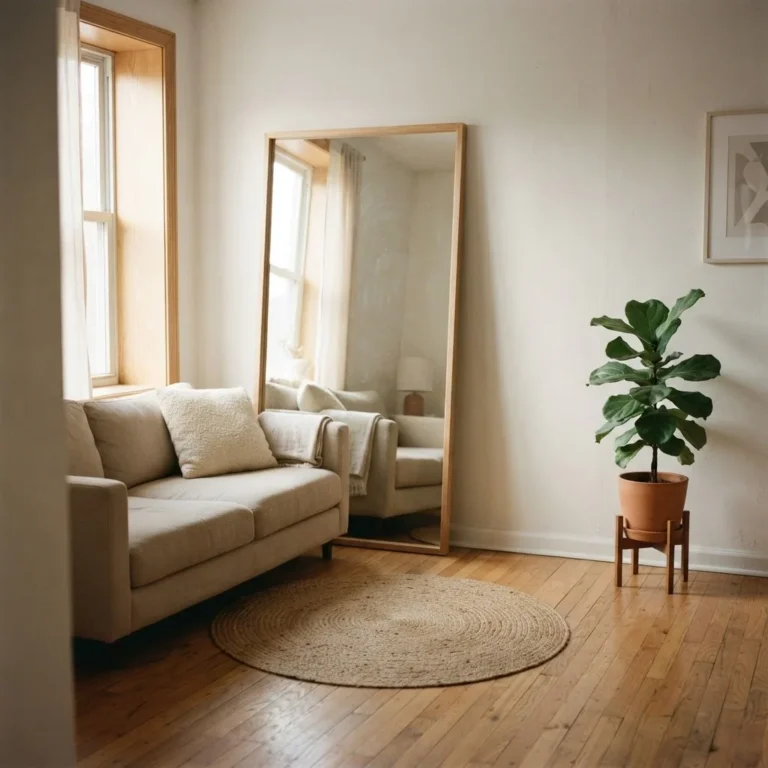
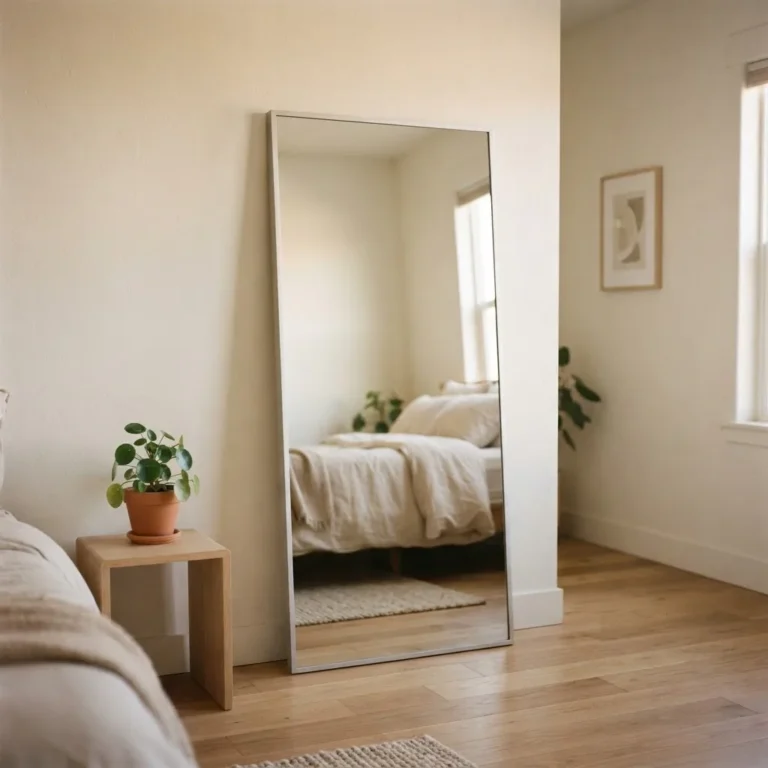
Leaning a large mirror against the wall next to a dresser or in a corner is also worth considering as a no-nail option. A leaned mirror looks completely intentional when it is large enough (at least 48 inches tall) and has a strong frame. It is one of the most deposit-friendly options available.
Dining Room
Feng shui has long considered the dining room the ideal room for mirrors, and practically speaking, the logic holds: a mirror on a dining room wall reflects the table, the people, the candlelight, and makes the whole room feel more full and festive. A statement mirror with some ornate or decorative quality, something with visual weight, tends to work better here than a minimal or purely modern piece. This is the room where a little drama is welcome.
Above the Fireplace Mantel
A mirror above a mantel is one of the oldest placements in home decor for good reason. It fills the vertical space above the mantel beautifully and reflects the room back on itself. The rule of thumb most designers follow: position the bottom edge of the mirror 4 to 6 inches above the mantel shelf, and choose a mirror that is roughly two-thirds the width of the mantel surface. The Spruce’s fireplace mirror design guide notes that round mirrors tend to soften a clean-lined modern fireplace beautifully, while a large rectangular mirror suits a more traditional surround. A sunburst mirror above a simple painted mantel is a particularly strong combination: the graphic rays fill the wall space well and add warmth without needing any additional mantel decor to complete it.
The Styling Secret Nobody Talks About: What the Mirror Reflects
Hanging the mirror is only the first half of the job. The second half, the part most styling guides completely skip over, is thinking about what the mirror is going to reflect.
A mirror reflects whatever is across from it. If that is a blank white wall, the mirror just shows you a blank white wall, which is kind of a missed opportunity. If it reflects a window, you get extra light and maybe a view. If it reflects a nicely styled shelf, a piece of art, or a plant arrangement, the mirror essentially doubles those beautiful things visually.
This is why placement matters beyond just the furniture it sits above. Before you commit to a spot, hold the mirror up and look at what you see in the glass from where you would normally sit or stand. If you see your laundry pile, your cluttered kitchen counter, or just a bare wall, consider shifting the mirror’s position or cleaning up what is across from it. Point the mirror toward whatever is most beautiful in the room.
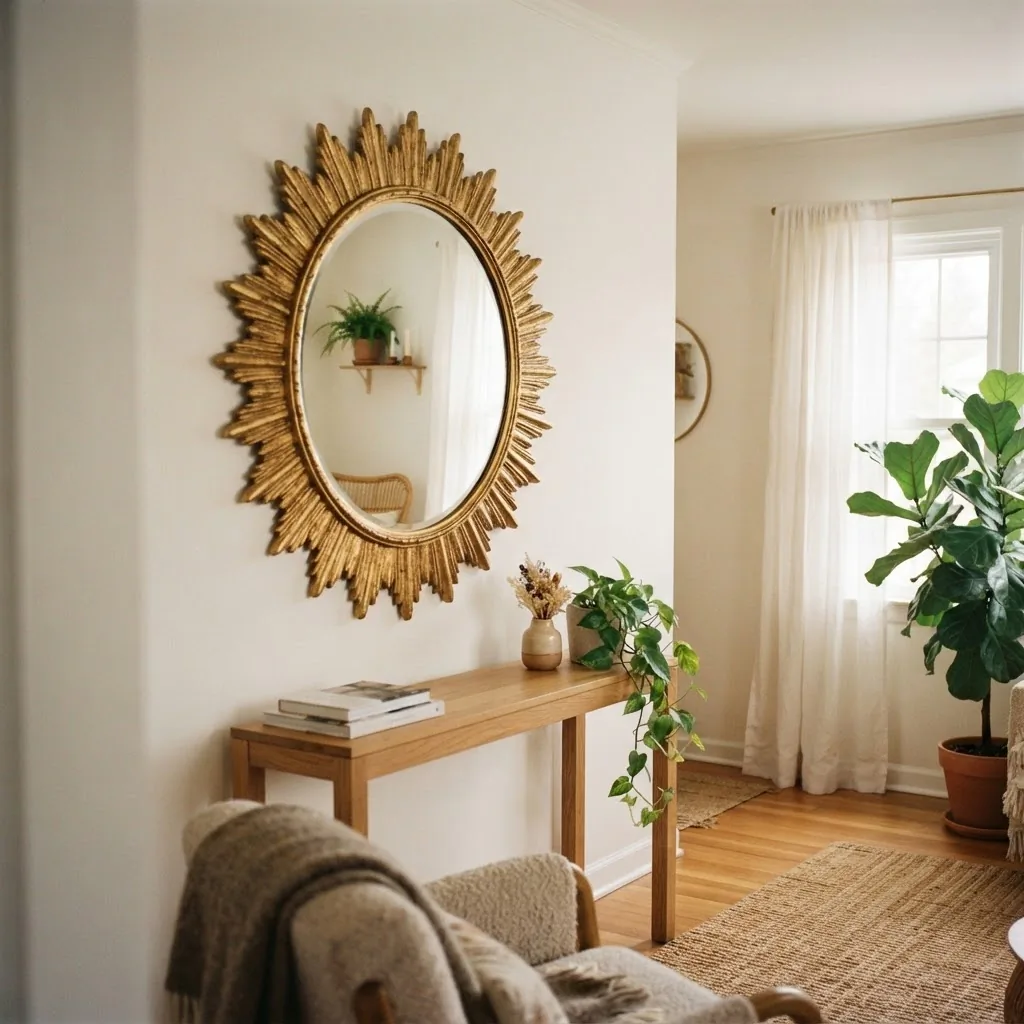
For entryways and small spaces, even pointing the mirror toward a window in another room or down a hallway with natural light creates a depth and brightness that makes the whole apartment feel bigger.
Building a Mirror Gallery Wall on a Budget
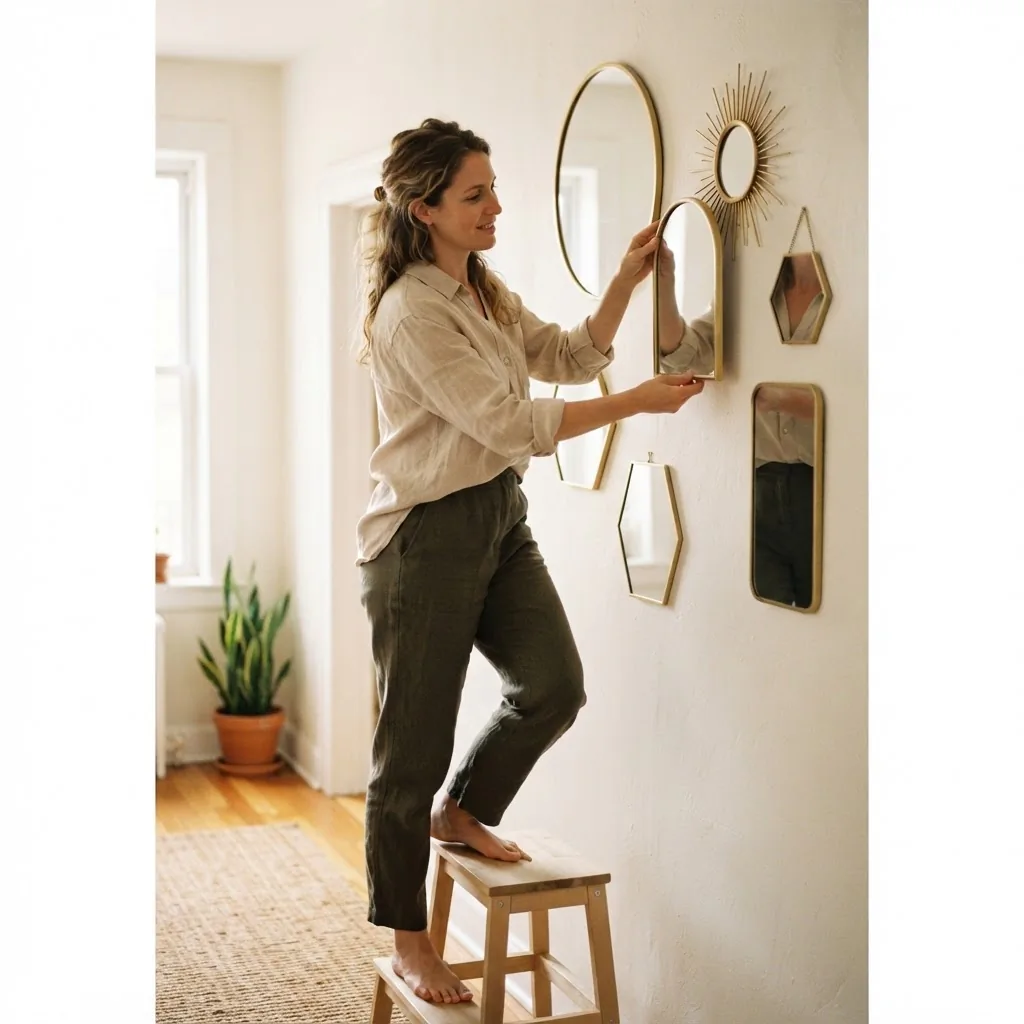
You do not need a single expensive statement piece to make a dramatic wall. A grouping of smaller mirrors in varied shapes can create just as much visual impact for much less money.
The key to making a mirror gallery wall look intentional rather than accidental is to establish one unifying element before you mix. That element can be finish (all gold, all black, all natural wood), shape family (all round or all geometric), or era (all vintage-looking or all modern). Mix everything else: sizes, frame styles, proportions. That one consistent thread is what keeps a grouping from feeling chaotic.
Before hanging anything, lay all the mirrors on the floor and arrange them until the composition feels balanced. The largest piece should anchor the center or slightly off-center. Leave 2 to 3 inches of breathing room between each mirror.
For renters, Apartment Therapy’s guide on budget decorative mirrors also points out that local glass shops and commercial mirror suppliers are often an overlooked source for large, inexpensive mirror panels. If you are planning a gallery wall or a large leaner, it is worth calling a local glass shop before heading to a big-box retailer.
Thrift stores are genuinely one of the best sources for interesting statement mirrors, especially for gallery walls. The frames are often more ornate and unique than what you find new, and a can of spray paint in a consistent finish color pulls mismatched thrifted mirrors together into a cohesive grouping for under $15.
Hanging a Mirror Without Touching Your Deposit
This is the question I get most from renters, and it deserves a straightforward honest answer rather than just “use Command strips.”
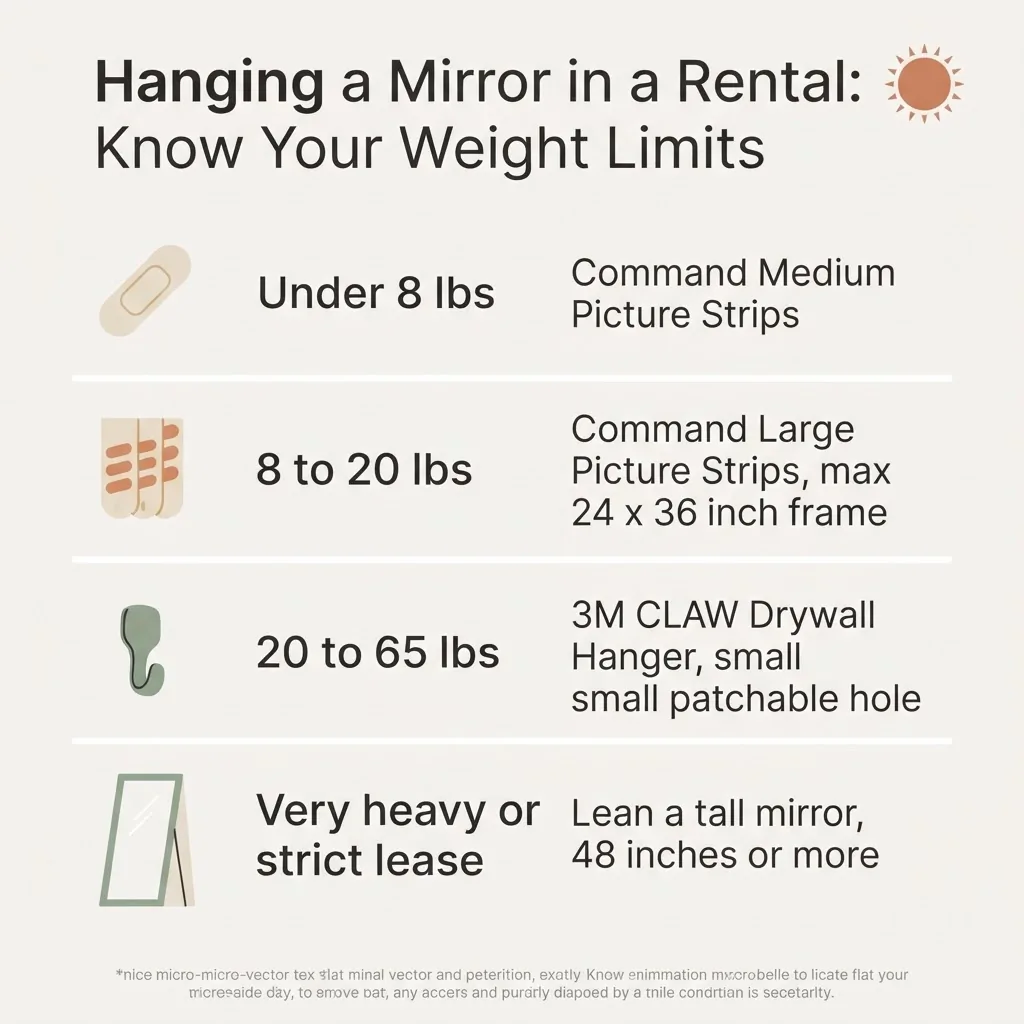
Command strips work for lighter mirrors. The large picture hanging strips from Command hold up to 20 lbs and mirrors up to 24 by 36 inches. That covers a solid range of mid-size mirrors. However, anything heavier than about 20 lbs or larger in surface area than that will need a different solution.
For heavier statement mirrors, the tool I recommend is the 3M CLAW Drywall Picture Hanger, which holds up to 65 lbs with no tools, no studs required, and leaves only a very small pinhole that is easily patched with a touch of spackling before you move out. That is meaningfully different from a large nail or drywall anchor hole.
The CLAW pushes directly into drywall at an angle using the hardened steel claws, then releases cleanly when you are ready to remove it. It is genuinely deposit-friendly for most mirrors up to substantial size and weight.
For mirrors you absolutely cannot hang at all (extremely heavy, very large, very strict landlord), a leaning mirror is the no-nail answer. The key to making it look styled rather than lazy is size: it needs to be tall (at least 48 to 60 inches), have a strong frame, and be leaned against a wall where it is clearly a deliberate design choice, ideally next to a piece of furniture so it feels grounded.
A quick hanging guide by mirror weight:
- Under 8 lbs: medium Command Picture Hanging Strips
- 8 to 20 lbs: large Command Picture Hanging Strips (up to 20 lbs, max 24″x36″ frame)
- 20 to 65 lbs: 3M CLAW Drywall Picture Hanger (minimal, patchable hole)
- Very heavy or strict lease: lean against wall, or place on a leaning shelf/ladder shelf
Honest Worth-It vs. Skip-It Notes on Mirror Price Tiers
I want to be straightforward here, because I have seen people spend money in the wrong direction on mirrors and also people skip buying a beautiful piece because they did not realize how far a small budget could go.
$30 to $70 (small sunburst, 18 to 23 inches): Great for a powder room, a gallery wall accent, above a nightstand, or inside a bookshelf. Do not expect this size to make a living room statement on its own. Buy the right size for the spot, and this tier delivers.
$80 to $150 (mid-range, 28 to 36 inches): This is where most renters get the best value. There are genuinely good-looking sunburst, arched, and round mirrors in this range from Target, Amazon, and Wayfair that look far more expensive than they are when hung correctly and styled well.
$150 to $350 (large, 36 to 48 inches): You start getting into pieces that can stand alone as a room’s main focal point. Quality and material variation improve meaningfully here.
$350 and up: Designer, handcrafted, or large custom pieces. Worth it if the piece is truly exceptional and you know you will bring it to future homes. Not worth it if you are unsure about the style or placement.
The honest thrift opportunity: I would always check thrift stores and Facebook Marketplace before buying a large mirror new. Large mirrors are heavy to ship and awkward to move, so people offload genuinely beautiful pieces for very little. A great frame refreshed with a coat of spray paint can look like a $400 mirror. That is one of the best returns in all of budget decorating.
Five Common Statement Mirror Mistakes (And the Easy Fix)
1. Going too small. The room tells you something is off but you cannot figure out what. Nine times out of ten it is an undersized mirror floating in too much wall space. Fix: size up, or add a second mirror nearby to create a grouping.
2. Hanging it too high. Mirrors that drift up near the ceiling feel disconnected from everything below them. Fix: center at 57 to 60 inches from the floor, or hang 8 to 10 inches above the furniture beneath it.
3. Reflecting clutter. The mirror doubles whatever is across from it. Fix: check the reflection before committing to the spot and adjust the placement or the room opposite.
4. Matching instead of contrasting. A round mirror above a round table, a rectangular mirror above a rectangular dresser. This can feel flat. Fix: contrast shapes. Round above rectangular reads as much more interesting.
5. Buying without measuring. An extremely common one. Fix: tape the shape and size of the mirror on the wall with painter’s tape before buying anything. Live with it for a day. You will immediately know if it is right.
A Final Note on Making It Feel Like Yours
Statement mirror decor is one of those areas where there genuinely are no wrong answers if you follow a few basic size and placement rules. The rest is personal. A spiky gold sunburst that feels too loud for one person feels like exactly the right amount of personality for someone else.
What I would encourage you to do is trust the room over the trend. Think about the light, the wall, the piece of furniture underneath it, and what you want to see reflected back at you. A mirror that is the right size for its wall, hung at the right height, reflecting something beautiful across the room: that is a statement mirror doing exactly what it should.
You do not need a designer’s budget or a homeowner’s walls to get there. You just need a little patience, a tape measure, and maybe a can of spray paint for that thrifted find.