Arched Mirror Decor: Room-by-Room Ideas That Actually Work

There is a reason arched mirrors have quietly taken over every corner of Pinterest and stayed there. The arch is one of those shapes that feels both modern and ancient at the same time, soft enough to add warmth, structured enough to feel intentional. A good arched mirror does something most decor pieces cannot: it makes a room look taller, brighter, and more finished all at once, and it costs a fraction of what a renovation would.
But here is the part most styling roundups skip over: an arched mirror in the wrong spot, or the wrong size, or hung at the wrong height, will actually make your room look worse. I have seen it happen, and I have made those mistakes myself. This guide is a room-by-room walkthrough of what genuinely works, what to avoid, and how to make it happen on a real budget whether you rent or own.
First: A Few Things Worth Knowing Before You Buy
How to pick the right size (the two-thirds rule and when to ignore it)
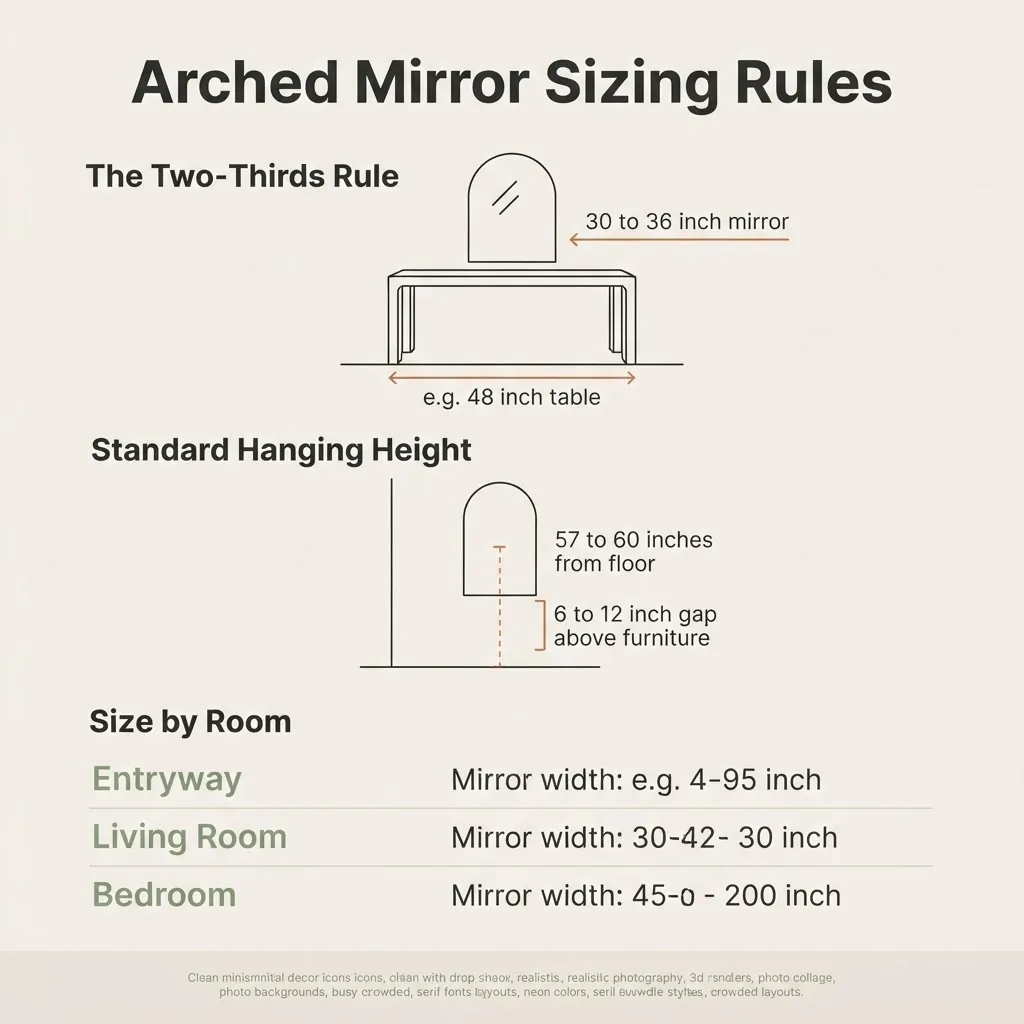
The most common sizing mistake is buying a mirror that is too small. A small mirror on a large wall does not look minimalist. It looks like an afterthought. The general rule designers use is the two-thirds rule: a mirror hung above a piece of furniture should be roughly two-thirds the width of that furniture. So if your console table is 48 inches wide, you want a mirror somewhere around 30 to 36 inches wide. If your dresser is 36 inches wide, aim for roughly 24 inches wide minimum.
For arched mirrors specifically, height matters as much as width because the arch adds vertical presence. A mirror that is 24 inches wide and 48 inches tall will feel very different on a wall than a mirror that is 24 inches wide and 32 inches tall. When in doubt, go taller rather than wider if your wall can take it, especially in small rooms where vertical height draws the eye up and makes ceilings feel higher.
Common sizes on the market right now range from small tabletop mirrors around 12 to 18 inches wide up to full-length floor mirrors in the 47 by 72 inch range. For most wall placements, the sweet spot is 24 to 36 inches wide. If you are buying a full-length leaning mirror, anything under 47 inches wide will start to look proportionally narrow once it is leaning against a wall.
What to expect at different price points
Budget arched mirrors in the $30 to $80 range exist and some are genuinely great finds, particularly at stores like IKEA, Target, and HomeGoods. At this price point you are typically getting a thinner frame, often in a powder-coated metal finish, and lighter glass. That is fine for smaller mirrors. For anything over 40 inches tall or over 15 pounds, I would move up to the $80 to $200 range where the frame construction is more solid and the mirror glass is thicker.
Above $200 you start getting into hand-finished frames, real wood, and better-quality glass with a truer reflection. If you are putting a mirror somewhere prominent, like a full entryway statement or a large living room wall, that range is worth considering. But I have seen $60 finds from HomeGoods look just as good as $300 mirrors when they are styled well, so do not let price alone be the deciding factor.
Frame finish and what style it suits
Gold and warm brass frames suit boho, earthy, cottagecore, and traditional rooms. Matte black frames are the most versatile and feel at home in minimalist, modern, industrial, and modern farmhouse spaces. Natural wood frames (especially light oak or bamboo) lean Scandinavian, coastal, or calm-and-simple. Rattan or woven frames read as bohemian or organic and they pair beautifully with linen, terracotta, and plants. White frames are underrated for small spaces because they recede against light walls and feel airy rather than heavy.
The Entryway: The Best Room for an Arched Mirror
If you only add one arched mirror to your home, put it in the entryway. This is where the shape earns its place most naturally because it echoes the visual vocabulary of doorways, gives the first impression of a thoughtful home, and solves a real practical problem: most entryways are dim, cramped, and forgettable.
Over a console table
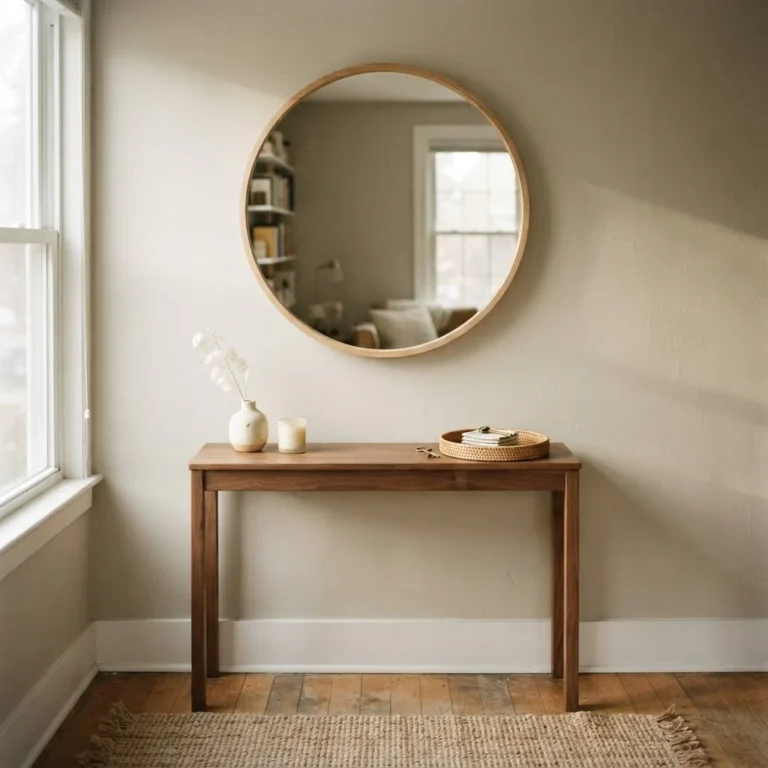
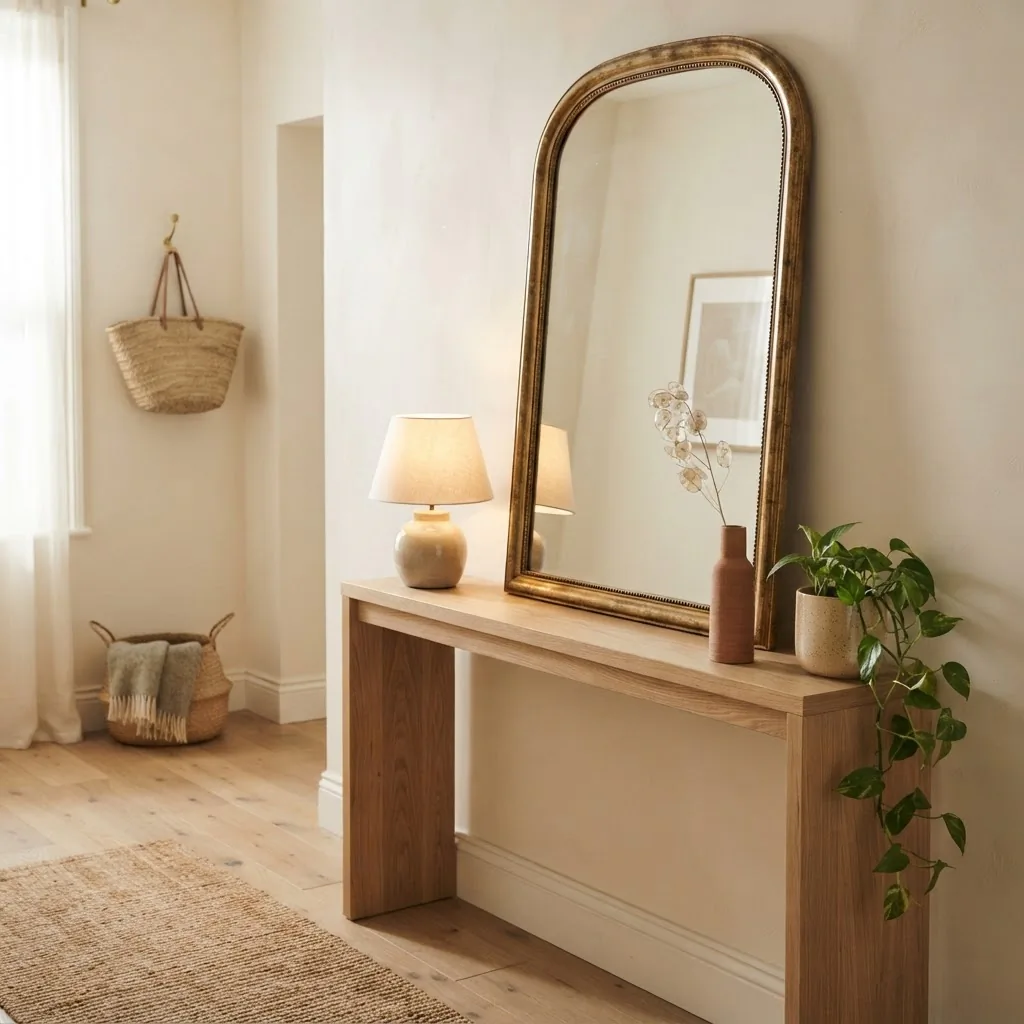
The classic setup is an arched mirror centered above a console or entryway table. Center the mirror over the furniture, leave a gap of 6 to 12 inches between the top of the table and the bottom of the mirror, and aim to hang the center of the mirror at roughly 57 to 60 inches from the floor. That standard hanging height works for most adults and keeps the mirror in a comfortable visual zone. The expert guide on hanging entryway mirrors from HTGT Furniture breaks this down clearly if you want to get precise with your measurements.
On the table below the mirror, keep it simple. A small lamp or a candle for light, one or two objects of different heights (a small vase and a book, or a plant and a tray), and something functional like a small bowl for keys. The mirror should be the star. The table is just a supporting actor.
No console? Lean it.
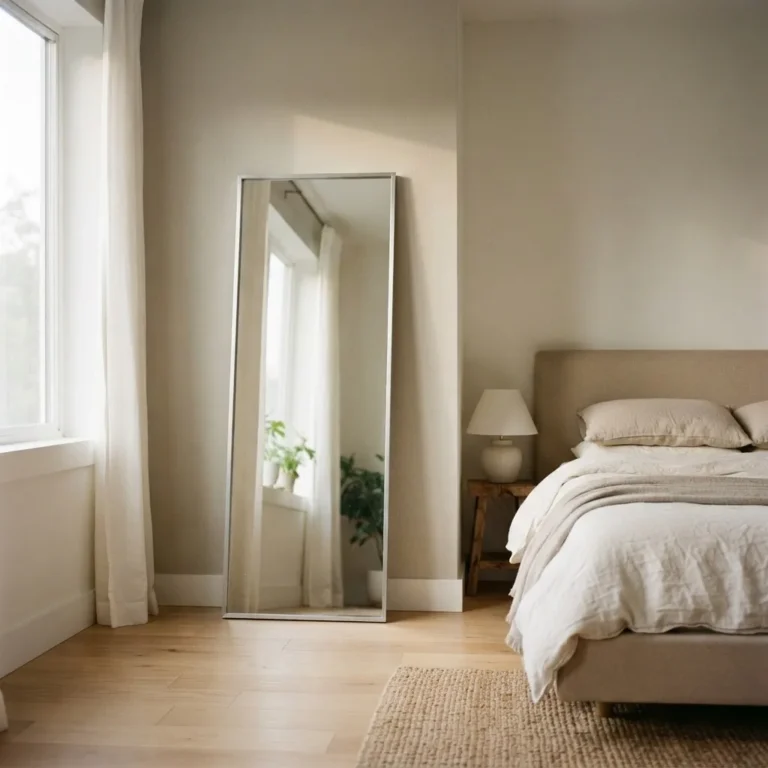
If your entryway has no room for a table, a tall leaning arched mirror propped against the wall is both a practical and genuinely stylish solution. A full-length mirror leaning in a narrow entryway visually doubles the perceived depth of the space, bounces light toward the door, and requires zero wall damage. You can lean it, love it, and take it with you when you move.
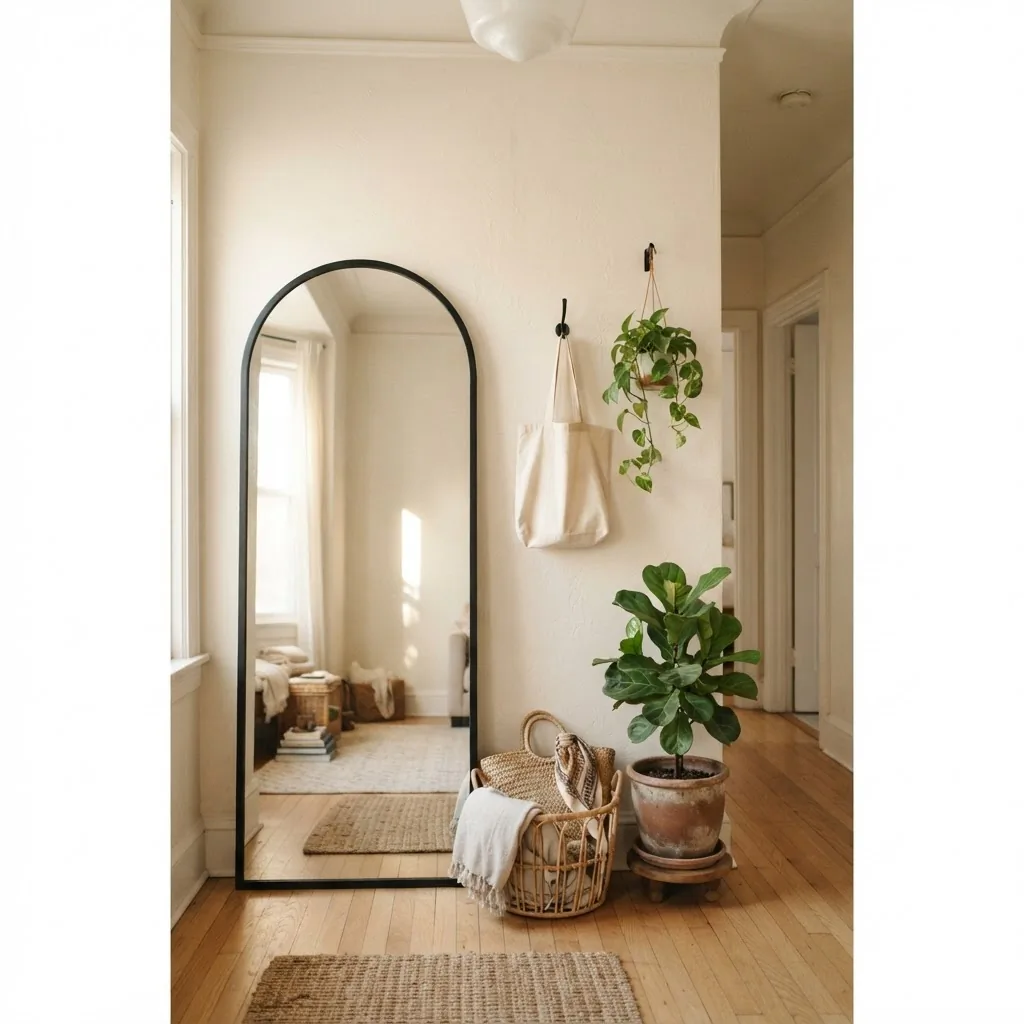
The one thing I want to be honest about: leaning mirrors can tip. If you have children or pets, anchor the top of the mirror to the wall with an anti-tip strap or a small picture hook and wire as a safety tether. The CPSC’s Anchor It! campaign exists specifically because tip-over accidents with furniture and large objects are more dangerous than most people realize. A single small hole for a safety anchor is worth it, and most landlords consider that a reasonable repair.
In a narrow hallway
For a hallway that feels like a corridor, an arched mirror positioned to reflect either a light source (a lamp, a window at the end of the hall) or an open doorway does something almost magical. It stops the hallway from feeling like a tunnel and gives the eye a place to land. In this setting, a slimmer frame works better than a wide one so it does not eat into the walkway visually.
The Living Room: Focal Point, Not Decoration
In a living room, an arched mirror should function as a genuine focal point, not just wall filler. The difference is intention. A mirror hung randomly on a blank wall is decoration. A mirror placed to reflect light, balance a seating area, or echo an architectural shape in the room is a focal point.
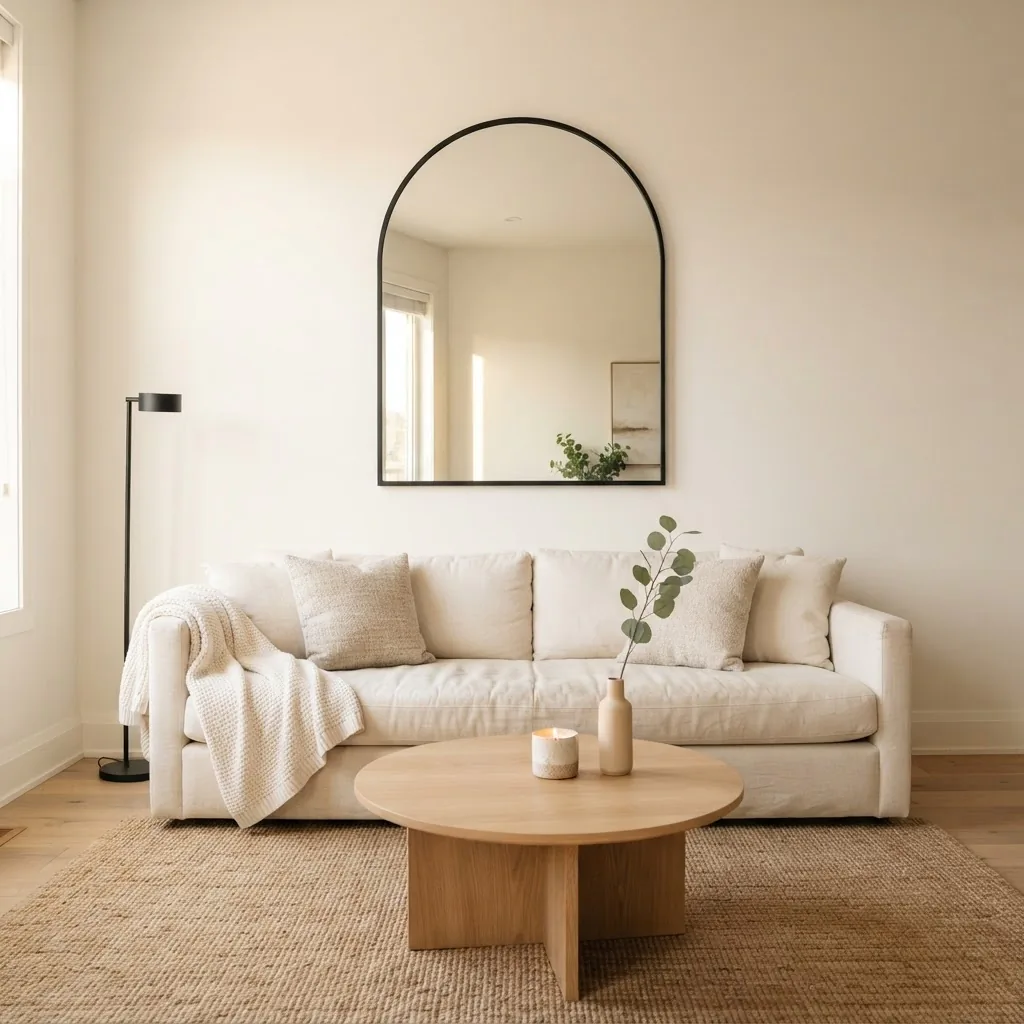
That is the version that makes guests stop and notice.
Above the sofa
The placement most people picture is a large arched mirror hung above the sofa. It works beautifully when the proportions are right. Use the two-thirds rule: if your sofa is 84 inches wide, you want a mirror in the 48 to 56 inch wide range. Too narrow and it will look timid. Hang the bottom of the mirror roughly 8 to 10 inches above the top of the sofa back so no one bumps their head and there is a clear visual relationship between the two pieces.
One important caveat: think about what the mirror will reflect. An arched mirror above a sofa that reflects a cluttered kitchen island or a messy corner of the room is going to make your living room look worse, not better. Before you commit to a spot, hold the mirror up and look at what is behind you. Mirrors amplify what they see.
On the mantel or fireplace wall
Resting an arched mirror on a mantel is one of the easiest, damage-free, renter-friendly styling moves you can make. No hanging required, no hardware decisions. Just prop it up, style the mantel around it with candles, a plant, and maybe a small stack of books, and you have a focal wall. The arch repeats the visual curve of a fireplace opening beautifully, which is part of why this combination has been popular for so long.
Between windows or in a dark corner
One of the smartest light tricks I know is placing a mirror so that it reflects a window rather than sitting next to it. When an arched mirror is positioned on the wall opposite or at a 90-degree angle to a window, it bounces natural light into the darkest parts of the room. Apartment Therapy’s mirror decor guide shows this technique clearly, including a case where a narrow arched mirror was placed between two small windows to triple the apparent amount of light in the space without adding a single lamp.
The Bedroom: Calm, Functional, and Personal
The bedroom is where arched mirrors often overthink their way into the wrong spots. There is a simple rule here: do not hang a mirror directly facing the bed. It interrupts sleep for some people and feels uncomfortable for most. The better placements are on a wall perpendicular to the bed, above the dresser, or leaning near the wardrobe.
Above the dresser
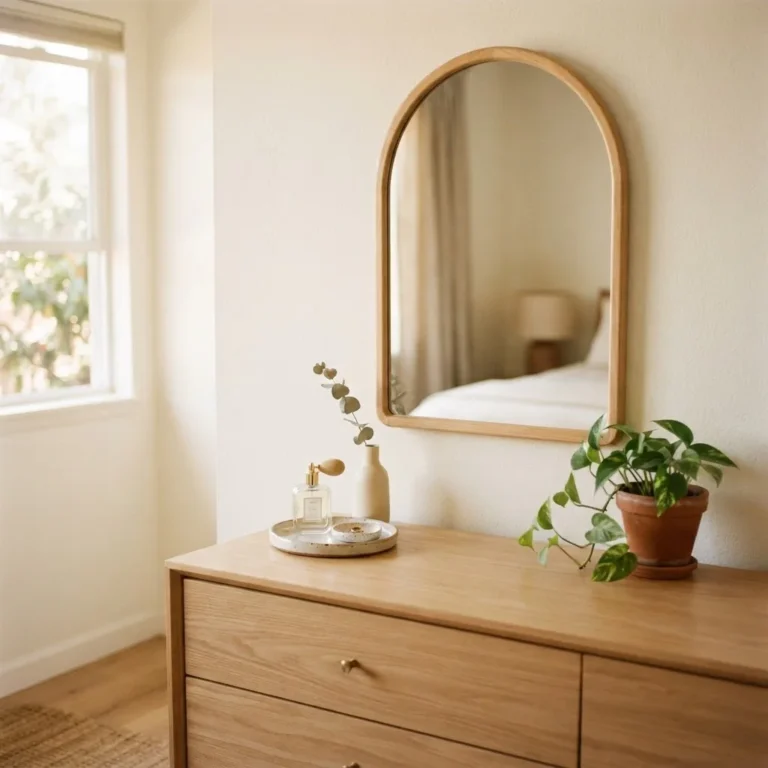
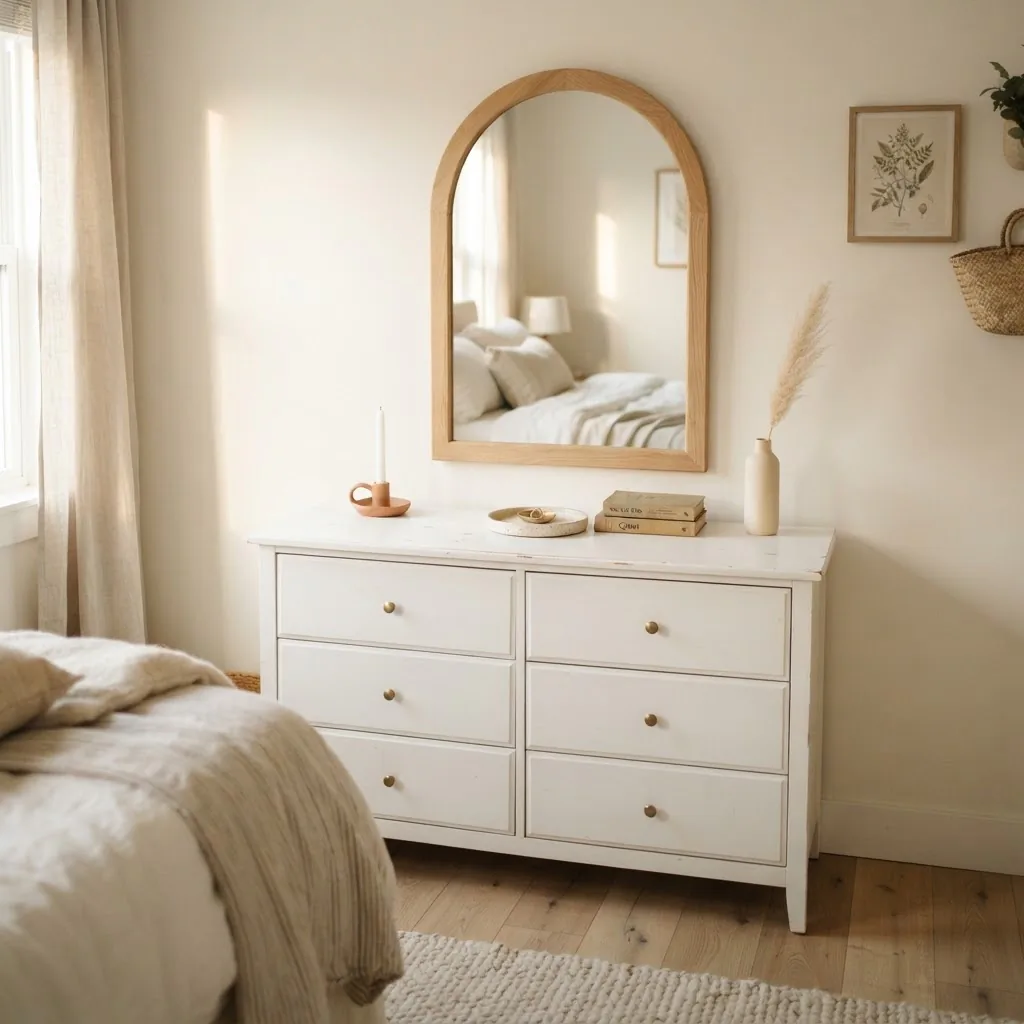
This is the most practical bedroom placement and one of the most commonly searched. An arched mirror above a dresser creates a natural dressing area, and it gives the dresser itself a reason to be styled. The mirror’s height makes the dresser feel more important and pulls the eye up, which is especially helpful in rooms with low ceilings.
Size guidance here: the mirror should be no wider than the dresser and ideally around two-thirds its width, as with any furniture pairing. If your dresser is 48 inches wide, a mirror in the 28 to 36 inch range will feel balanced. Go too narrow and it will look like a mistake. Go wider than the dresser and it will look like the furniture does not belong together.
On the dresser surface below the mirror, keep the styling intentional. A small tray to corral jewelry or perfume, one candle or a small plant, and a lamp if the overhead lighting is harsh. The dresser-and-mirror combination is a built-in vignette, so treat it like one.
Leaning beside the wardrobe or closet
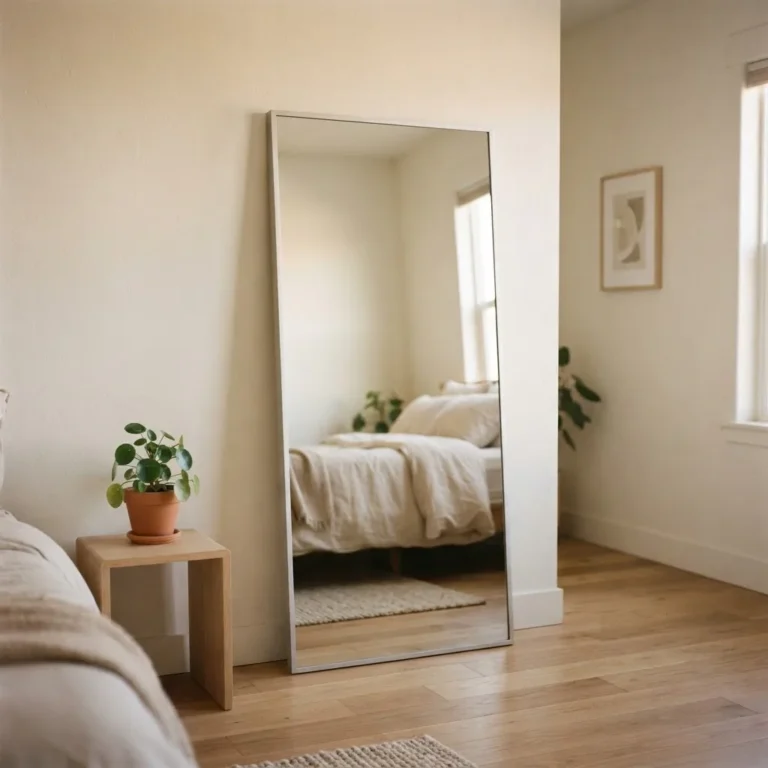
A full-length arched floor mirror leaning beside a wardrobe or closet door is functional, beautiful, and completely damage-free. This is one of my favorite recommendations for renters because it does everything a hanging mirror does, it just sits on the floor. Style the area around it with a small plant, a basket, or a textured throw draped over a nearby chair and it feels intentional rather than temporary.
The DIY headboard alternative
Here is an idea worth borrowing from Apartment Therapy: two matching arched mirrors hung side by side above the bed create a striking, one-of-a-kind alternative to a traditional headboard. It works best with smaller arched mirrors, roughly 18 to 24 inches wide each, hung close together so they read as a pair. Layer in plenty of throw pillows so the sleeping surface still feels soft and cozy. This is especially clever in a small room where a bulky upholstered headboard would feel overwhelming.
The Bathroom: Beyond the Standard Vanity
Arched mirrors are one of the biggest upgrades you can make to a rental bathroom, because the standard flat rectangular mirror that comes with most apartments or rental homes is almost always boring. Swapping it out, if your lease allows, or simply adding a second decorative arched mirror elsewhere in the bathroom, changes the entire feel of the space.
As a vanity replacement
Replacing a builder-grade rectangular bathroom mirror with an arched mirror of similar width is a genuinely impactful upgrade. Typical bathroom vanity mirrors run 24 to 48 inches wide depending on the vanity, and arched bathroom mirrors are widely available in that range. If you go this route in a rental, save the original mirror and reinstall it when you leave. Most swap-out mirrors are simple and reversible.
One note on material: bathrooms are humid, and moisture is rough on certain frame materials. Solid wood frames without a good sealer can warp over time. Metal frames (powder-coated or brass-finished) and composite wood frames hold up much better in steamy spaces. Look for a frame described as moisture-resistant if you are using it directly over the sink.
As a styling accent in a small bathroom
If you are not replacing the main vanity mirror, a smaller decorative arched mirror added to a blank bathroom wall, particularly opposite a window or the vanity light, bounces light and adds depth to a small space. This works especially well in windowless bathrooms, where any light-reflecting surface feels like a small victory.
The Dining Room and Beyond: Less Obvious Places That Work
The dining room is an underrated spot for an arched mirror. A medium to large arched mirror hung above a sideboard or credenza in a dining room creates the same effect as a console setup in the entryway, but in a warmer, more social context. Position it so it reflects the dining table or the overhead pendant light. That reflected glow of candlelight or a warm pendant is one of the coziest things you can add to a dining space.
For very small apartments and studios, do not overlook blank hallway walls, the wall behind a reading chair, or the space above a low bookshelf. Any spot where you need more light, more depth, or a visual destination for the eye is a candidate for an arched mirror.
Hanging an Arched Mirror Without Destroying Your Walls
This is the section most styling guides skip, and for renters it is the most important part of the whole conversation.
For lighter arched mirrors under 20 pounds, Command Picture Hanging Strips can do the job cleanly without a single nail hole. They hold up to 20 pounds on mirrors up to 24 by 36 inches, which covers a large portion of the smaller arched mirrors on the market.
For heavier mirrors, the 3M CLAW Drywall Picture Hanger is a significantly better option than standard drywall anchors. The 3M product page for heavy mirror and frame hanging confirms that the CLAW hangers hold up to 65 pounds with no tools and no studs required, and they leave only a tiny hole behind, not the large damage of a traditional anchor. For most arched mirrors in the 15 to 40 pound range, this is the sweet spot for renters who need a secure hang without major wall damage.
For very large or very heavy mirrors, the safest approach is finding a stud. The Home Depot guide on hanging heavy mirrors walks through the stud-finding and hardware process step by step. When you move out, a properly patched stud hole is easy to fill with a bit of spackling compound and a touch of matching paint, and most landlords consider standard picture hanging fair wear and tear.
The two things renters most often get wrong with heavy mirrors: using Command strips on a mirror that is too heavy, and skipping the level.
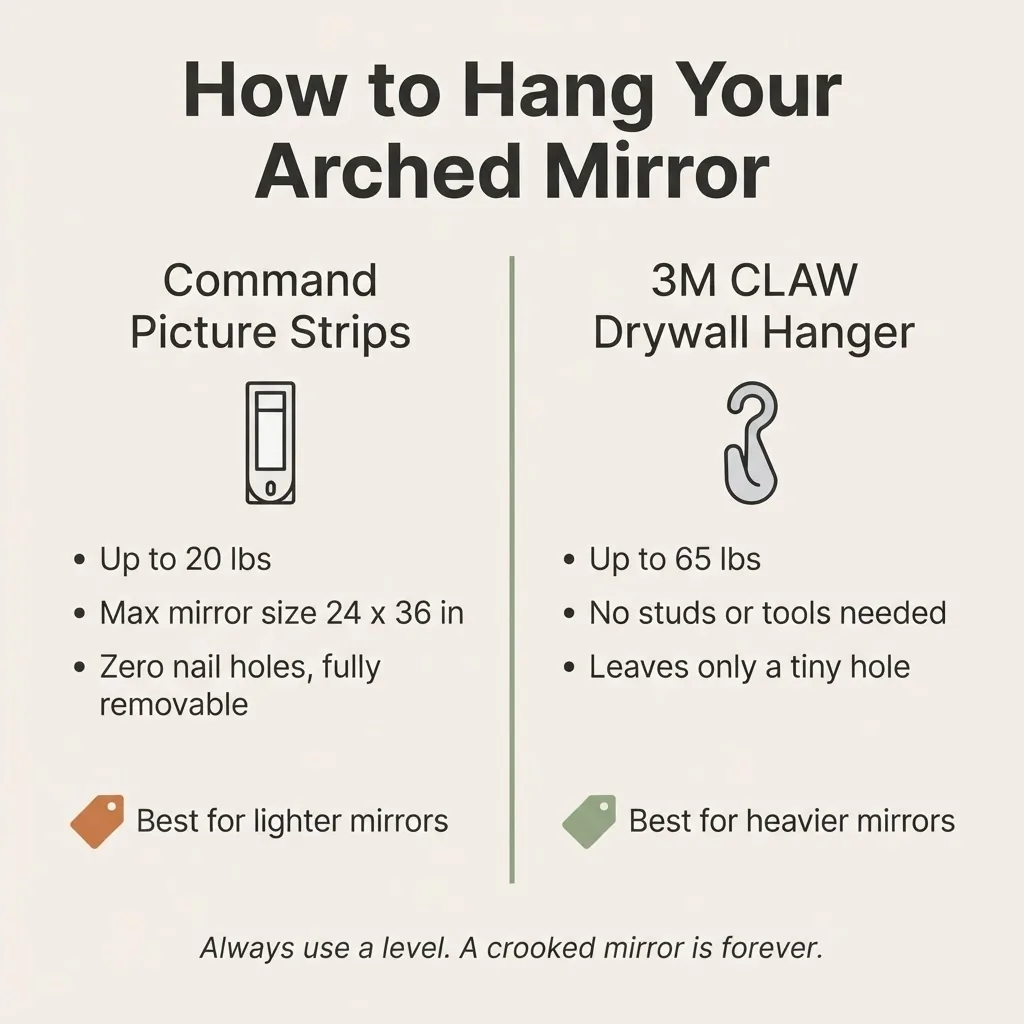
A slightly crooked mirror is one of those things that bugs you forever once you notice it. Use a level, or at minimum a free bubble-level app on your phone. It takes 30 seconds and it makes an enormous difference.
One more thing. If you are leaning a large mirror anywhere in a home with children or pets, please read the CPSC’s guidance and consider a simple anti-tip strap. A 60-pound mirror falling is genuinely dangerous. The small effort of securing it is one hundred percent worth it.
What to Put Around an Arched Mirror (and What to Skip)
The accessories and styling around the mirror matter almost as much as the mirror itself.
Things that work: a lamp or candle at the base creates soft light that reflects beautifully. A small plant adds organic texture and softens the hard geometry of the frame. A vase with a single stem or a small bundle of dried grass or pampas reads as calm and curated. A tray or small bowl grounds the surface and keeps it from looking cluttered. Books with nice spines add warmth and color.
Things to skip: too many small objects at different heights create visual noise that the mirror then reflects back at twice the volume. Matching, identical accessories on both sides of a mirror can look good in theory but often feels stiff and staged in practice. And please resist the urge to put a very large mirror on a wall that reflects a messy area of the room. The mirror will faithfully show every bit of that mess to everyone in the space.
The general principle is the same one I come back to for every styling decision: less stuff, better placed, looks more expensive and more intentional than more stuff, loosely arranged.
A Note on Style Pairings
If you are trying to match an arched mirror to your existing decor, here is a quick honest guide.
For boho or earthy spaces, a rattan frame, a natural wood frame, or a thin brass frame works. Pair with woven baskets, dried grasses, and terracotta tones. For minimalist rooms, matte black or simple natural wood with clean lines is the move. The mirror should feel like it disappears slightly into the calm. For coastal spaces, white frames, driftwood-finish frames, or simple thin metal in chrome or brushed nickel complement the light palette. For cottagecore, ornate gold frames, vintage-looking beveled mirrors, or antique-finish options suit the layered, slightly nostalgic aesthetic. For modern farmhouse, black metal frames with a simple arch are the most natural fit, especially alongside shiplap-look walls or warm wood tones.
The unifying idea, regardless of style, is that the frame should feel like it belongs to the same conversation as the furniture and textiles in the room. A heavily ornate gold mirror in a spare minimalist room will always look like a styling accident. A simple frame in a boho room will look anonymous. Match the energy of the frame to the energy of the space.