21 Full-Length Mirror Ideas for Small Bedrooms on a Budget

There is a particular kind of frustration that comes with a small bedroom. You see a beautiful leaning mirror on Pinterest, propped effortlessly against a clean white wall with a little plant beside it and soft light coming in from the side. Then you look at your actual room and see a twin bed, a dresser that takes up most of the available floor space, maybe a door that swings into the middle of everything, and exactly zero obvious walls to put a mirror against.
I have been in that situation more times than I can count, decorating rentals where I couldn’t touch the walls and the room layouts made no geometric sense. What I eventually figured out is that the problem is almost never a lack of space. It’s a lack of information about where mirrors actually go in a small room and what they actually do. Once you understand a few basic principles, the options open up considerably.
This is a practical guide. We are going to cover 21 real ideas, placement logic that actually works in tight rooms, honest notes on sizing, and how to make it work whether you rent, own, or are decorating your first apartment with a $60 budget and a landlord who will absolutely notice nail holes.
Why a Full-Length Mirror Is One of the Best Investments for a Small Bedroom
Before we get into the ideas themselves, let’s briefly talk about why this item earns its square footage in a small room.
A full-length mirror does three things at once that almost nothing else in a small bedroom can do. It gives you a functional place to check your whole outfit, which sounds basic but matters every single morning. It reflects light, which makes a dark or shadowy room feel noticeably brighter without you changing a single bulb. And it creates visual depth, which is design-speak for “it makes the room look bigger than it is.”
The reason mirrors create that sense of space is simple physics. When light hits a mirror, it bounces back into the room, effectively doubling whatever is in front of it. According to Apartment Therapy’s roundup of expert mirror placement advice, a single large mirror is consistently more effective at making a room feel bigger than a grouping of smaller mirrors. The key word is large, and a full-length mirror qualifies.
The sizing sweet spot for most bedrooms is somewhere in the range of 60 to 65 inches tall, which is tall enough to show your full body and substantial enough to do real work in the room. Most standard retail sizes run from 48 to 72 inches tall and 16 to 30 inches wide, with 16 to 20 inches being ideal if your space is genuinely tight. If you want reliable dimension guidance before you shop, this full breakdown of standard full-length mirror sizing is worth a quick read.
The Placement Logic That Changes Everything
Most people think about a full-length mirror as a piece of furniture: something that needs its own dedicated wall space. That’s the wrong frame entirely. A mirror is more like a light source or a window. Where you put it determines what it does for the room, not just what it looks like.
Here are the placement principles that actually matter in a small bedroom:
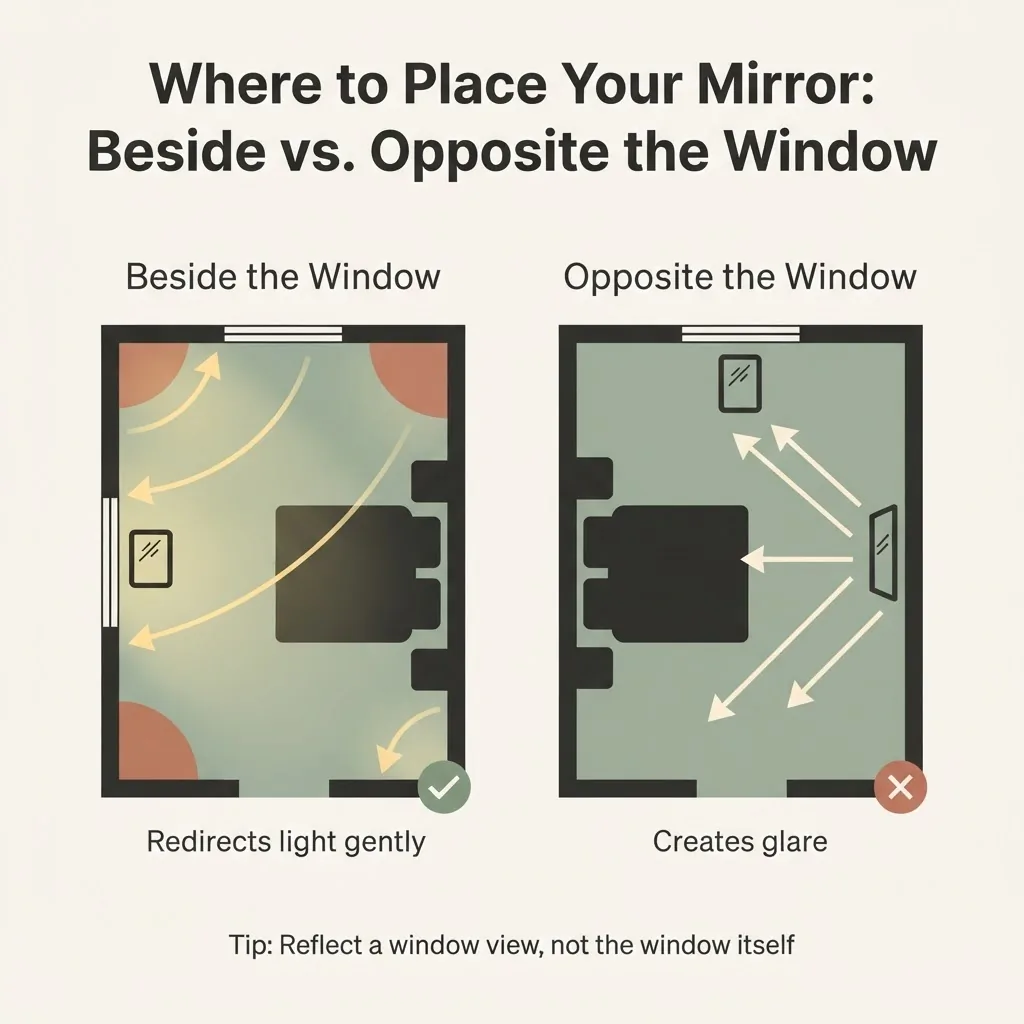
Beside a window, not opposite it. This one trips a lot of people up. The instinct is to put the mirror directly across from a window so it reflects the light. But Homes & Gardens notes that a mirror placed adjacent to a window, meaning on the wall that meets the window wall, is actually more effective for redistributing light into the room. Directly opposite creates glare and can make the light harsh rather than warm. Beside the window redirects that light gently across the room.
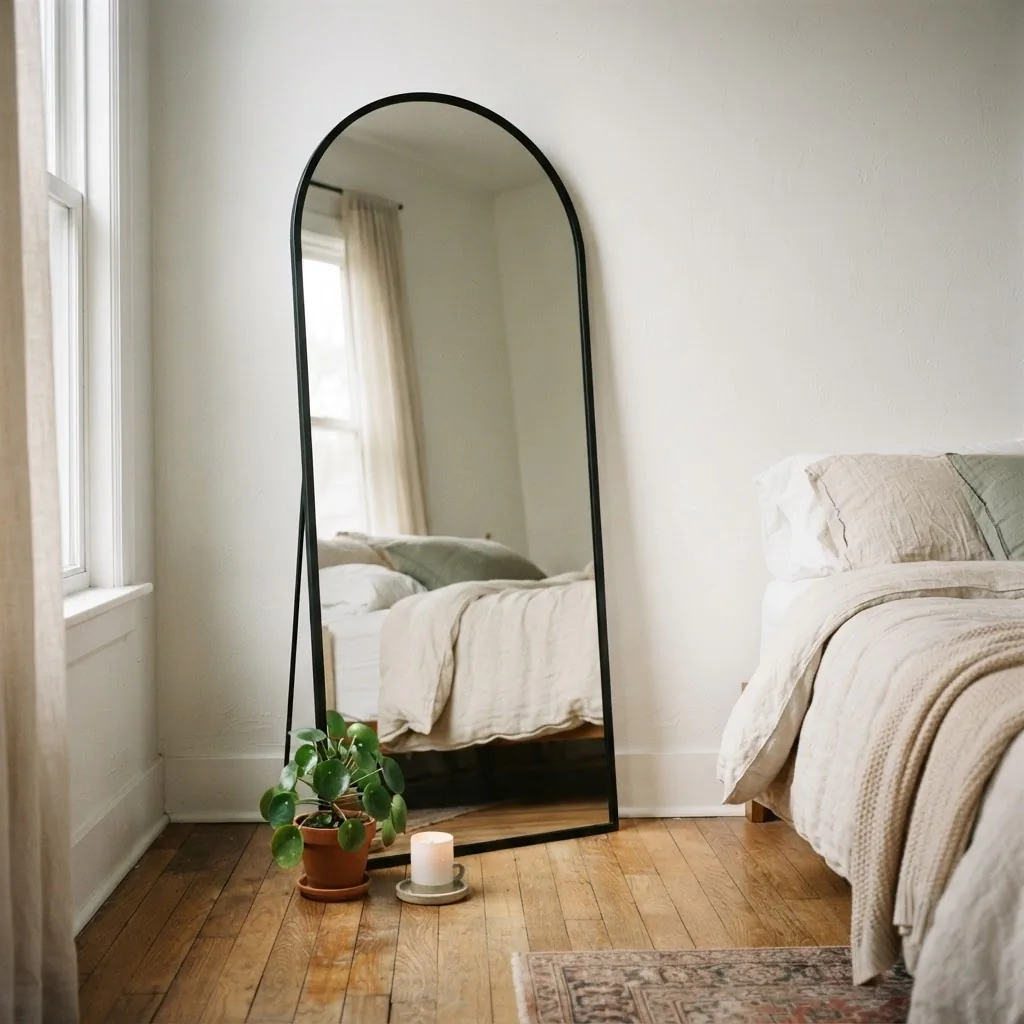
Reflect something good. Whatever your mirror faces, that is what it doubles. Point it toward a window and you get a sense of greenery or sky. Point it toward a thoughtfully styled shelf or a bed with good pillows and it reinforces the calm in the room. Point it toward a pile of laundry or the inside of a closet door and that is what gets doubled too. This sounds obvious but it changes how you position every mirror.
Work with the door, not against it. In small bedrooms, the door is often the enemy of good layout. A common solution: mount a full-length mirror on the back of the bedroom door or on the wall that the door swings toward. The mirror is completely out of the traffic pattern, fully functional, and takes up zero floor space.
21 Full-Length Mirror Ideas for Small Bedrooms
The Leaning Mirror Classics
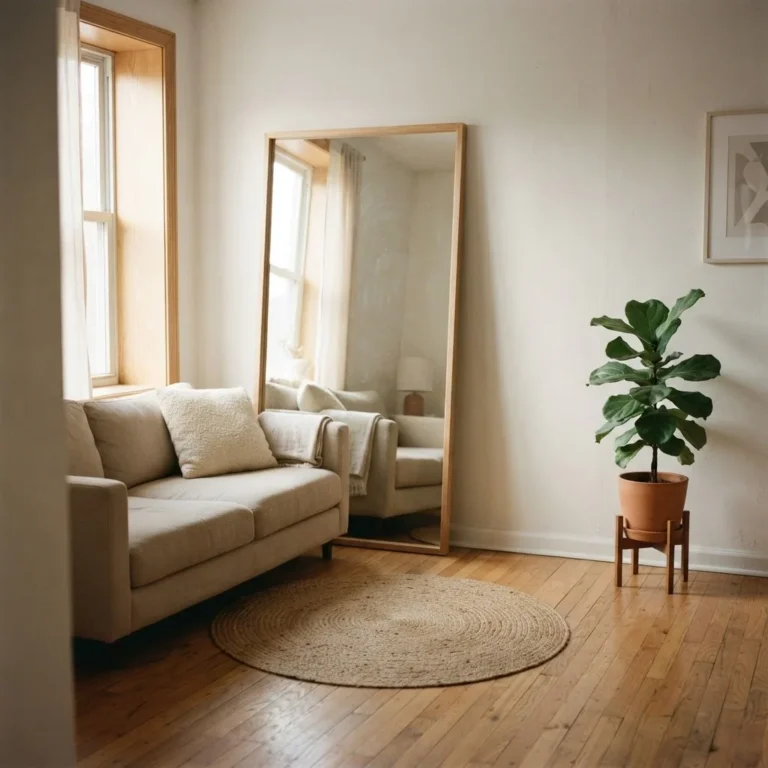
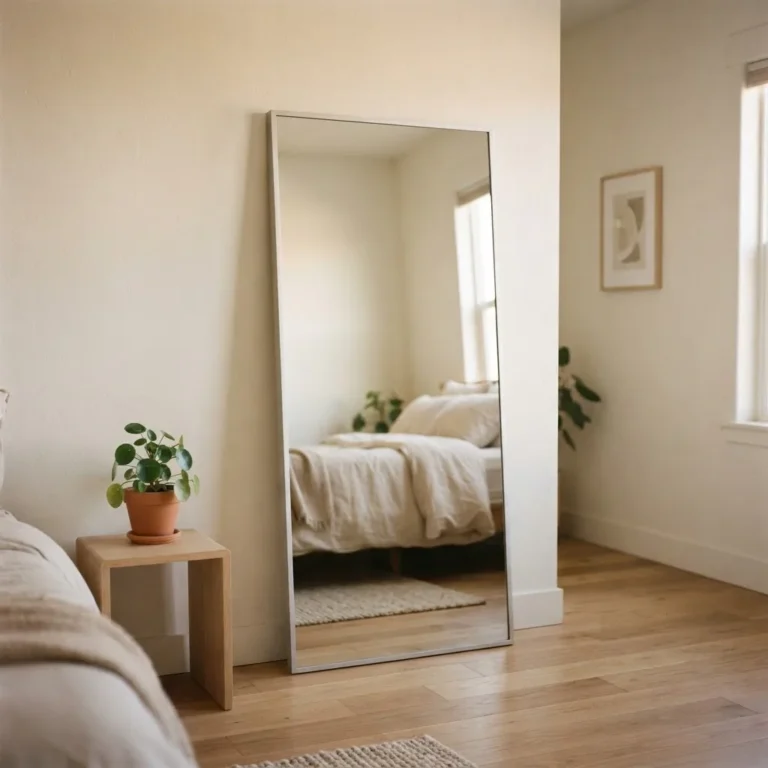
1. The simple lean in a corner. One of the easiest placements in a small bedroom is to lean a full-length mirror in the corner of the room, angled very slightly away from the wall. A corner takes up floor space you aren’t using anyway, and the slight angle means it reflects a wider section of the room rather than a single fixed point. This is a forgiving placement for beginners because it’s easy to adjust.
2. The lean beside the dresser. If your dresser sits against a wall, lean the mirror right beside it. This does two things: it creates the visual impression of a dressing area even in the smallest room, and it gives you a place to check your outfit while you’re standing at the dresser.
3. The lean against a closet. If you have a freestanding closet or wardrobe, leaning a mirror against it reads as intentional rather than random. The closed wardrobe door gives the mirror something clean and structured to sit against.
4. The low lean, floor-forward. Instead of propping the mirror at a steep angle, lean it nearly flat with more of the bottom pulled away from the wall. This creates a more casual, editorial look that works especially well in boho and Scandinavian-inspired bedrooms. It also reflects the ceiling and more of the upper room, which adds visual height.
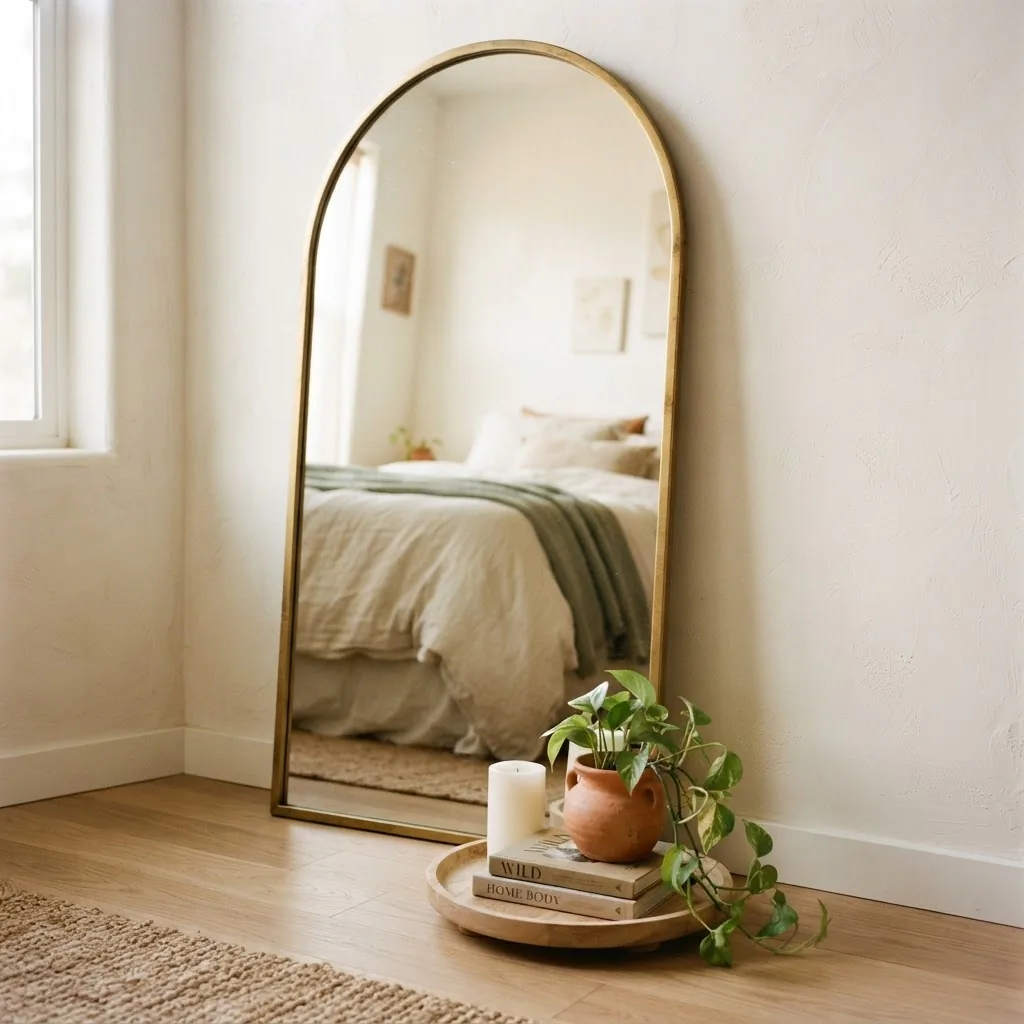
5. The styled lean with a tray or plant. A leaning mirror looks finished when there’s something small at the base. A tray with a candle and a small plant, a few books stacked flat, or a woven basket adds the “I meant to put it there” quality that separates a styled room from a room where things just landed. Keep it minimal, two or three items at most.
Renter-Friendly Hang Solutions
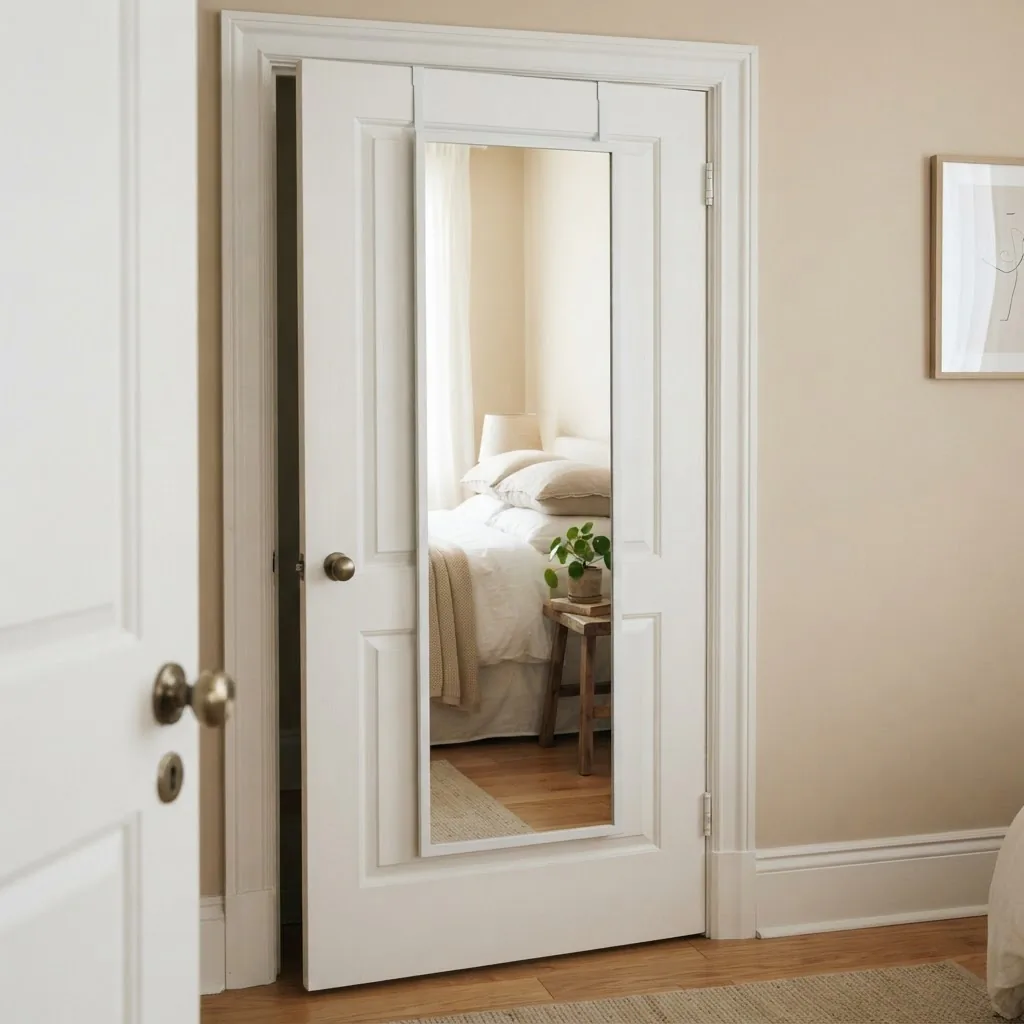
6. Over-the-door full-length mirror. This is the single most renter-friendly solution and it’s underrated. Over-the-door mirrors hang from the top of the door using hooks, require no hardware at all, and come off in seconds. They are ideal for small bedrooms where wall space is genuinely not available. The back of a bedroom door is prime real estate that most people ignore entirely.
7. The inside-of-closet-door mirror. If you have a hinged closet door with a hollow-core interior, you can mount a mirror on the inside using removable adhesive strips, keeping it completely out of sight when the closet is closed. This is the deposit-safest option in existence. You get a full-length mirror, it doesn’t take any room wall space, and the landlord never even sees it.
8. Adhesive strip hang for lighter mirrors. For mirrors under about 20 pounds, Command Picture Hanging Strips can hold a wall-mounted mirror without leaving significant damage behind. Check the weight of your specific mirror before buying strips and buy for the weight capacity above what you need, not at the limit. This works well for slim, lightweight mirrors in the 48 to 55 inch range.
9. The narrow wall hang. Small bedrooms often have one narrow wall, maybe 18 to 24 inches wide, beside a door frame or between two pieces of furniture. A slim full-length mirror, somewhere in the 16 to 20 inch width range, fits perfectly here and looks very intentional. This is one of my favorite placements because it uses dead space that usually collects nothing at all.
10. The bedroom wall nook hang. If your bedroom has a recessed nook or an alcove, a wall-mounted mirror fits inside it like it was designed for the space. The frame sits flush with the surrounding wall, and the reflection from inside the nook bounces light into a corner that usually sits dark.
By Style
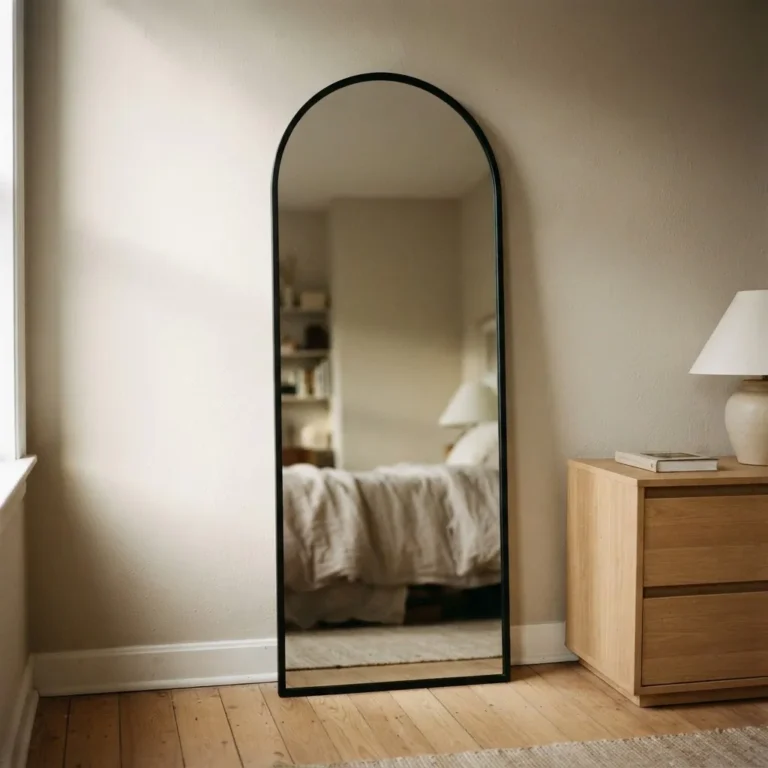
11. The black arch for minimalist or modern rooms. Arched mirrors with thin black metal frames are everywhere right now, and they earn their place. The arch shape softens what could feel hard and geometric, and the thin black frame reads as modern without being cold. A 65-inch arched mirror in black metal leans beautifully against a white or neutral wall and costs roughly $60 to $100 at most mid-range retailers.
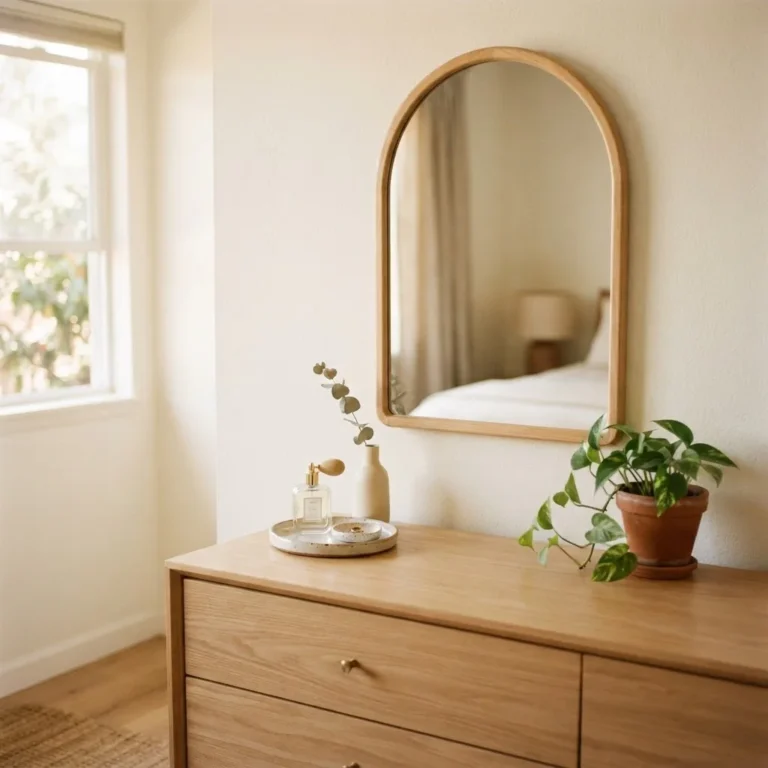
12. The natural wood frame for boho or Scandinavian spaces. A thick oak or ash-toned wood frame makes a mirror feel warmer, more organic, and genuinely cozy.

This style works particularly well leaned against a textured wall or beside a bed with linen bedding. Worth knowing: wood-framed mirrors should stay out of very damp or steamy rooms, as moisture can cause the frame to warp over time.
13. The gold or brass arch for an eclectic or maximalist bedroom. A gold arched mirror adds a lot of warmth and personality without requiring anything else on the wall. Lean it against a dark-painted accent wall (or a peel-and-stick wallpaper panel) and it becomes a full focal point on its own. Budget-friendly gold arch mirrors start around $50 to $80 and look significantly more expensive when styled well.
14. The rattan-framed mirror for cottagecore or coastal rooms. Woven rattan or wicker frames bring texture and warmth in a way that feels organic rather than decorative. In a small bedroom that tends toward neutrals and natural materials, a rattan-framed full-length mirror reads as considered and calm.
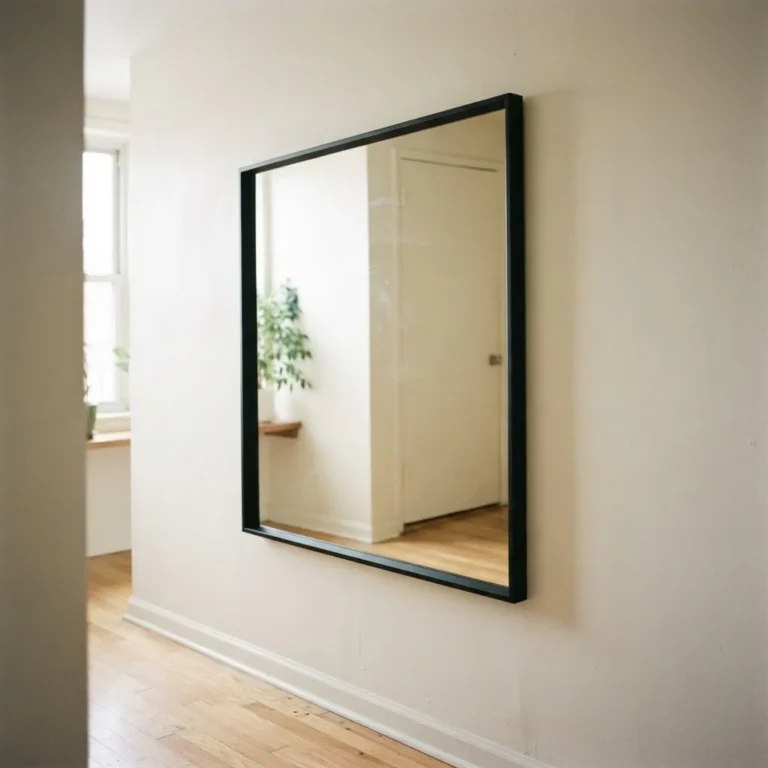
15. The frameless or near-frameless mirror for visual lightness. If your room already has a lot of visual weight, a frameless or very thin-framed mirror keeps the space feeling open. It almost disappears into the wall, which is exactly what a small room sometimes needs.
Doubling Up and Getting Creative
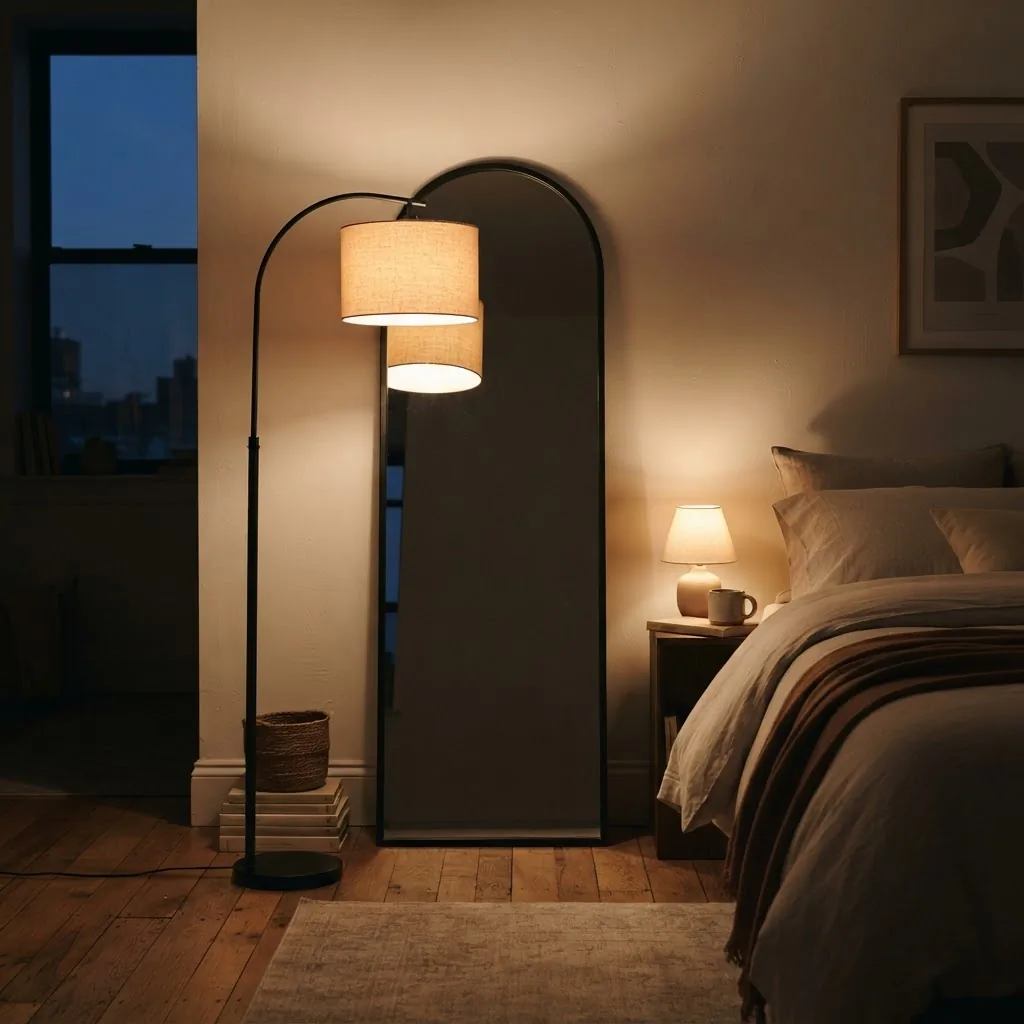
16. Mirror beside the bed. In a bedroom without space for a dresser mirror or dressing area, leaning a full-length mirror beside the bed creates a small, calm vignette. Style it with a lamp on the opposite bedside table so the mirror reflects the warm light back across the room. This is one of the most effective mood-lighting tricks for a small bedroom that doesn’t involve any wiring.
17. Mirrored closet doors. If your rental already has sliding closet doors, check whether your landlord would allow you to have them replaced with mirrored versions. Many will agree to this because it adds perceived value. You get continuous floor-to-ceiling reflection, which visually doubles the depth of the room, and you never need a separate mirror at all.
18. The pair of leaning mirrors in a studio. In a studio or open-plan small space where the bedroom isn’t a separate room, two full-length mirrors leaned on either side of the bed create a visual “headboard” effect. This is dramatic, intentional, and surprisingly effective in spaces that otherwise feel undefined.
19. The mirror wall cluster. Rather than one large mirror, a cluster of two or three full-length mirrors of varying heights leaned together in a row creates a gallery-wall effect with more practical coverage. This works best in rooms with a longer bare wall, like the wall opposite a window, and the mixed heights keep it from looking rigid.
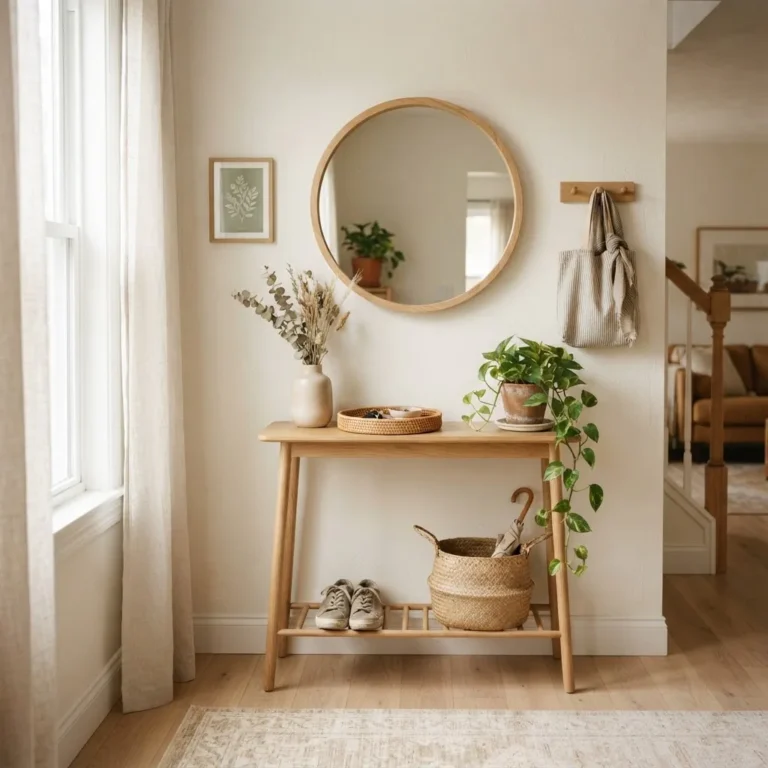
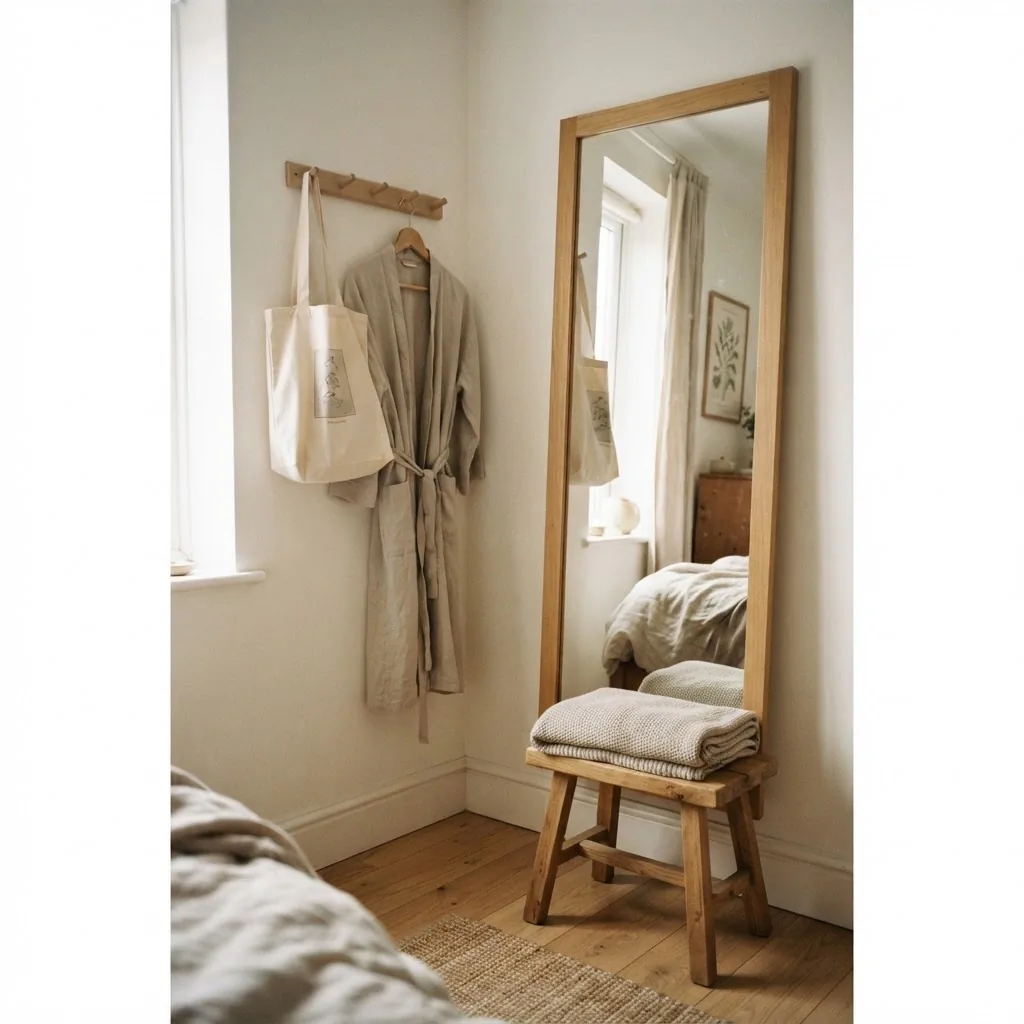
20. The dressing corner setup. Claim one corner of the room as a dressing area by pairing a full-length leaning mirror with a small hook rail mounted beside it and a low bench or stool. Even in a very small bedroom, a defined “getting ready” corner keeps the rest of the room feeling like a place to rest rather than a place to scramble for lost shoes.
21. The mirror plus a good light source. Pair your full-length mirror with a floor lamp or a wall-mounted sconce positioned just beside it. The mirror reflects the lamplight and distributes it across the room as warm, ambient glow rather than one focused beam. This is one of the most reliable ways to make a small bedroom feel cozy and intentional after dark, and it costs next to nothing to execute.
What to Actually Look for When You Buy
The mirror market is very wide, and the price range is wild. You can spend $30 on something at a discount retailer or $600 on a designer piece. Here is an honest breakdown of what the money actually buys.
The single biggest predictor of reflection quality is glass thickness. According to research from NYT Wirecutter’s full-length mirror testing, which put over a dozen mirrors through real testing, thinner glass is more prone to warping and distorted reflections. Inexpensive mirrors often cut costs here, which is why your reflection sometimes looks slightly funhouse in a budget pick. Their recommendation is to look for glass at least a quarter inch thick, which you generally start to find reliably in the $80 to $120 range. Under $80 can work, but inspect the reflection carefully before committing.
Budget tier guide based on current market:
- Under $50: Very basic, often thin-framed arched mirrors. Functional but glass quality varies. Fine for low-traffic or decorative placement.
- $50 to $100: The sweet spot for quality at a reasonable price. This is where arched black or gold metal frames with acceptable glass quality live. Worth the modest upgrade over the cheapest tier.
- $100 to $200: Noticeably better construction, thicker glass, more interesting frame designs. Statement pieces without designer price tags.
- Over $200: Design-forward pieces with sculptural frames, solid wood, or premium finishes. Worth it if the mirror is genuinely going to be the focal point of the room.
The Safety Note Nobody Talks About
Leaning a heavy mirror sounds casual, but a full-length mirror can weigh anywhere from 20 to 55 pounds depending on the glass and frame. A leaning mirror that tips over is a real hazard, especially in homes with children or pets. The CPSC’s Anchor It! safety campaign specifically recommends securing heavy leaning items with anti-tip straps or brackets. Most leaning mirrors come with a tip kit or you can buy furniture anti-tip straps separately for a few dollars. If you’re renting, use a small nail or a single screw into a stud for the safety strap only; this is almost universally considered a reasonable repair at move-out and far less disruptive than a broken mirror and a hospital visit.
The One Thing Most People Get Wrong
The biggest mistake with a full-length mirror in a small bedroom is putting it where it fits rather than where it works. A mirror squeezed between a dresser and a wall with no thought about what it reflects will make the room feel more crowded, not less. Before you commit to a spot, lean the mirror in the position you’re considering, step back, and look at what the reflection shows. If it shows a clean, calm section of the room, you’re in the right place. If it shows clutter, a crammed closet, or a view of the back of a door, move it.
A mirror that reflects something beautiful makes the room feel bigger and calmer. A mirror that reflects something chaotic just doubles the noise. That’s the whole principle, and it applies whether you’re working with a $40 find or a $400 statement piece.