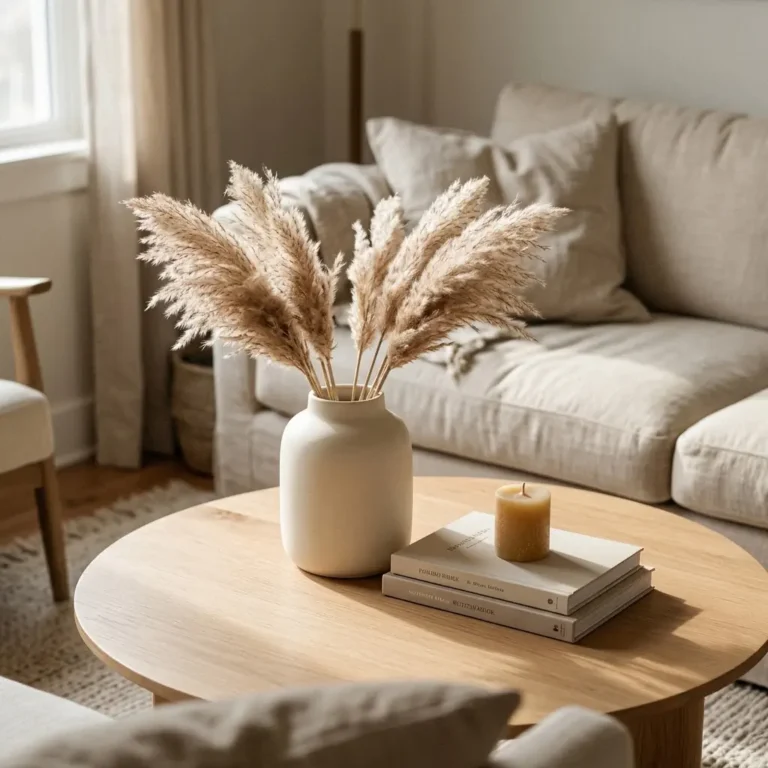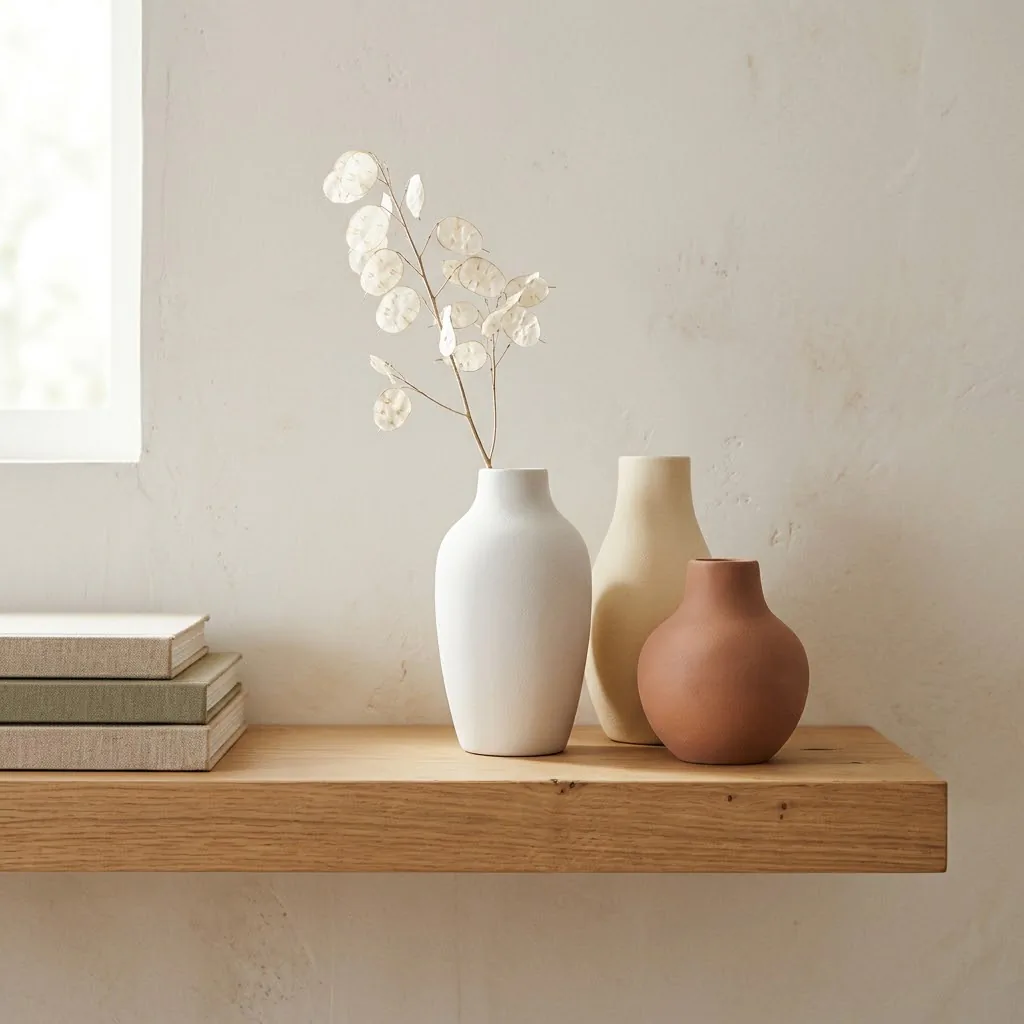
20 Minimalist Vase Decor Ideas for a Calmer, Prettier Home

I have been in a lot of rental apartments where the biggest decorating problem was also the smallest one. Not the outdated cabinets. Not the beige carpet. Just a bare shelf, a naked console table, or a nightstand with nothing on it but a phone charger. These spaces didn’t need more furniture or a fresh coat of paint. They needed one thing with presence. Something that said: a person lives here, and she cares about how it looks.
A good vase is almost always the answer.
Not a complicated arrangement. Not a $90 artisan piece from a design shop. Just a thoughtful, well-placed vase, styled the right way, with the right thing in it or sometimes with nothing in it at all. Minimalist vase decor is one of the most affordable, most renter-friendly ways to make a room feel finished. And once you understand a few basic rules, it becomes genuinely easy.
Here are 20 ideas, from first-apartment beginner moves to more intentional shelf styling, all of them budget-friendly and none of them requiring anything you can’t undo before you move out.
The Foundation: Before You Buy a Single Vase, Read This
Get the Size Right First
The most common vase mistake I see in small rental spaces is a mismatch in scale. A tiny bud vase gets lost on a large console table. A too-tall statement vase overwhelms a petite nightstand. There is an easy rule to remember before you buy anything: a vase placed on a piece of furniture should be roughly one-third the height of that furniture. So if your entryway console is about 32 inches tall, you’re looking for a vase somewhere in the 10 to 11 inch range. On a lower coffee table, around 18 inches, a 6-inch vase works well. And when you’re adding stems or branches, the floral authority Afloral recommends that your vase be roughly one-half to one-third the height of whatever you put in it, so a 10-inch vase pairs well with 20 to 30-inch stems.
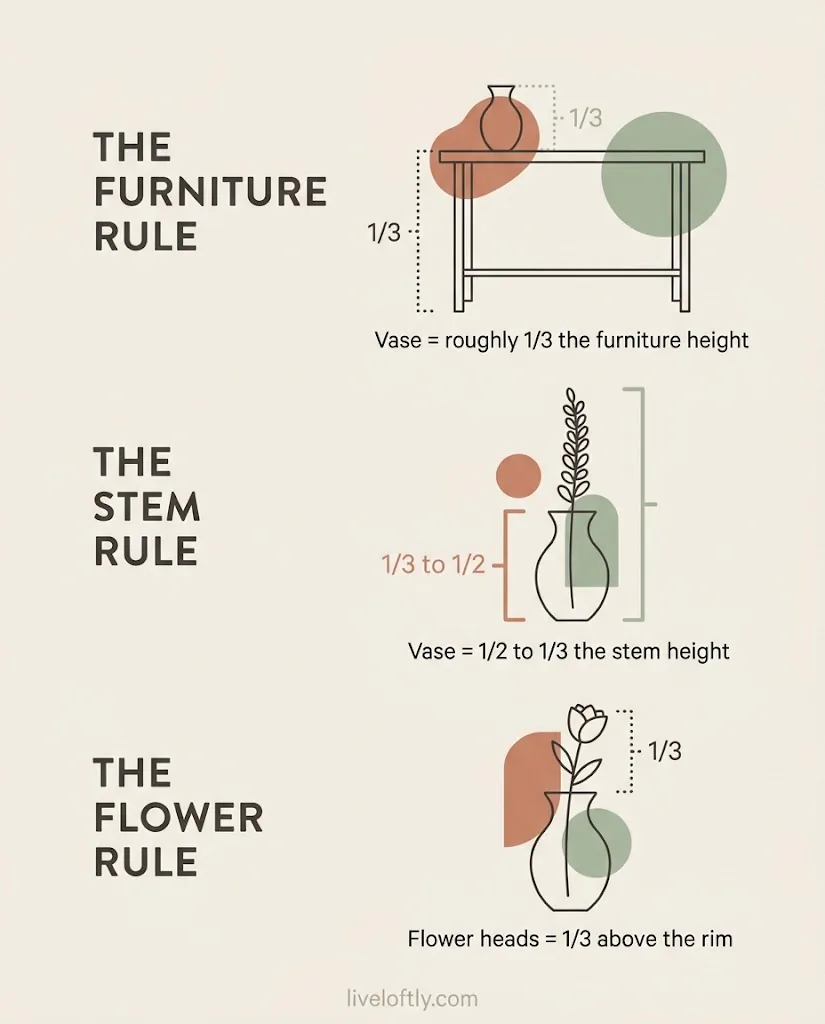
If in doubt, go slightly smaller rather than slightly larger. In a minimalist room, negative space is doing real work. A vase that sits quietly on a surface and earns its place feels more intentional than one that dominates the scene.
Pick a Material That Matches the Mood You Want
Ceramic is the most forgiving material for minimalist vase decor. It takes texture and color well, it’s more durable than glass on a surface that gets bumped, and matte or semi-matte finishes in white, cream, dusty terracotta, or soft sage read as calm and warm almost automatically. For a Japandi or Scandinavian-influenced room, matte ceramic in a single neutral is usually the right call.
Clear glass vases are quieter: they don’t add visual weight, which makes them useful in small spaces. They’re also more forgiving if you want to swap out what’s inside seasonally without the vase competing. Concrete and cement vases have a slightly industrial feel that works well in modern minimalist rooms. Terracotta is earthy and budget-friendly (you can often find decent ones for $5 to $15), and it pairs beautifully with dried stems and greenery.
The Spruce’s guide to types of vases is worth a quick read if you want a more detailed breakdown of shapes (bud, cylinder, trumpet, sculptural) and what each one does well before you spend money.
The Ideas
1. The Single Stem in a Narrow-Neck Vase
This is the most beginner-friendly move in minimalist vase decor and one of the most impactful. One stem, one narrow vase, one surface. Done. A single dried cotton branch or eucalyptus sprig in a slim terracotta or white ceramic vase on a nightstand creates more calm than a whole shelf of miscellaneous objects. The Japanese art of ikebana, which Architectural Digest has covered beautifully, is built on this exact philosophy: that a single, deliberate stem can hold as much presence as a full arrangement. You do not need flowers. You do not need a full bouquet. One branch placed thoughtfully in the right vessel is a complete statement.
2. A Trio of Vases at Varying Heights
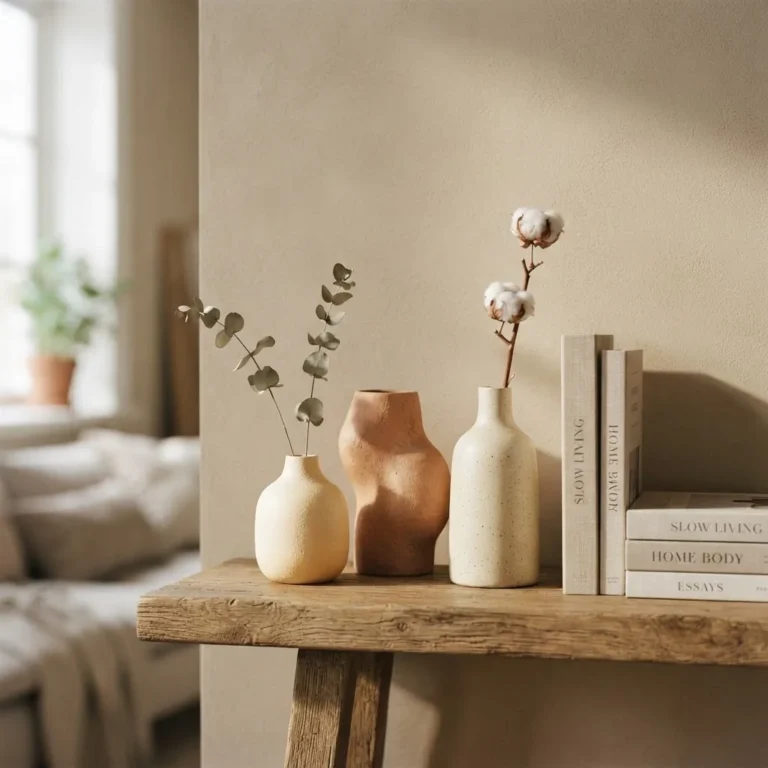
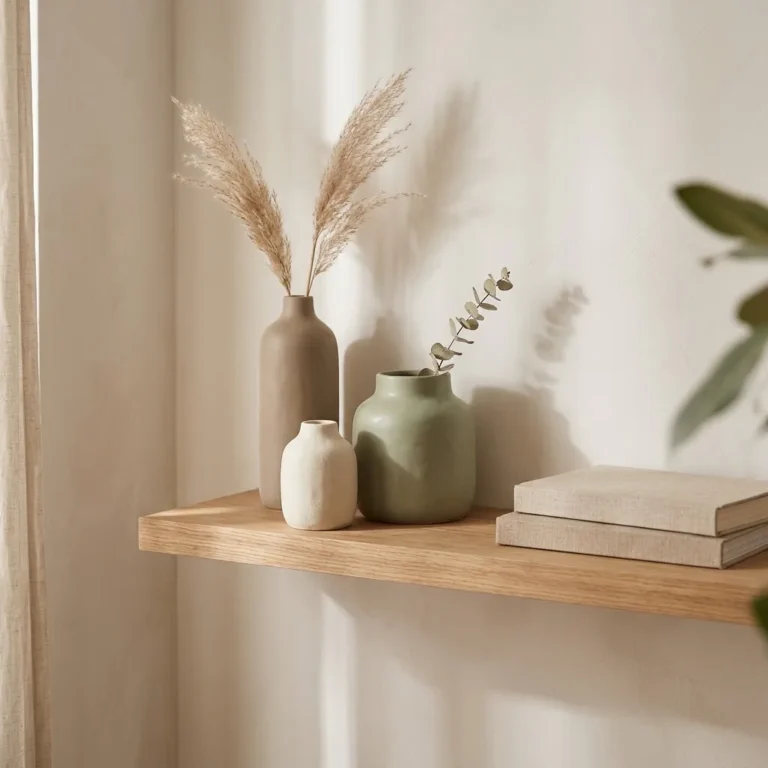
The rule of odd numbers is one of those design principles that sounds like a “rule” but actually makes intuitive sense once you try it. Two vases next to each other look like a pair, symmetrical and a little stiff. Three vases of different heights, grouped loosely on a shelf or console, read as collected and calm. Choose vases in the same color family or the same material to keep it cohesive, but vary the height, and if you can, vary the silhouette slightly. A squat rounded shape next to a taller cylinder next to a slim bud vase, all in matte white or cream, works beautifully on almost any shelf.
3. The Empty Vase as Sculpture
Minimalist vase decor does not require anything inside the vase. This is genuinely underappreciated. A vase with an interesting silhouette, like a waisted form, a sculptural curve, or a hand-thrown asymmetric shape, earns its place on a shelf as a sculptural object. The inside can be completely empty. If you ever feel paralyzed by the “what do I put in it” question, give yourself permission to just style the vase itself. One beautiful empty vessel, placed on a small tray or beside a stack of books, is a valid, intentional decor choice.
4. Dried Stems for a Low-Maintenance Long Life
Dried stems are the most practical thing you can put in a minimalist vase, especially if you’re renting and want decor that doesn’t need maintenance every week. Dried lunaria (the silvery coin plant), dried bunny tail grasses, dried lavender, and dried eucalyptus all hold their shape for one to three years if kept out of direct sunlight and away from humidity. When mixing stems, think in threes: one taller dramatic stem for height, one medium stem for body, and one shorter filler stem for texture at the base. Lytton Rose Botanical has a practical guide on building dried arrangements in this way if you want a deeper look at the layering approach.
5. Pampas Grass: Honest Notes Before You Buy
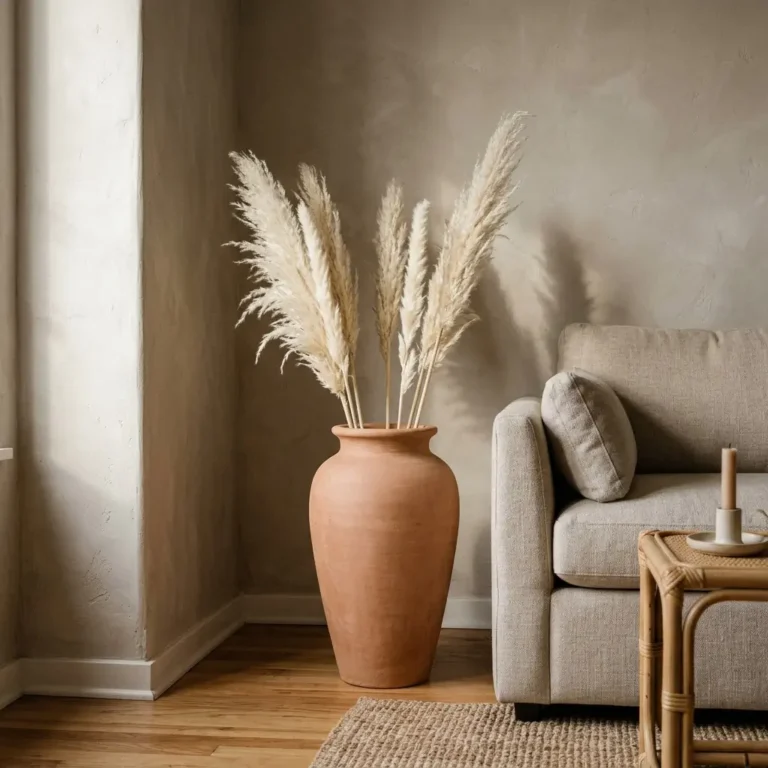
Pampas grass became the poster child of minimalist and boho decor for good reason. It is soft, textural, and dramatic in a slim-neck vase. But I want to give you a real heads-up: if you or anyone in your home has hay fever, dust sensitivities, or respiratory issues, dried pampas plumes can shed fine particles that irritate the nose and throat. Dried Flowers Decor UK has written a straightforward guide on this that’s worth a look before you commit to a large arrangement. If you love the look but have sensitivities, dried bunny tail grass or dried pampas in smaller amounts, placed in a well-ventilated spot, tends to be better tolerated.
6. Fresh Eucalyptus for a Week of Calm
Dried eucalyptus lasts for months. Fresh eucalyptus lasts one to two weeks in water before it dries naturally in the vase, at which point it often still looks beautiful in a softer, more muted form. A handful of eucalyptus stems in a simple glass cylinder vase on a bathroom counter or kitchen windowsill is one of the easiest ways to make a rental feel like a home. The natural scent in the first few days is a bonus. Cost is usually $3 to $8 for a bundle at a grocery store or farmers market.
7. One Tall Floor Vase in a Corner
If you have a bare corner in your living room or bedroom, a single tall floor vase placed at floor level can anchor that space without taking up surface area. This works especially well in small apartments where floor space is more available than shelf space. A plain white or neutral ceramic floor vase between 24 and 36 inches tall, holding a few long branches of dried eucalyptus, olive branches, or even plain dried birch, looks architectural and intentional. It reads as expensive without necessarily being expensive: floor vases in this style run from about $30 to $80 at most home stores.
8. A Bud Vase Cluster on a Tray
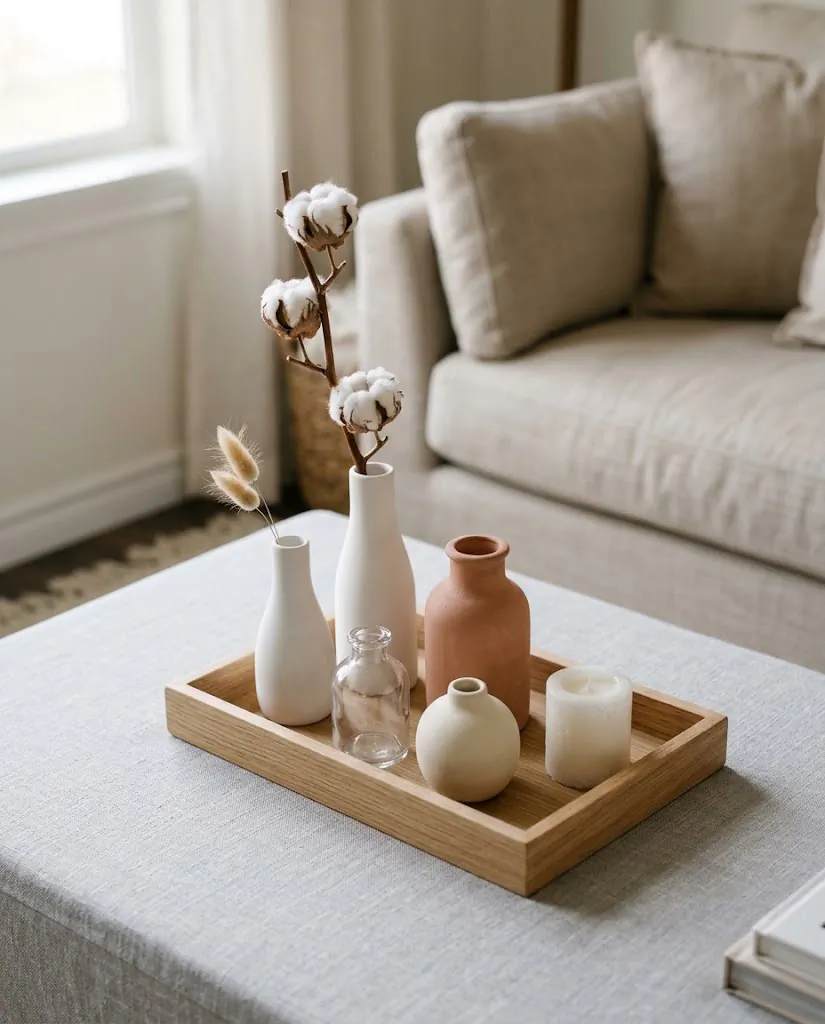
Three to five small bud vases, each holding a single stem, grouped together on a small tray, is one of the most versatile minimalist vase setups you can create. The tray is important: it contains the grouping, makes it look deliberate, and makes the whole thing easy to move when you clean. You can mix slightly different vase shapes and finishes within the same color family (all white, or all earthy tones) without it looking chaotic. On a coffee table, this is the entire centerpiece. On a bathroom shelf, it feels spa-like. Budget this at $15 to $30 for the full setup if you source the bud vases from thrift stores and dollar stores, which is genuinely where I’d look first.
9. The Thrift-Store-to-Minimalist Pipeline
Most thrift stores have an entire shelf of vases, and most of them cost between $1 and $5. The shapes are often better than what you’ll find at a big-box store because older vases tend to have more character. The problem is usually color: they come in brass, dark burgundy, or a slightly unfortunate 1980s green. The solution is spray paint. A quick coat of matte white, matte cream, or stone-finish spray paint turns almost any thrift-store vase into something that looks like it came from a Scandinavian home goods shop. Clean the surface with rubbing alcohol first, use thin even coats, and let it fully cure before displaying. Total investment: under $10 for the vase plus paint.
10. Matching the Vase Color to Your Room’s Neutrals
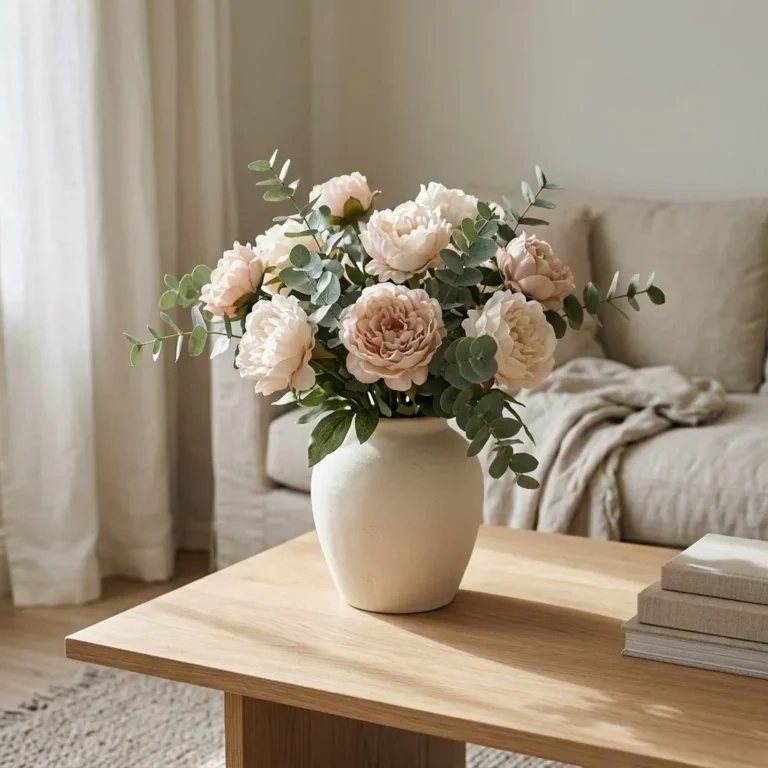
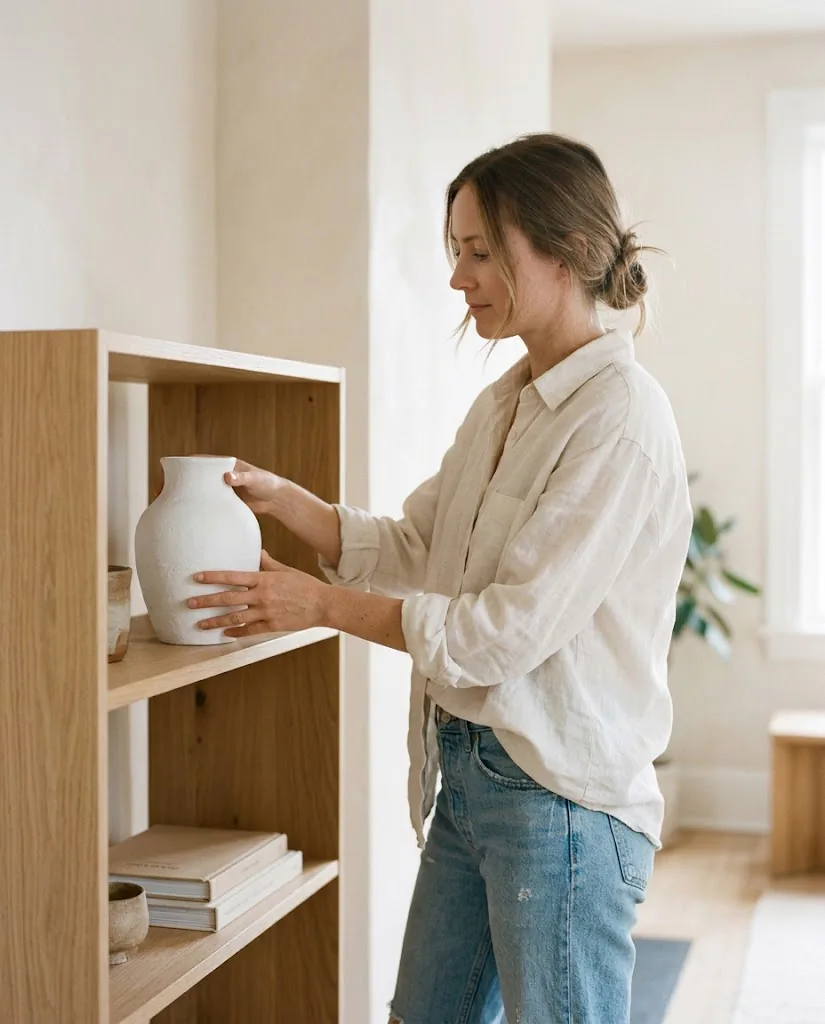
One of the fastest ways to make minimalist vase decor look expensive is to match the vase’s base color to your room’s existing neutral tones. If your walls are warm white and your couch is a warm sand, a soft cream or warm white ceramic vase will sink quietly into the room in the best possible way. It adds presence without adding visual noise. If your space leans cooler, try a grey or soft sage. Contrast is fine in minimalist rooms, but it works best when it’s one deliberate contrast, not three competing ones.
11. Seasonal Swaps with the Same Vase
One good minimalist vase can serve you all year if you swap what’s inside. In spring, a few fresh tulip stems. In summer, dried grasses and a linen ribbon. In autumn, a single dried seed pod or a stem of preserved fall leaves. In winter, a branch of pine or even a simple cluster of dried cotton. This is the renter’s seasonal refresh: no commitment, no storage problem, just a new stem or branch from a grocery store or a walk outside. The vase stays, the season changes around it.
12. White Ceramic on a Wooden Surface
If you want a pairing that almost never fails in minimalist decor, it’s a white or cream matte ceramic vase on a warm wooden surface. The wood adds warmth, the ceramic stays light and airy, and together they hit that Japandi or Scandi tone that is calming without being cold. This works on a wooden dining table as a centerpiece, on a wooden shelf, or on a butcher-block kitchen counter.
13. The Bathroom Counter Bud Vase
A single bud vase on a bathroom counter is one of the smallest changes you can make to a rental bathroom, and one of the most noticeable. Renters tend to overlook the bathroom as a styling space because it feels too utilitarian. But a small white ceramic bud vase with one sprig of dried eucalyptus or a few cotton stems takes up about four square inches of counter space and makes the room feel instantly more considered.
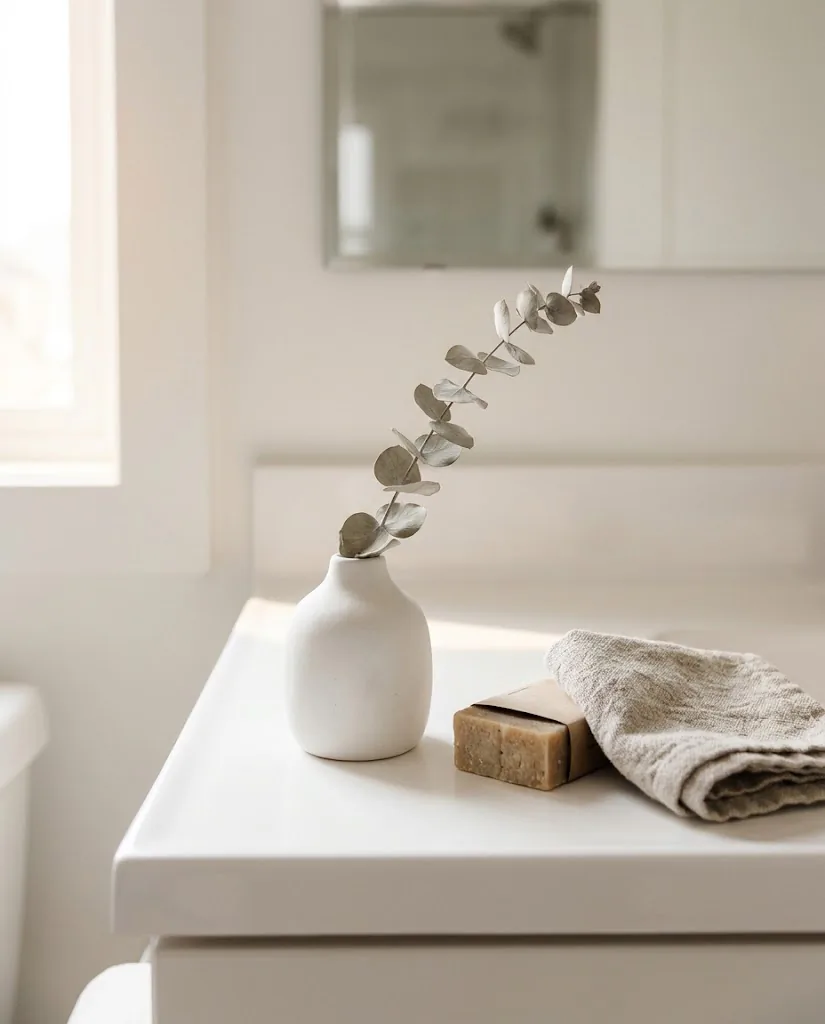
If counter space is tight, a small shelf bracket (removable, damage-free with the right adhesive strip) can hold a small vase on the wall beside the mirror.
14. Styling a Vase Beside a Stack of Books
On a nightstand or a shelf, placing a slim vase next to a small stack of two or three books creates a grounded, lived-in feeling. The books add weight and horizontality, the vase adds height and softness. This pairing is especially good when you only have one or two items on a surface and want it to feel intentional rather than sparse. Keep the books spine-out with covers that are neutral or quiet colors if you want the full minimalist effect.
15. A Glass Cylinder Vase as a Candle Holder
Clear glass cylinder vases are among the most versatile and cheapest vase options around, often $5 to $12 at most home goods stores or thrift stores. They work beautifully as vases, but they also double as candle holders. Place a pillar candle inside for a clean, architectural look on a dining table or a living room surface. The glass protects the flame slightly and catches the light in a way that bare candles don’t. This is a practical, budget-friendly dual-use that maximizes what you spend.
16. The Single Olive Branch
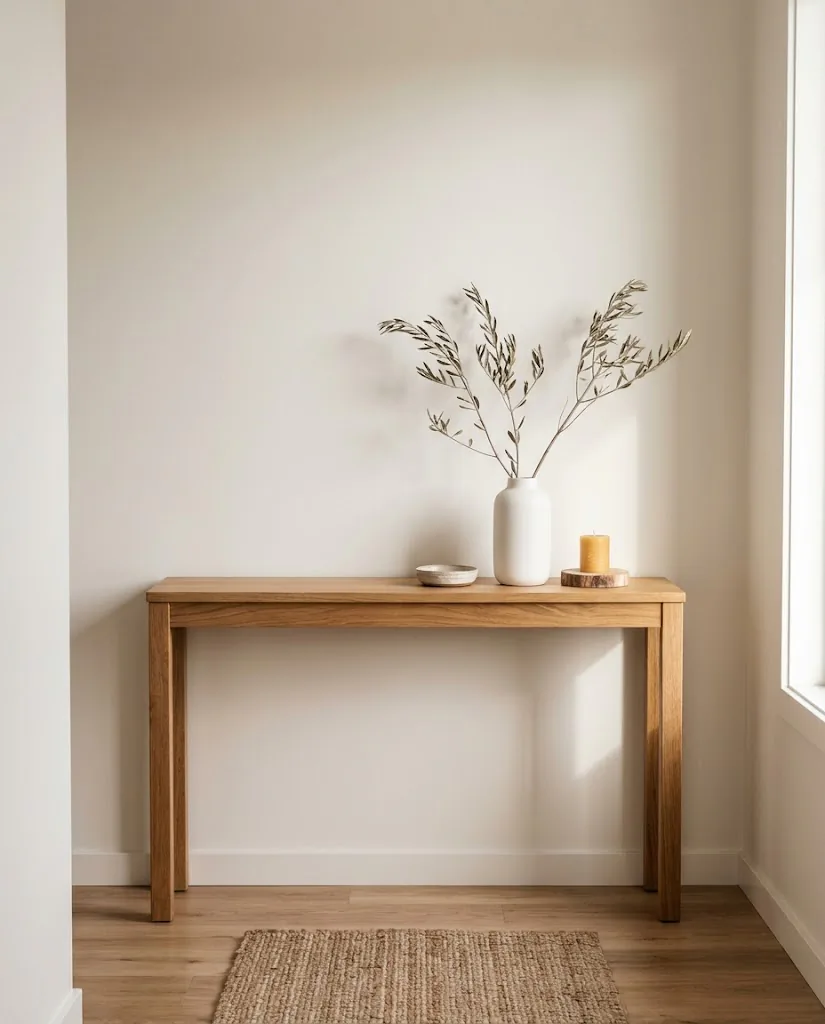
An olive branch, fresh or dried, in a simple ceramic or glass vase is one of the most timeless minimalist styling choices. Olive branches are not expensive at a grocery store or farmers market, and a few long stems with their leaves intact create a naturally sculptural shape without any arranging skill required. They look at home in Mediterranean-influenced rooms, coastal spaces, and even clean modern minimalist rooms. Once they dry in the vase over a few weeks, they hold their shape and their silver-green color for months.
17. Varying Textures Within a Neutral Color Palette
A common fear with minimalist vase decor is that it will look flat or boring without color. The answer is texture, not more color. Three vases in the same neutral palette but in different textures, say a rough terracotta, a smooth matte ceramic, and a light-catching glass, create visual interest without visual noise. This is the same principle that makes a good throw blanket arrangement work: when the colors are quiet, your eye reads the shapes and surfaces instead, which is genuinely more calming than a room full of bright competing tones.
18. The Entryway Console Moment
The entryway is where minimalist vase decor does some of its best work. A single medium-height vase on a console table with one or two other objects (a small dish for keys, a single candle) creates a landing zone that feels both functional and calm. You don’t want to crowd the console, especially in a narrow entryway where a small-space rental might have only 12 to 18 inches of depth to work with. Stick with one vase, one stem or a small handful of dried branches, and let the negative space do the rest.
19. The Dining Table Center
A long dining table often gets a too-large centerpiece that blocks conversation and dominates the surface. For minimalist vase decor on a dining table, think low or think linear. A low, wide-mouth vase with a few cut stems arranged horizontally, staying under 8 to 10 inches in height, keeps sightlines open. Alternatively, a row of three slim bud vases down the center of the table, each with a single stem, creates a quiet rhythm that feels deliberate without being fussy. House Beautiful’s guide on the 1/3 vase rule is worth keeping in mind here: florists recommend that flower heads sit roughly one-third above the vase rim for the most balanced look.
20. Give Yourself Permission to Start Simple
The last idea is really more of a permission slip. You do not need a full styled shelf with five perfectly curated objects and a trailing plant and the right art above it. Start with one good vase, one stem, and one surface. Put it somewhere you look every day. See how it makes the room feel. That is the whole point of minimalist vase decor: doing a little, on purpose, and letting that small thing carry the room a little further toward feeling like home.
A Quick Word on Budget
For renters and first-apartment people, here is what I think of as the honest budget breakdown for minimalist vase decor. A thrift store vase costs $1 to $5, and spray paint to refresh it adds another $4 to $8, so you can have a genuinely beautiful minimalist vase for around $10 total. Basic new ceramic bud vases run $8 to $20 at Target, IKEA, or Amazon. A mid-range sculptural or textured ceramic with some real character usually falls in the $25 to $60 range. Above $60 you’re in artisan or boutique territory, and while those pieces can be beautiful, I’d say it’s genuinely worth spending your decor budget on a few things at the lower and mid ranges before committing to a single pricey piece. A $12 thrift-store vase styled right will look better than a $90 vase placed without intention.
The Honest “Worth It / Skip It” Notes
Worth it: a small collection of 3 to 5 bud vases in neutral tones. A single well-proportioned ceramic vase in a shape you genuinely love. Dried stems from a grocery store or farmers market. A matte spray paint for refreshing thrift finds.
Skip it (or at least wait): oversized floor vases for a genuinely tiny room where they’ll dominate. Heavily patterned or brightly colored vases when the rest of your room is neutral (unless you are very intentional about it). Fake flowers in plastic that look cheap up close. Pampas grass at full scale if you have respiratory sensitivities.
Final Thought
Minimalist vase decor works because it is about restraint. Not emptiness, but intention. A single vase, the right stem, the right surface, the right amount of space around it: these small choices add up to a room that feels quietly calm and genuinely cared for. And that is a feeling worth creating in any home, rented or owned, big or small.