17 Fall Candle Scents That Actually Make a Room Feel Cozy

There is a moment every September, usually right when the air shifts from hot to just-cool-enough, when I want my home to smell like fall. Not in a fake, overpowering, “scented candle aisle at a discount store” way. In the quiet, warm, walking-through-someone’s-kitchen-on-a-Saturday-morning way.
Candles are one of the fastest, most affordable ways to change the feeling of a room. Not just the look, the actual feeling. Scent works on your nervous system faster than almost any other sensory input, and the right one burning on a gray October afternoon can make even a small apartment feel intentional and calm. The wrong one, or the right one used poorly, is just a fire hazard and a wasted wick.
I have spent years decorating rentals where I could not paint walls, could not nail things into studs, and could not do much of anything permanent. Candles became one of my most reliable tools because they cost almost nothing compared to furniture, they work in any style of space, and they are entirely removable when you move out. But I have also wasted money on candles that smelled amazing in the store and like almost nothing burning at home, on beautiful glass containers that tunneled after the second use, and on scents that were so heavy they made a small room feel claustrophobic.
So this is the guide I wish I had. Seventeen real fall scents worth considering, organized by mood. Plus the practical stuff: how to burn a candle so it actually lasts, how to match scent strength to room size, how to style candles so they look like they belong, and what to do if your building does not allow open flames.
The Five Scent Families of Fall (and What Mood Each One Creates)
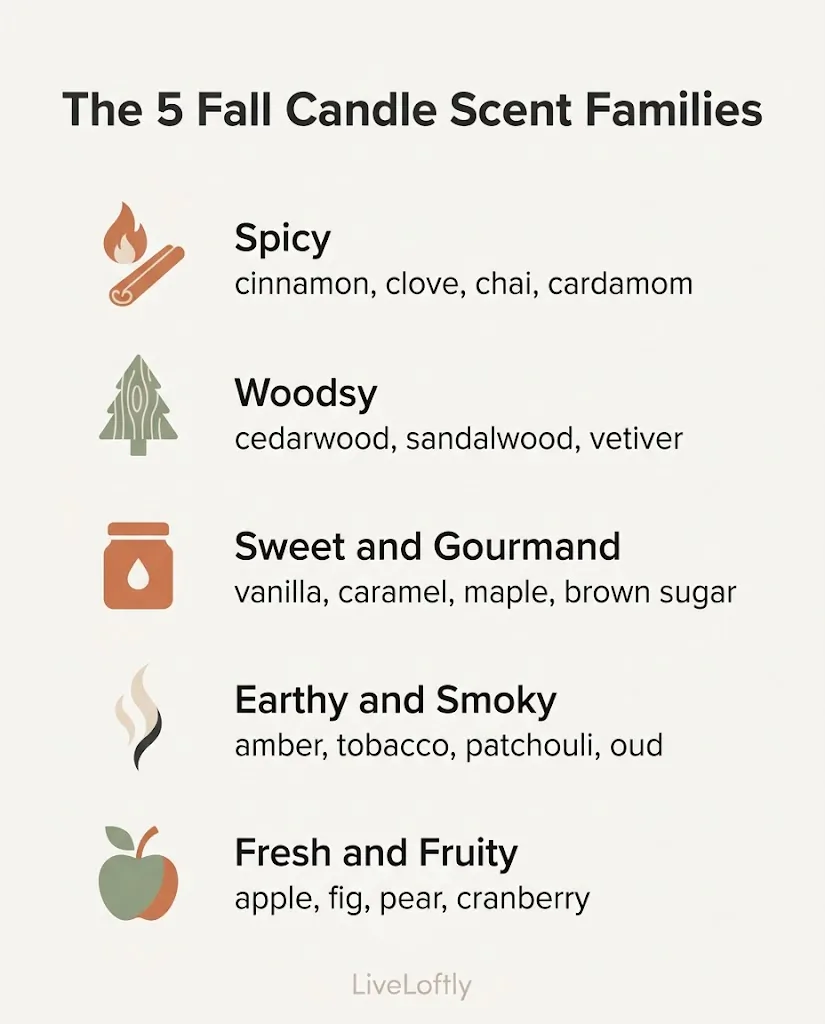
Before we get into specific scents, it helps to understand that fall candle scents cluster into five broad families. Knowing which family appeals to you makes shopping much easier and cheaper, because you will stop buying things that look seasonally appropriate but smell nothing like what you actually want in your home.
The first family is Spicy, and it is the most iconic of the five. Cinnamon, clove, cardamom, nutmeg, ginger, and chai all live here. Spicy scents are warming and stimulating, the olfactory equivalent of a wool sweater. They read as active and welcoming, which is why they work so well near a front door or in a kitchen. The downside is that they can feel aggressive in a small space if the throw is too strong.
The second family is Woodsy, which covers cedarwood, sandalwood, birchwood, pine, driftwood, and vetiver. These are quieter scents. Earthier and slower. A woodsy candle creates the feeling of being outdoors without actually being cold, which is genuinely calming. If you find most fall candles too sweet or too perfumy, a woodsy scent is almost always the right correction. As Yankee Candle describes in their fragrance families guide, woody notes “add structure and depth” and are often used as base notes to anchor brighter or sweeter elements above them.
The third family is Sweet and Gourmand, which includes vanilla, caramel, maple, brown sugar, dark chocolate, and anything that smells faintly like something baking. These are the most universally appealing scents, the ones that make guests say “something smells amazing in here” without being able to name exactly what it is. They are also the easiest to overdo.
The fourth family is Earthy and Smoky, and it is where the more sophisticated fall scents live: amber, tobacco, oud, patchouli, incense, leather, and smoke. These are not for everyone, but if you love the smell of a bookshop or a campfire from a safe distance, this family will make your home feel genuinely distinctive. A candle with amber and tobacco notes does something a pumpkin spice candle simply cannot.
The fifth family is Fresh and Fruity, which includes apple, pear, cranberry, fig, orange peel, and similar notes. These are the fall scents that feel like being at an orchard rather than in a kitchen. Lighter, crisper, and less likely to overwhelm a small space. If you share a studio apartment with someone who is sensitive to heavy fragrance, this family is worth knowing.
The 17 Scents, Organized by What They Actually Do
Warming and Welcoming (Good for Entryways, Kitchens, Living Rooms)
1. Apple Cinnamon. The classic. Clean, sweet, and immediately readable as autumn. Works well near a front door because it signals welcome without being heavy. This is the safest starting point if you have never bought a fall candle before.
2. Pumpkin Spice. Still enormously popular for a reason. The best versions combine warm spices with a subtle creaminess. The versions to skip are the ones that smell like artificial pumpkin flavoring, sharp and one-dimensional. Look for scent notes that include clove and vanilla alongside pumpkin to avoid that.
3. Chai and Cardamom. A step more sophisticated than straight cinnamon. Chai-scented candles layer cardamom, ginger, and often a hint of black tea alongside the spice, which gives them a rounder, warmer quality. If pumpkin spice feels too trendy to you, this is the move.
4. Cinnamon and Clove. Deeper and drier than apple cinnamon. Better for evenings and living rooms than mornings and kitchens. Pairs beautifully with amber or sandalwood if you want to layer scents across a space.
5. Ginger and Orange Peel. Bright and spiced at the same time, which makes it more versatile than it sounds. The citrus keeps it from getting heavy, so it works in smaller rooms where a straight spice candle might feel like too much.
Calm and Grounding (Good for Bedrooms, Reading Corners, Bathrooms)
6. Cedarwood. Quiet, earthy, and genuinely calming. One of my personal favorites for a bedroom or a reading corner. It smells like a forest from inside a warm house. Very few people find cedarwood offensive, which makes it a good choice if you share a space.
7. Sandalwood. Creamy and warm, with a slight sweetness that makes it feel more approachable than other woodsy scents. Sandalwood is the kind of base note that makes a room feel expensive without shouting about it. It is also soft enough for a bedroom, which is not true of most fall spice candles.
8. Amber and Vanilla. Rich, resinous, and deeply cozy. Amber adds a kind of golden warmth that is hard to describe precisely but immediately recognizable as fall. Paired with vanilla, it becomes almost enveloping. This combination is particularly good for the two hours after dinner when you want the room to feel settled and quiet.
9. Vetiver and Cedarwood. Vetiver is a root with a smoky, earthy, almost leathery edge. It is an unusual choice for a fall candle, which is precisely why it is worth knowing about. Vetiver grounds a space in a way that is harder to achieve with sweeter or spicier scents. PureWow noted in a recent fall candles roundup that a sandalwood, cedarwood, vetiver, and amber blend can burn for up to 60 hours at a stretch, which makes higher-priced options in this family more defensible on a per-burn basis.
10. Tobacco and Amber. For the person who wants a home that smells like a well-worn library rather than a bakery. Not sweet, not perfumy, just warm and a little mysterious. Burns best in rooms where you sit still, a reading chair, a home office, a sofa in the evening.
Sweet and Cozy (Good for Living Rooms, Dining Areas, Bedrooms)
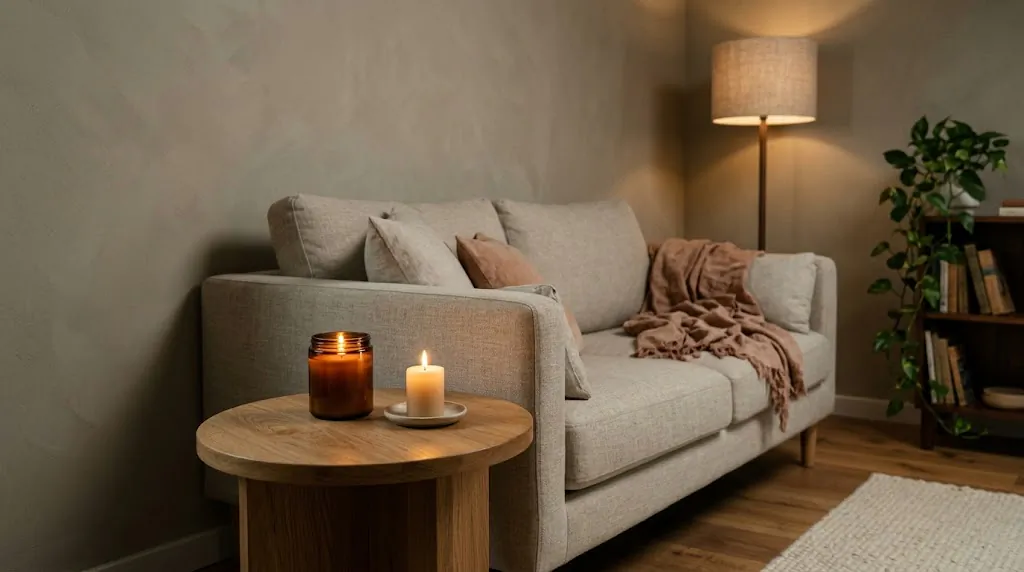
11. Vanilla and Brown Sugar. Universally appealing. Gentle enough for a bedroom, distinctive enough for a living room. The best vanilla fall candles smell rounded and warm rather than like vanilla extract straight from the bottle.
12. Maple and Clove. A combination that is less common than pumpkin spice but often more interesting. Maple sits at the intersection of sweet and woodsy, so it bridges families in a way that makes a space feel layered rather than one-note.
13. Caramel and Apple. A grown-up version of the county fair smell. Sweet but grounded by the fruit note, which keeps it from reading as purely dessert-like. Works particularly well in a kitchen or dining space.
14. Dark Chocolate and Cardamom. This is the fall scent for people who think most fall candles are too obvious. Gourmand in a sophisticated way. Burns better as an evening scent than a daytime one.
Fresh and Crisp (Good for Small Spaces, Shared Apartments, Sensitive Noses)
15. Apple Orchard. Different from apple cinnamon. No spice, just the clean, slightly tart smell of actual apples. This is the right call for very small spaces, shared apartments with scent-sensitive roommates, or anyone who wants to feel seasonally cozy without a heavy fragrance presence.
16. Cranberry and Fig. Tart and slightly jammy, with enough sweetness to feel fall-appropriate without tipping into bakery territory. Fig adds a subtle earthiness that keeps it interesting.
17. Pear and Cashmere. Gentle, clean, and quietly elegant. If you want your home to smell like a boutique hotel in October rather than a pumpkin patch, this is your scent. It works in any room and bothers almost nobody.
How to Match Scent Strength to Your Space (This Matters More Than Most People Realize)
Small apartments and big candles are not always a good match. Scent throw, the distance and intensity with which a candle fills a room, varies by wax type, fragrance load, and room size. In a 400 to 600 square foot apartment, a large jar candle with a strong hot throw (most paraffin candles fall here) can easily become overwhelming in under an hour. A soy candle in the same size jar will typically be gentler because soy burns at a lower temperature and diffuses scent more slowly.
A rough working guide: in a space under 200 square feet, like a studio bedroom or a bathroom, a 4-ounce votive or small jar is genuinely plenty. For a living room or open-plan space up to about 400 square feet, a standard 8 to 10 ounce jar candle is appropriate. For larger spaces, you can go up in size or add a second candle in a complementary scent from the same fragrance family.
Fresh and fruity scents tend to have a lighter throw and work better in small spaces. Earthy and smoky scents tend to linger longer and fill a room more completely, which means they need more space to breathe.
The Candle Habits That Save You Money (and Protect Your Deposit)
Here is where most people lose money on candles, and it is completely avoidable.
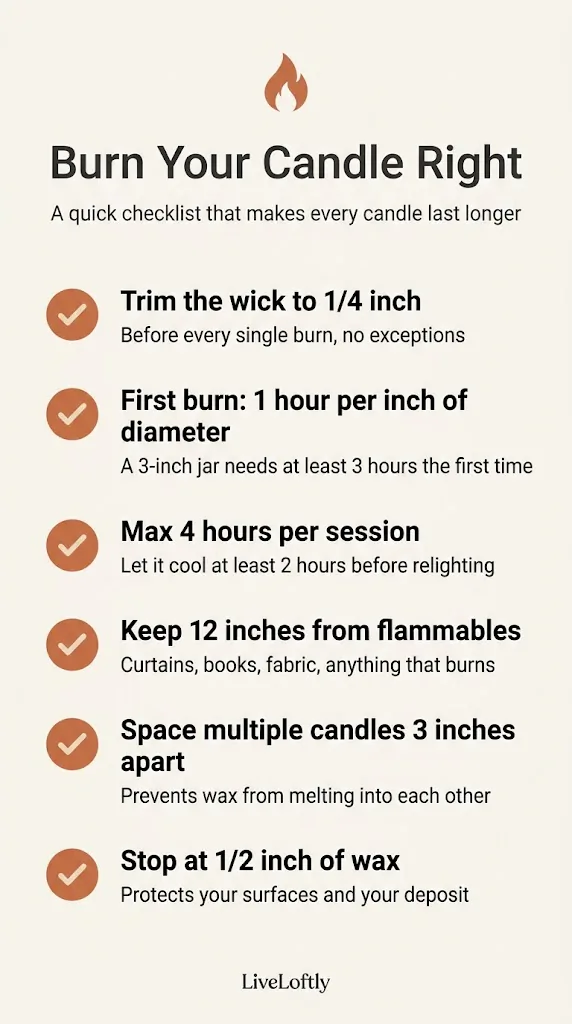
Trim the wick before every single burn. The National Candle Association recommends trimming the wick to one-quarter inch before lighting. A longer wick produces a larger flame and more soot, which means black marks on your glass container and potentially on your ceiling, and no renter wants to explain that to a landlord. The NCA also notes that properly trimmed wicks can extend candle life by up to 25 percent, which at candle prices is meaningful.
Do the first burn correctly. This is the rule most people have never heard and the one that most often causes frustration. According to the National Candle Association’s burning guide, a candle should burn for one hour per inch of container diameter on its very first lighting. A standard 3-inch diameter jar should burn for at least three hours the first time. If you cut that short, the wax creates a “memory ring” and will tunnel down the center for the rest of its life, wasting the wax around the edges. This is how a $22 candle gives you six hours of use instead of forty-five.
Do not burn past four hours or below half an inch of wax. Burning too long in one session causes the wick to develop a carbon buildup that makes the flame unstable. Burning past the half-inch mark can cause the glass to overheat and crack, and on a renter’s shelf, that matters.
Keep candles at least three inches apart from each other if you are grouping them, and at least 12 inches from anything flammable like curtains or books. The U.S. Fire Administration reports that on average 20 home candle fires are reported every single day, and the most common causes are candles placed near combustibles and candles left unattended.
Stop burning when half an inch of wax remains. At that point the heat can transfer through the bottom of the container. Stopping early protects your surfaces and your deposit.
The Renter Option: Flameless Candles and Wax Warmers
If your lease explicitly prohibits open flames, you are not out of options.
Wax warmers use a low-wattage bulb or electric plate to gently melt scented wax, releasing fragrance without any open flame. As The Spruce explains in their breakdown of candle warmers versus burning, warmers eliminate the soot and smoke that comes with burning and are a genuinely practical choice for no-flame apartments. The tradeoff is that warmers reduce candle life faster by melting the entire wax pool at once, so you will burn through a candle more quickly using this method.
Wax melts and tarts are another option. You buy them separately from the warmer, they are typically inexpensive (often under $5 for a pack), and you can swap scents easily without committing to a full candle in a scent you are not sure about yet.
High-quality flameless LED candles have also improved significantly. The better ones have a realistic amber flicker, a remote or timer function, and some are made with real wax drip texture that genuinely reads as a candle from across a room.
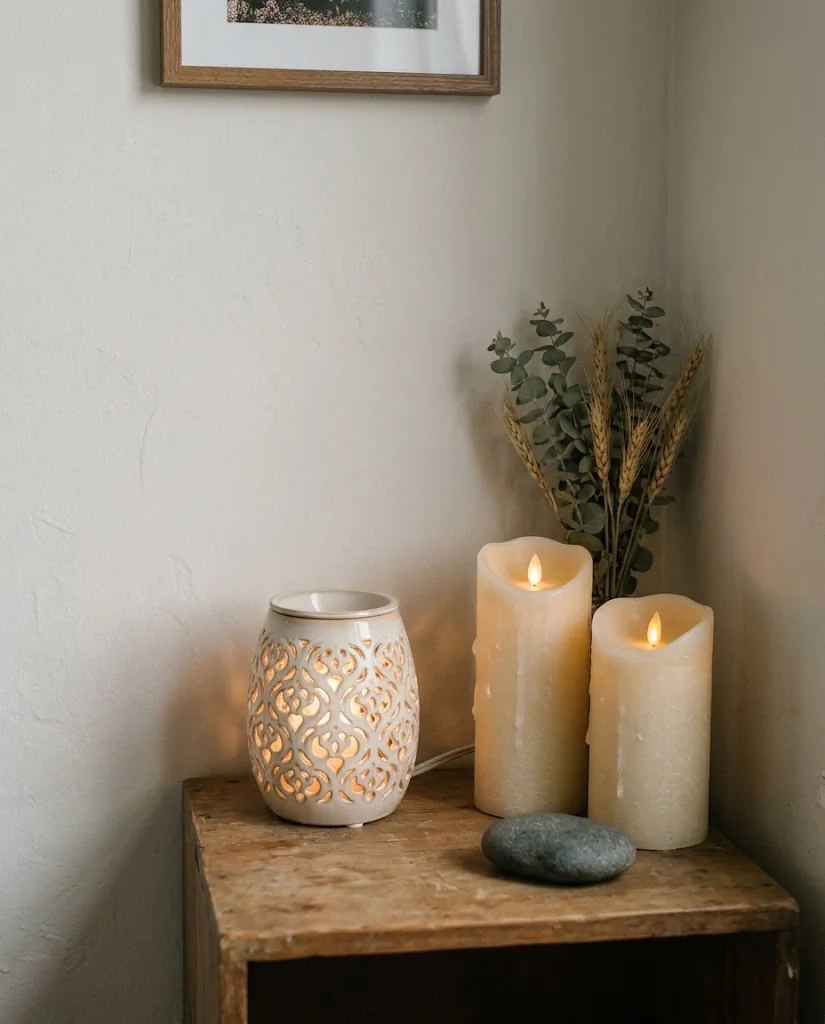
They will not scent your space on their own, but paired with a room spray or wax melt warmer nearby, they create a very convincing cozy atmosphere.
How to Style Candles So They Look Like You Meant It
A single candle sitting alone on a coffee table looks accidental. Two candles sitting next to each other at the same height look a little awkward. Three candles at varying heights, or one candle grouped with one or two other objects, looks intentional. That is the whole game.
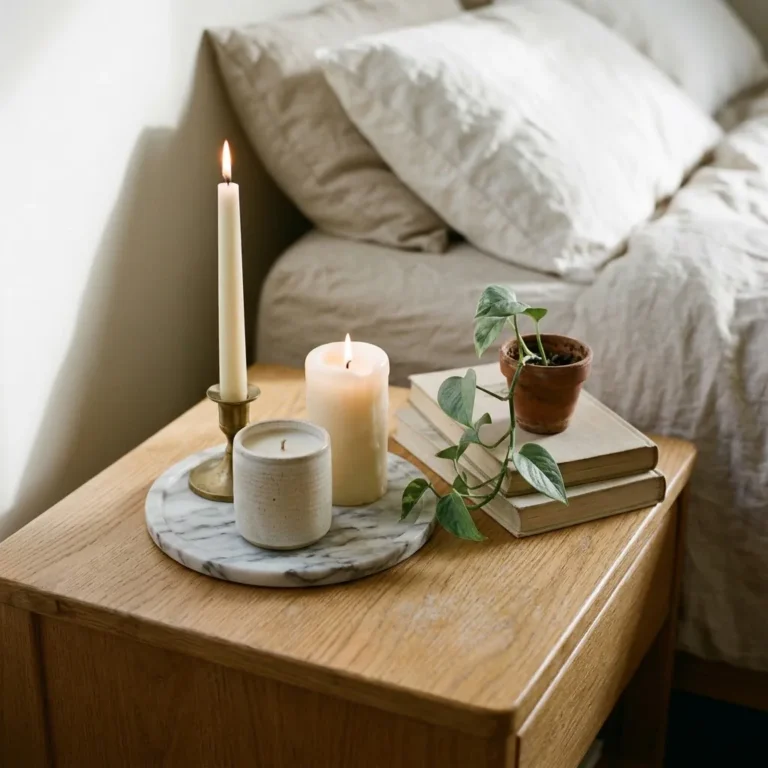
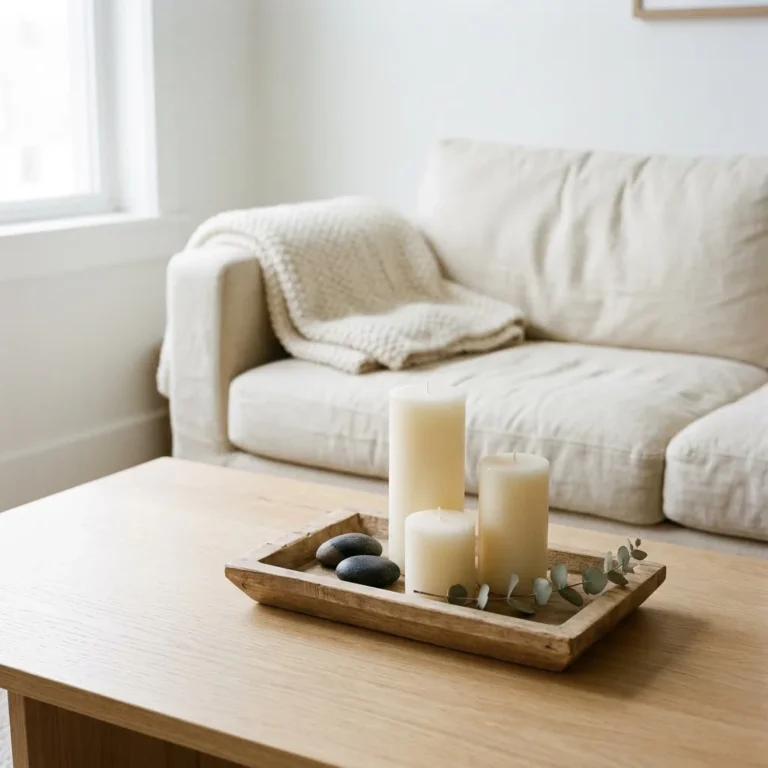
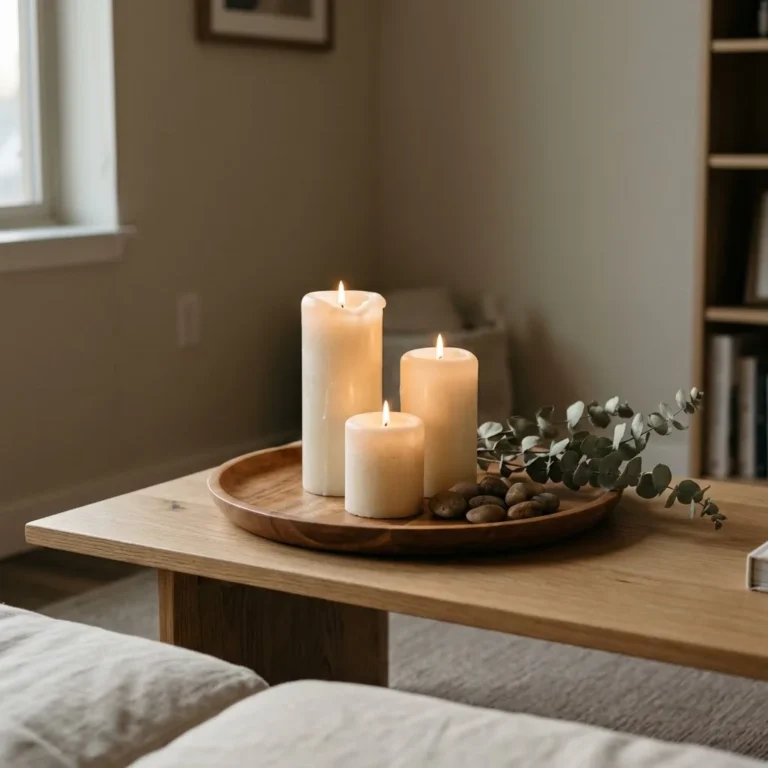
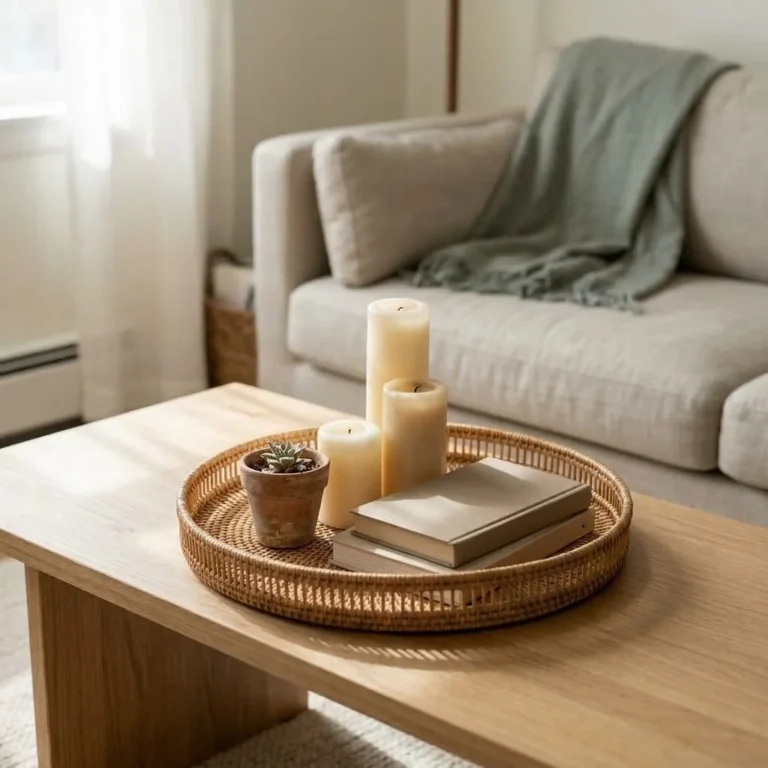
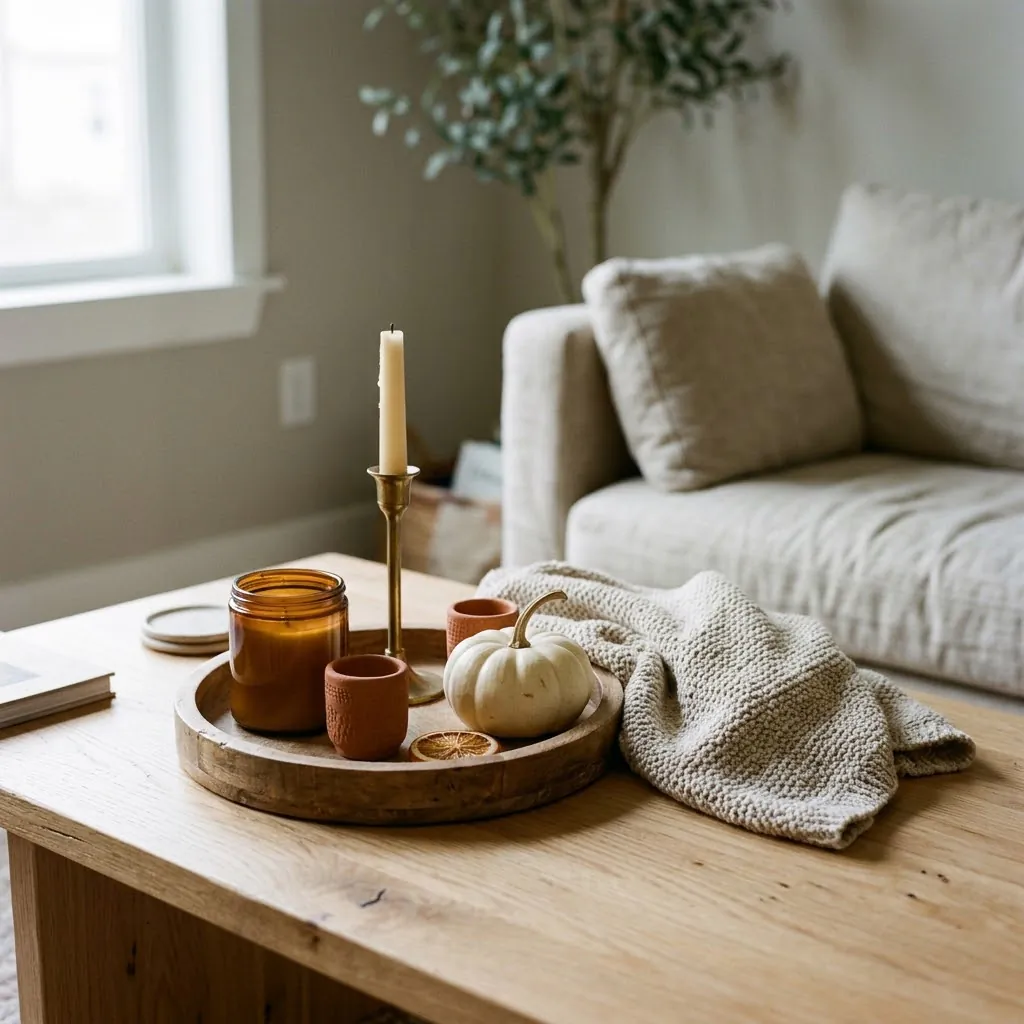
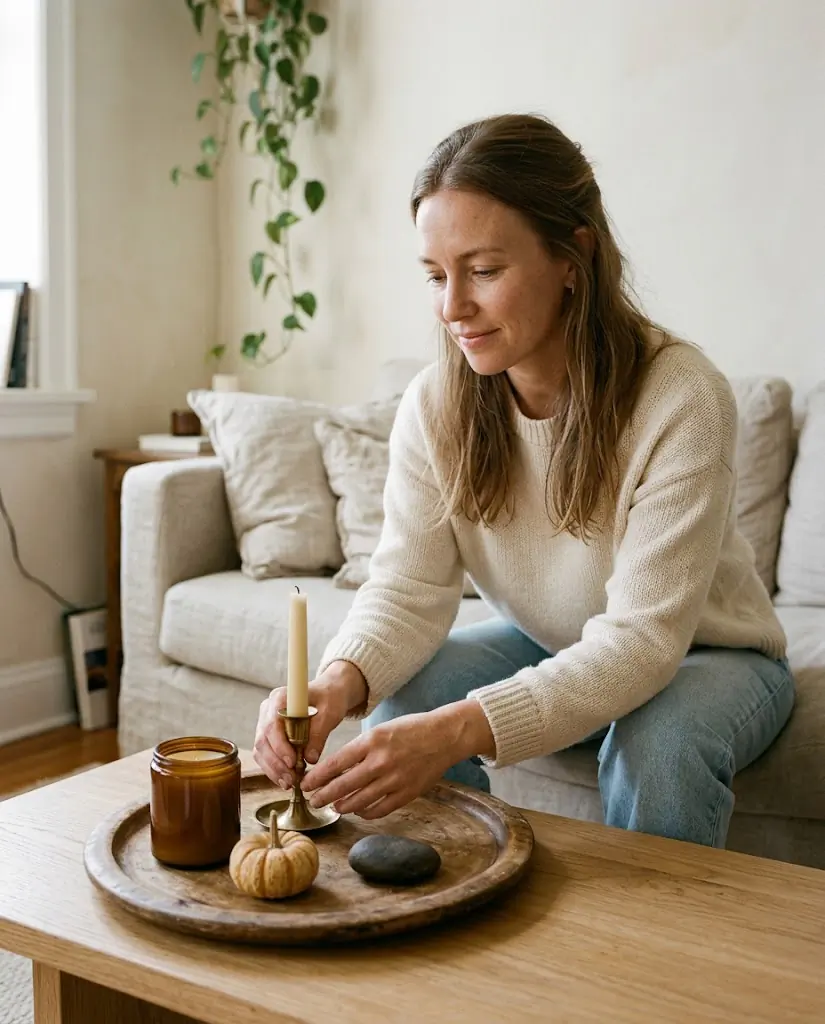
On a coffee table: Gather candles onto a tray. A wooden, ceramic, or metal tray with a 12 to 14 inch diameter gives you enough space to work with. Group one taller candlestick, one medium jar candle, and one or two small votives at different heights. Add something non-candle to break up the repetition: a small book, a smooth stone, a dried orange slice, a mini pumpkin. The tray unifies everything and also protects your coffee table from wax drips.
On a shelf: This is where varying vessel type matters most. A glass jar candle, a terracotta votive holder, and a taper in a brass candlestick will look far more collected than three matching glass jars in a row. Keep the overall footprint of the grouping small, candles on a shelf are an accent, not a collection. One or two candles on a well-styled shelf is usually enough.
On a windowsill: Excellent location for a candle because the backlight from outside makes the flame look beautiful from inside the room. But keep the window closed and keep curtains well clear. This is the spot most likely to create a draft that bends the flame toward something flammable. A pillar candle on a heat-resistant glass or ceramic plate is the safest setup for a windowsill.
On a mantel: If you have a fireplace mantel, this is the natural home for a cluster of candles. Group them asymmetrically. Three candles of varying heights on one side of the mantel with other objects on the other side will look more interesting than a symmetrical row down the center.
Layering Scents Across a Space (a Low-Effort Trick That Feels High-End)
You do not need to limit yourself to one scent. Scent layering, the idea of using complementary fragrances in different parts of your home to build a coherent olfactory atmosphere, is having a genuine moment, and for good reason. According to fragrance development consultant Emilie Mascarell in a recent Apartment Therapy feature on fragrance layering, the key is to think in terms of mood rather than matching scents exactly. “Everything doesn’t need to match, but the transitions between spaces should feel intentional.”
For fall, a practical approach looks like this: a spicy or fresh-fruity candle in your entryway or kitchen where you want energy and welcome, a woodsy or amber candle in the living room for evenings, and something quiet like sandalwood or vanilla in a bedroom or reading corner. The scents do not need to be from the same brand or even the same price point. They just need to share a general emotional direction, warm, grounded, and cozy in this case, without fighting each other for dominance.
The mistake most people make is burning two heavy, strong-throw candles in adjacent rooms simultaneously. Less is more with scent in small homes. One good candle at a time, in the room you are actually in, will do far more for the atmosphere than four mediocre ones burning at once.
Worth It vs. Skip It: A Honest Look at Price Tiers
You can find fall candles at almost every price point, from a couple of dollars at a dollar store to $90 for a single glass vessel from a luxury brand. Here is an honest assessment of what each tier actually gives you.
Under $10: Often paraffin-based with synthetic fragrance. Can smell fine cold, and many smell fine burning, but they tend to burn faster, throw more soot, and have shorter total burn times. Worth trying for a scent you are not sure about yet, not worth buying in multiples as your main home fragrance.
$10 to $20: This is where you start finding soy-blend candles with cleaner burns and better fragrance load. Bath and Body Works falls here, as does a good chunk of Target’s private label home section. Quality varies widely, but there are genuinely good candles in this range, especially if you know your scent family and can read ingredient labels.
$20 to $35: The most reliable range for quality. Soy or soy-blend, thoughtfully fragranced, burn times typically in the 40 to 60 hour range for a 10-ounce jar. This is where I would put the bulk of a candle budget.
$35 and up: Often very high quality, with complex fragrance layering, long burn times, and beautiful vessels you will want to keep. Worth it occasionally for a scent you genuinely love and will burn all the way through. Not worth it as an experimental purchase or as shelf decoration.
The most expensive candle you own that you are afraid to light is worth exactly zero dollars to your living space.
A Few Quick Notes Before You Light Anything
Always place candles on a stable, heat-resistant surface. Never on a wood shelf directly, never on a cloth surface, never balanced anywhere they could tip. A ceramic plate, a glass coaster, or a proper candle plate costs almost nothing and protects both your surfaces and your deposit.
Burn candles in well-ventilated rooms. A tiny bit of airflow helps the flame burn cleanly, though a direct draft or open window will cause uneven burning and black marks on the glass. Open a window in an adjacent room, not directly next to the candle.
Store unused candles in a cool, dark place with the lid on. According to the NCA, highly fragranced candles have a shelf life of six to twelve months for optimal scent performance. A candle sitting on a bright windowsill for three months as decoration will smell noticeably weaker when you finally light it.
And the simplest rule: do not leave a burning candle unattended. Ever. In a small apartment, that is less about dramatic fire risk and more about the small, quiet ways an unattended candle damages things, a bit of wax on a shelf, a soot mark on a wall near a curtain, a glass vessel cracked from too much heat. None of those things are deposit-friendly.
The Bottom Line
Fall candles are one of the most affordable and most effective ways to make a space feel genuinely seasonally alive. The difference between a candle that works and one that disappoints almost always comes down to knowing your scent family, burning it correctly from the very first use, and placing it where it can actually do something.
Start with one scent in the family that sounds most like you. Burn it the right way. See how it makes the room feel. You do not need seventeen candles to get the full effect of cozy fall candlelight. You need one good one, burning cleanly, in a room you actually spend time in.
That is honestly enough.