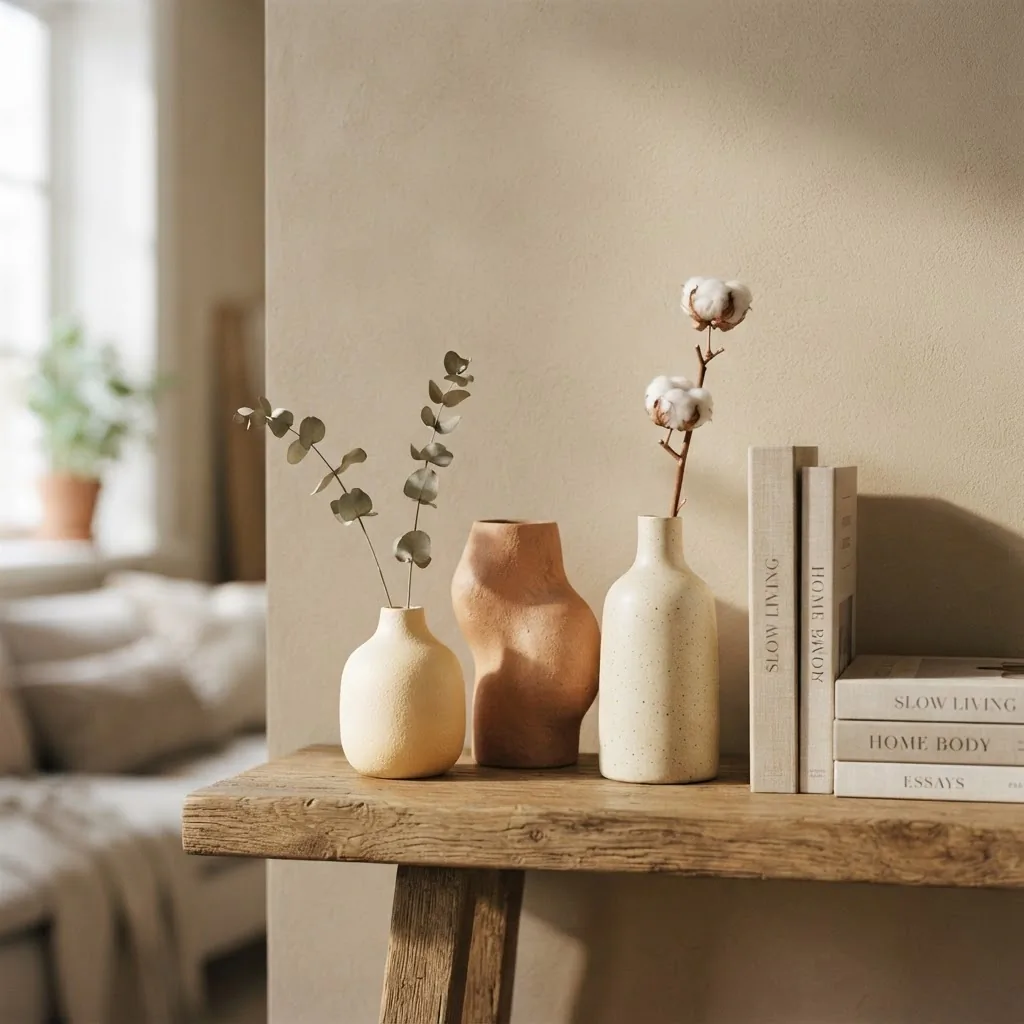
How to Style a Vase So It Actually Looks Good at Home

I have stood in front of a vase on a shelf and genuinely felt stumped more times than I can count. The vase is perfectly nice. The shelf is fine. But together, they look like a vase on a shelf, not like a purposeful, pretty moment in a room. If that sounds familiar, you are in exactly the right place.
Here is the thing: styling a vase well has almost nothing to do with floristry. You do not need to know how to hand-tie a bouquet or remember the name of a single flower beyond “the round ones” and “the spiky ones.” What it really takes is understanding a few basic ideas about proportion, grouping, and what to actually put inside. Everything else follows from there.
This is a guide for people who have a vase and want it to look like it belongs, not like it got placed there because they did not know what else to do. Whether your vase is a $3 thrift find, an IKEA ceramic, or a family hand-me-down, these ideas will work for you.
The One Rule That Makes Everything Easier: Proportion
Before anything else, let’s talk proportion, because this single idea explains why so many vase arrangements look a little off even when nothing else is obviously wrong.
The classic rule, used by florists and floral designers for decades, is that whatever you put in your vase should stand roughly 1.5 to 2 times the height of the vase above the rim. So if your vase is 8 inches tall, your stems or branches should extend another 12 to 16 inches above the opening. Iowa State University Extension’s guide on how to create a floral arrangement describes proportion as one of the primary principles of design, specifically the relationship of components within the design to each other and to their surroundings. In plain terms: if your stems are too short, the arrangement looks squat and unfinished. If they are too tall and thin, it looks unstable and nervous. The sweet spot in between is what gives you that calm, intentional look.
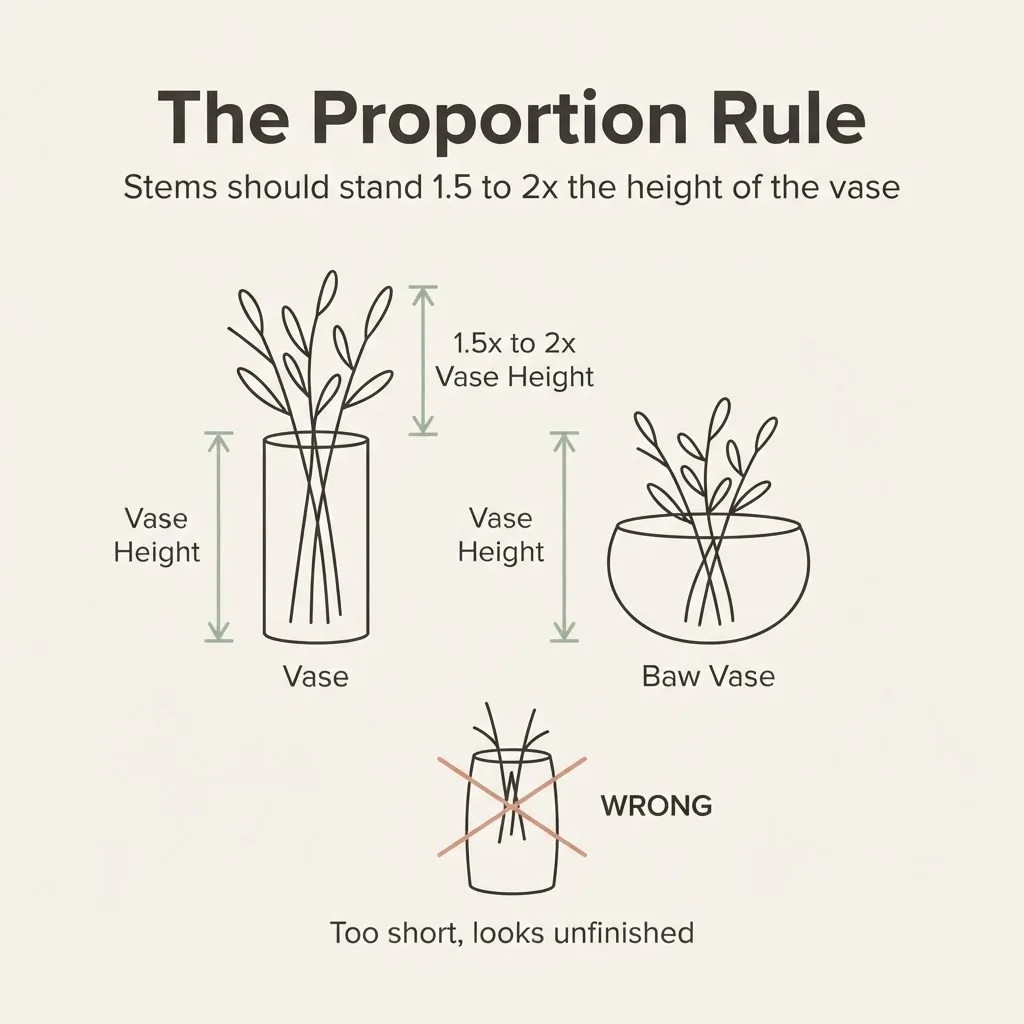
This rule works for fresh flowers, dried stems, faux branches, and even foraged twigs from your backyard. It is not a rigid law, but keeping it in the back of your mind when you trim stems or pick up a new vase will save you a lot of “why does this look weird?” moments.
Start With What You Already Have: The Honest Vase Audit
Before buying anything, look at what you own. Most people have at least one vase floating around, and sometimes the one you almost donated is the most useful one in your collection.
Pull them all out and line them up. Notice which ones have a narrow neck (easier to arrange in, because the opening holds stems upright without help), which ones are wide-mouthed (harder to arrange in but beautiful for big loose bouquets), and which ones are colored or opaque (a genuine advantage, because they hide messy stems). A clear cylinder is the hardest vase to make look effortless, because you can see everything inside. That is not a reason to throw it away, but it is a reason to know what you are working with.
If you are shopping for a first vase or trying to fill a gap, you really do not need to spend much. Thrift stores are genuinely one of the best places to find interesting, solid vases in unusual shapes and materials, often for $1 to $5. Craft stores and IKEA regularly carry simple ceramic bud vases and cylinder vases in the $8 to $20 range that are perfectly good starting points. The vase itself does not have to be impressive. The styling is what makes it look good.
15 Ways to Style a Vase (No Florist Required)
1. Use the 1.5x Rule for Instant Polish
You now know this rule, so use it every time. Before you drop anything into a vase, hold it up next to the vase and check the proportions. Trim stems down if needed. Add taller branches if something looks too stubby. This single habit will make every single arrangement look more considered than it actually was. Proportions that feel right to the eye are not an accident, they are a formula, and you now have it.
2. Try a Single Stem in a Bud Vase
One of the most underrated moves in home styling is also the simplest: a single stem in a small vase. One peony. One sprig of eucalyptus. One grocery-store tulip. Placed on a bathroom counter, a bedside table, or a kitchen windowsill, a single stem in a bud vase is quiet and intentional in a way that a big arrangement often is not. It is also the most budget-friendly option there is, because a bunch of tulips that costs $6 at the grocery store becomes six individual styled moments throughout your home.
The key with single stems is to keep the vase small and the stem proportionally tall. A tiny vase with a stem that barely clears the rim looks accidental. The same vase with a stem that reaches twice its height looks like you meant it.
3. Group Vases in Odd Numbers
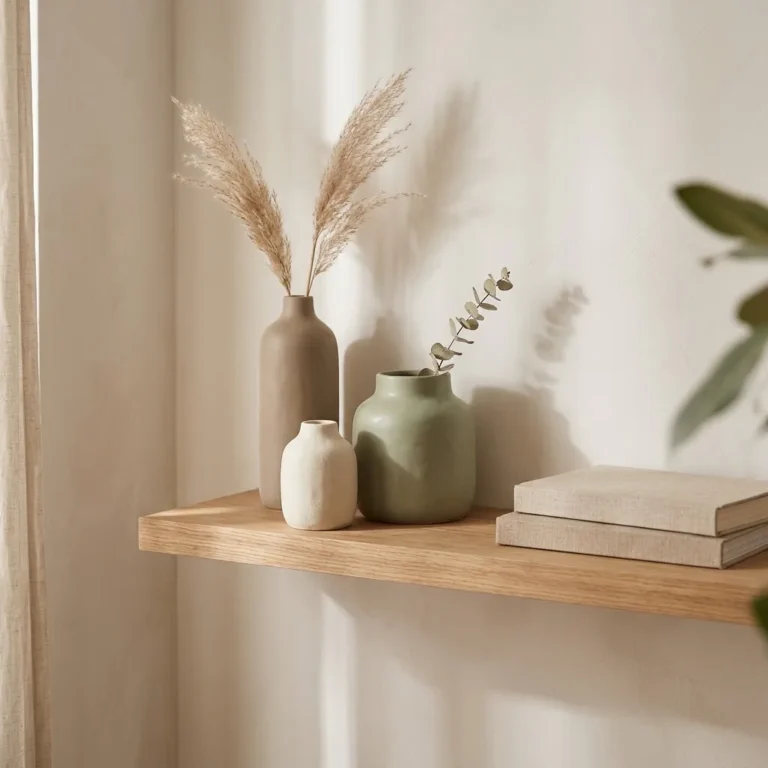
If you have more than one vase and are not sure how to display them, group them in threes or fives rather than twos or fours. Odd-number groupings feel more natural and interesting to the eye, and groupings of three in particular are one of the most reliable styling principles in interior design. The key is varying the heights so your eye moves through the group rather than stopping flat. One tall, one medium, one short is the classic version. You do not need all three to be the same style or material, in fact a mix of textures and finishes (matte ceramic next to a colored glass bottle next to a woven vessel) tends to look more collected and personal than a perfectly matched set.
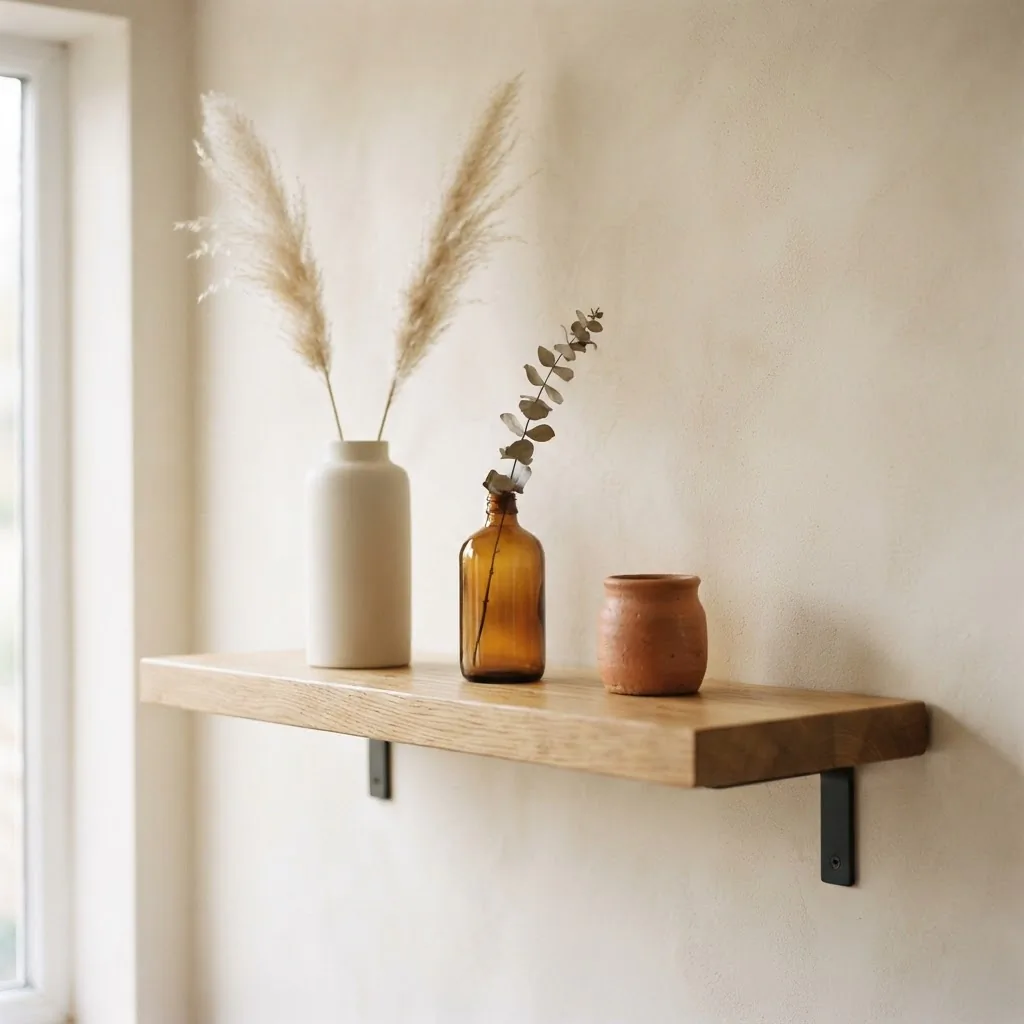
Homes and Gardens’ editors describe this approach well in their guide to decorating with vases, noting that odd-number groupings with varied heights create rhythm and balance.
4. Use a Tape Grid to Hold Stems Upright
This is the trick no one talks about and almost everyone needs. If you have ever put flowers in a vase and watched them immediately flop to one side, the problem is usually that the mouth of the vase is too wide for the number of stems you have. The fix is simple: before adding water, lay a few strips of clear waterproof tape across the opening of the vase in a grid pattern, leaving small squares for stems to pass through. This grid holds each stem in place so your arrangement looks structured instead of deflated. It works in any clear vase and costs nothing.
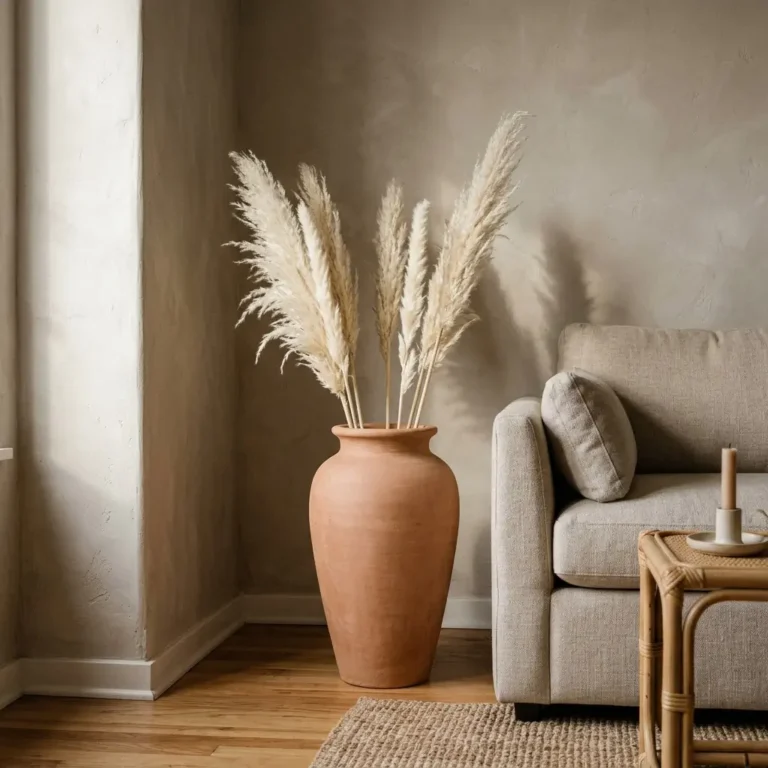
5. Style a Floor Vase With Branches or Pampas
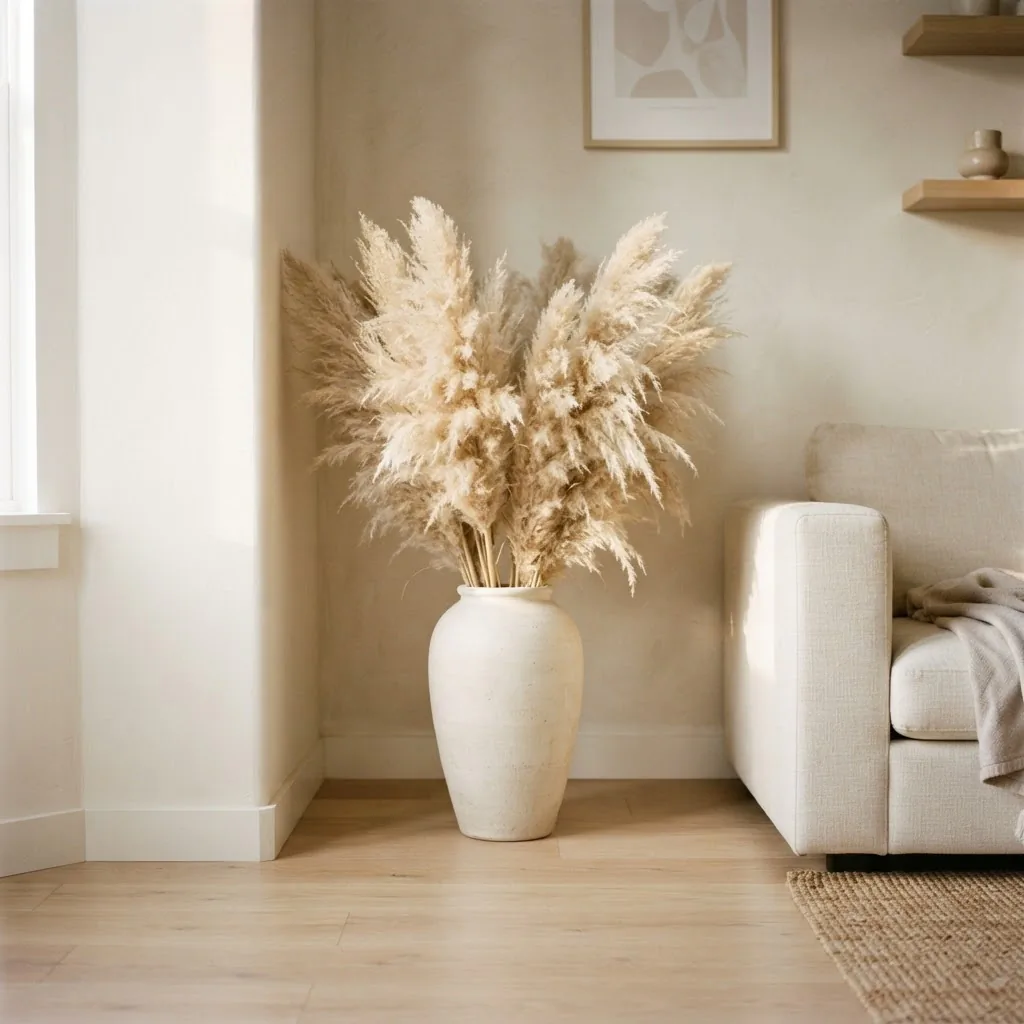
A tall floor vase is one of the most dramatic and affordable ways to fill an empty corner in a rental apartment, because it takes up almost no floor space and makes a room feel finished immediately. The best fillers for a tall floor vase are things that can stand up to the scale: long dried pampas grass stems, eucalyptus branches, cotton stems, curly willow branches, or even foraged branches from outside. The Spruce’s roundup of large floor vase decoration ideas shows how something as simple as a white vase with a few pampas stems in the corner of a living room looks effortlessly styled without any flowers involved at all.
For the proportion rule in a floor vase: if your vase is 24 inches tall, your branches should ideally reach another 36 to 48 inches above the rim. That might sound dramatic, but it is what fills the visual space correctly and prevents the arrangement from looking like it got cut short.
6. Fill a Clear Vase With Something Unexpected
If you have a clear glass cylinder and no stems, you have more options than you think. Pebbles or smooth river stones fill the base and look clean and intentional. Sand gives a coastal feel. Marbles work especially well in smaller clear vases on a coffee table or shelf. Pinecones are a simple seasonal option. The fill does two things: it anchors the vase visually so it does not look empty, and in many cases it also holds faux or dried stems upright so you do not need the tape grid method.
7. Go Seasonal Without Spending Much
One of the easiest ways to keep a vase feeling current through the year is to swap out the filler seasonally, which you can do for very little money. Cotton stems and warm-toned dried grasses in fall, simple evergreen sprigs or bare branches in winter, tulips or ranunculus from the grocery store in spring, sunflowers or wildflower bunches in summer. You are not redesigning the room, you are just rotating one element, and it makes a noticeable difference in how the space feels.
8. Make Faux Stems Look Real
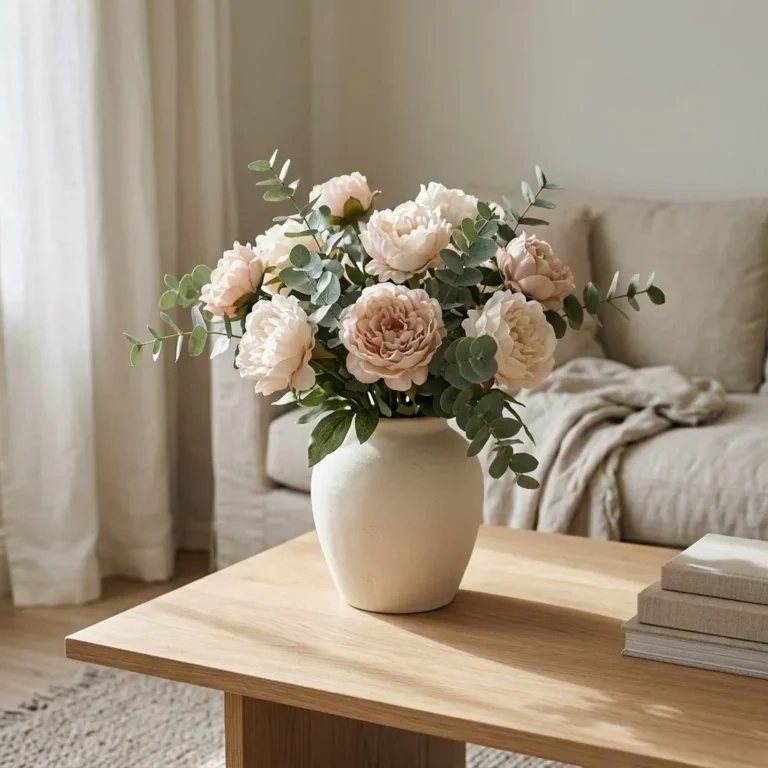
Faux flowers have come a long way, and there is no shame in using them, especially if you travel often, have pets who eat plants, or just want something that lasts. The key to making artificial stems look convincing is hiding the plastic bits. In an opaque or colored vase this is easy, just drop them in. In a clear glass vase, fill the base with sand, stones, or marbles to cover the plastic stem ends. Bend and curve individual stems gently before arranging them, because real flowers do not grow in perfectly straight lines. Vary the height of the stems slightly so they look like they were placed, not dropped in a bundle.

One practical tip worth following: the bottom leaf on a faux stem should sit level with the neck of the vase, so that only the flower or upper foliage is visible above the rim. This prevents the arrangement from looking like a bunch of plastic sticks.
9. Let a Beautiful Vase Stand Alone
Here is a permission slip: you do not have to put anything in a vase for it to count as decor. A vase with a genuinely interesting shape, material, or color can absolutely stand on its own as a sculptural object. A hand-thrown ceramic with a beautiful glaze, a colored glass bottle, a chunky concrete vase with texture, all of these things look good empty when they are placed with intention. The key is that the vase itself needs to earn that solo moment. A plain white cylinder sitting empty looks forgotten. A beautiful organic-shaped ceramic sitting empty looks like a collected piece.
If you are going to display an empty vase, give it a little breathing room on the shelf rather than crowding it, and consider placing it next to a book or a candle so it reads as part of a styled moment rather than a leftover item.
10. Hide Messy Stems With a Colored or Opaque Vase
One of the most practical styling upgrades for anyone who loves fresh or dried flowers is simply switching to a colored glass or opaque ceramic vase. Florist Gail Smith notes that dried flowers in particular often look messy when stems are visible in a clear vase, because dried stems tend to be stiff and plentiful. A tinted or opaque vase instantly solves this problem. It also makes a grocery-store bunch of flowers look considerably more deliberate, because the eye goes straight to the blooms rather than a tangle of stems and water.
If you already have a clear vase you love, the stone or marble fill technique achieves a similar effect, covering the lower third of the vase where the stems are least attractive.
11. Layer a Vase Into a Shelf Vignette
A vase sitting alone on a shelf can look stranded. The same vase placed next to a small stack of books, a candle, and one framed photo becomes a vignette, which is just a fancy word for a small, intentional grouping of objects. The books add height variation and something for the eye to land on. The candle adds texture contrast. The vase ties it together as the soft, organic element.
A good shelf vignette follows the same odd-number rule: three to five objects at varying heights, with at least one taller element, one lower element, and one object with a different texture. Your vase fills the tall-and-organic role beautifully.

12. Try a Single Style Bud Vase Cluster on a Dining Table
Instead of one large centerpiece on a dining table, try a cluster of three small bud vases with a single stem in each. Use the same flower variety in all three vases for a cohesive, modern look, or use the same color family with different flower types for something a little more relaxed. Space them slightly unevenly (not in a perfectly straight line) for a gathered, natural feel. This works especially well in small apartments where a large centerpiece would overwhelm the table, and it is easy to move to the side when you actually need the table surface for food.
13. Use Pampas Grass Thoughtfully, Not Trendily
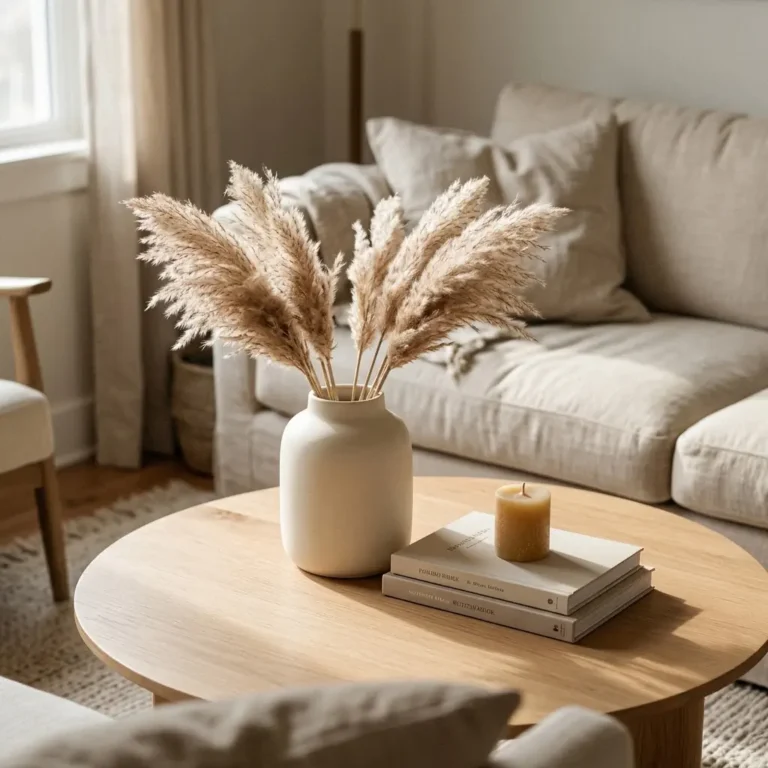
Pampas grass has been everywhere for a few years, and it is genuinely beautiful when used well. Where it goes wrong is when it is used too heavily or in spaces that do not need the scale. A single tall bundle of dried pampas in a floor vase in a neutral living room is elegant. A cluster of five pampas arrangements in a studio apartment reads as overwhelming. The Spruce’s guide to decorating with pampas grass shows how even a small stem or two in a bathroom vase adds warmth without the full bohemian commitment.
If you are buying dried pampas, look for bundles with full, fluffy plumes rather than sparse, scraggly ones. A small quality bundle costs roughly $10 to $20 and will last for months or longer if you keep it dry and away from direct harsh light. Gently fluffing the plumes when you first arrange them helps them open up beautifully.
14. Make Fresh Flowers Last Longer
This section belongs here because if you are going to buy fresh flowers for your vase, you deserve to get more than three days out of them. ISU Extension’s guide on how to care for cut flowers makes the key points clearly: start with a clean vase (bacteria from an unwashed vase shortens flower life significantly), remove all leaves below the waterline (submerged foliage rots and clouds the water), cut about half an inch to one inch off the stems before placing them in the vase, and use a commercial floral preservative if one comes with the bunch. Check the water daily and change it completely if it starts to smell or go cloudy.
Two things worth knowing: homemade preservative tricks like aspirin, pennies, sugar, and soda do not work as well as the commercial packets and can actually shorten flower life in some cases. And scissors tend to crush stem ends slightly, reducing water uptake, so a clean, sharp knife or proper floral shears will get you noticeably more days from the same bunch.
15. Style for Your Specific Decor Aesthetic
The same styling principles apply across every decor style, but the specific choices look different depending on your space. For a minimalist or Scandinavian-leaning room, a single matte ceramic vase in white, cream, or warm grey with one or two simple dried stems does the work quietly. For a boho or cottagecore space, a cluster of mismatched thrifted vessels with dried grasses, cotton stems, and a few wildflower-style faux blooms in warm tones creates the layered, gathered feeling. For a coastal-inspired room, colored glass vases in sea green, amber, or clear with sand in the base and a few eucalyptus stems or dried grasses feel right without being cliche. For a modern or more architectural space, a tall geometric vase with a single dramatic branch (cherry blossom, eucalyptus, or even a plain birch branch) makes a bolder statement than a full arrangement would.
The through-line in all of these is the same: proportion, an intentional filler choice, and a grouping that feels purposeful rather than accidental.
The Worth-It vs. Skip-It Breakdown
Since budget matters here, here is an honest rundown.
Worth it: a few good ceramic vases in neutral tones that work across seasons. A bag of smooth stones or decorative marbles to anchor stems. A bundle of quality dried pampas or eucalyptus. Clear waterproof tape (floral tape works, painter’s tape does not). A decent pair of sharp scissors or kitchen shears reserved for stems.
Skip it (or buy cheap): fussy novelty vases in very specific colors that only work with one thing. Large bunches of low-quality faux flowers that look obviously plastic. Expensive fresh flower deliveries if you are just going to let them die in three days without changing the water. Matching vase sets that look coordinated rather than collected.
The vase that looks like it cost nothing is often the thrift-store ceramic that you styled with intention. The $40 vase that looks forgettable is usually one that got dropped on a shelf without thought.