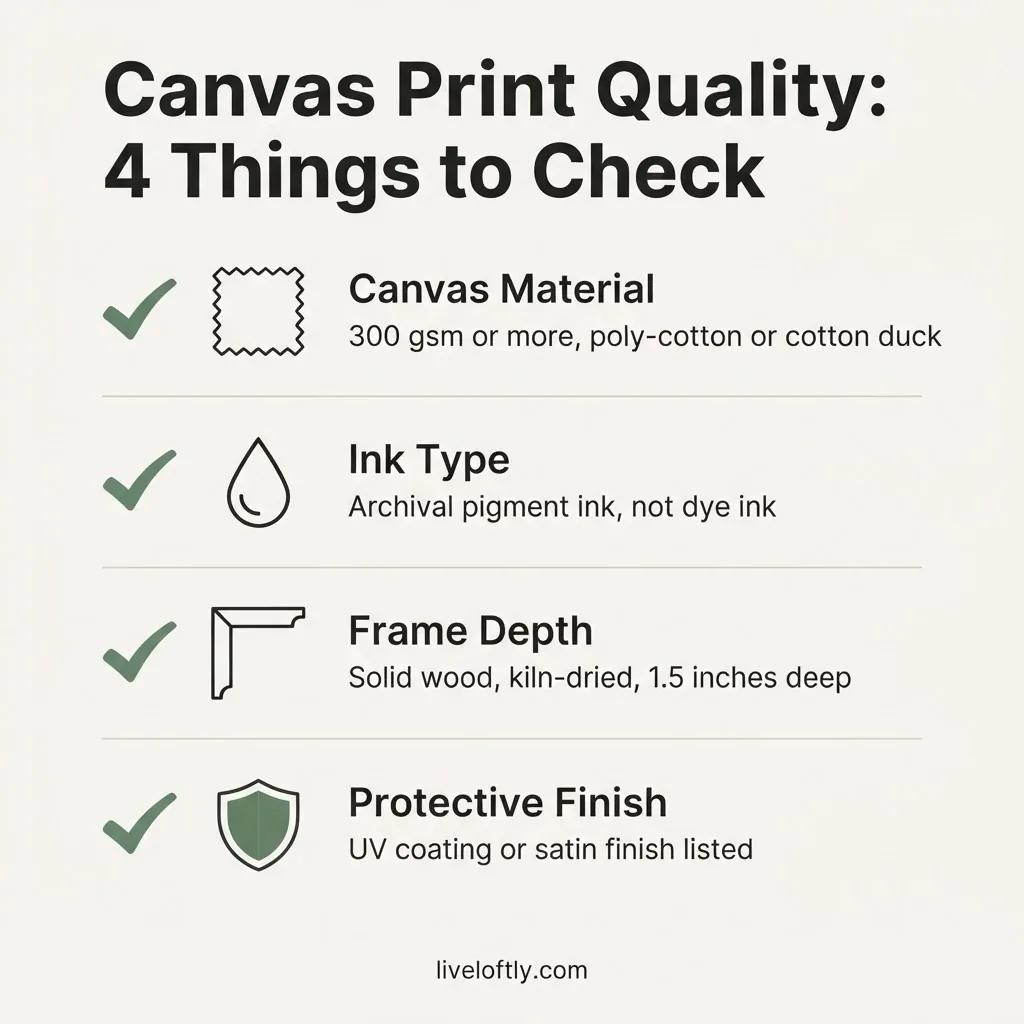
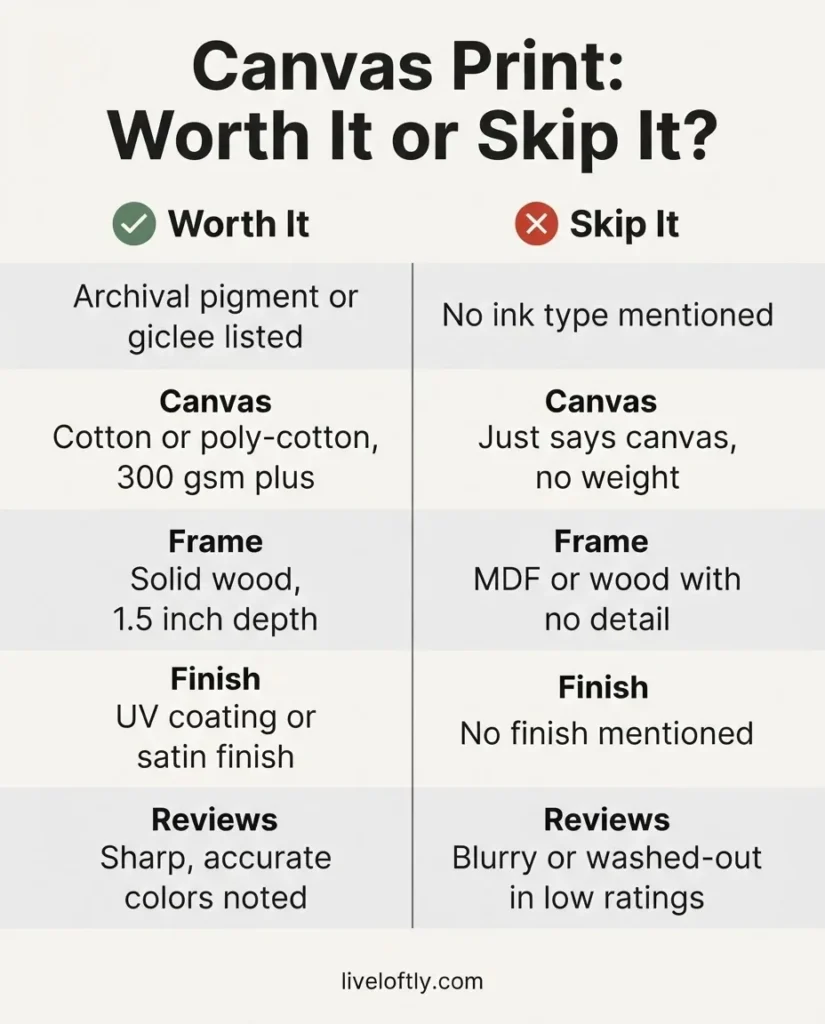
A high-quality canvas print has four things: a heavy poly-cotton or cotton canvas (300 gsm or more), archival pigment-based ink rather than dye ink, a solid kiln-dried wood stretcher frame at least 1.5 inches deep, and a UV-protective finish. If a listing tells you all four, you are in good shape. If it tells you none of them, keep scrolling.
That is the short version. But since most Amazon listings are not that upfront about their specs, I want to walk you through what each of those things means in plain English, why it matters, and exactly what to look for when you are staring at a product page trying to decide if a canvas print is worth the money or the wall space.
I have been furnishing apartments and houses on a budget for a while now, and canvas prints are one of those categories where you can genuinely get a great piece for a reasonable price, or you can end up with something that looks washed out within a couple of years or arrives warped out of the frame. The difference is usually not the price tag. It is the specs hiding in the product description.
Why Canvas Print Quality Matters More Than the Image
Most people shop canvas prints the same way: they scroll through images, find one they like, check the price, and click buy. That is the natural way to shop, and I am not saying your eye for a good image is wrong. But the image is only half the product. The other half is how it is made, and that half determines whether you are looking at the same crisp, vibrant piece five years from now or something that has faded, sagged, or developed a slight warp in the frame.
Here is the frustrating part: two canvases showing the exact same image, the same size, and a similar price, can have completely different build quality. One is made with archival pigment ink on a heavyweight cotton canvas with a solid wood frame. The other is a low-resolution image printed with dye ink on thin polyester with a cheap MDF or light-pine frame that was never properly dried before it was stretched. They look nearly identical on a product listing. They do not look the same on your wall in three years.
This is why reading the specs matters, and why I am going to make that easy for you.
What “Blurry” Actually Means (and How to Avoid It)
A canvas print looks blurry when the digital image file used to print it has too few pixels for the print size, usually because a low-resolution image was stretched to fill a large canvas without enough detail to hold up. This is not a framing problem or a material problem. It is purely a resolution problem.
For pre-made canvas art you buy off a shelf or online listing (not a custom print of your own photo), the blurriness question is on the seller, not you. Budget sellers sometimes take a low-resolution digital image and upscale it to fill a 24×36 canvas. The result looks soft, slightly pixelated, or just less sharp than it should be at close range.
According to CanvasPop’s resolution guide, the practical minimum for a quality canvas print is 150 DPI (dots per inch). For a small 8×10 to 12×16 print, that requires at least 1,800 x 2,400 pixels. For a medium to large canvas at 24×36, the recommendation jumps to 3,600 x 5,400 pixels at that same 150 DPI minimum. A seller working from a high-quality original digital file or artwork scan will have no problem hitting those numbers. A seller using a stock image grabbed at web resolution will not.
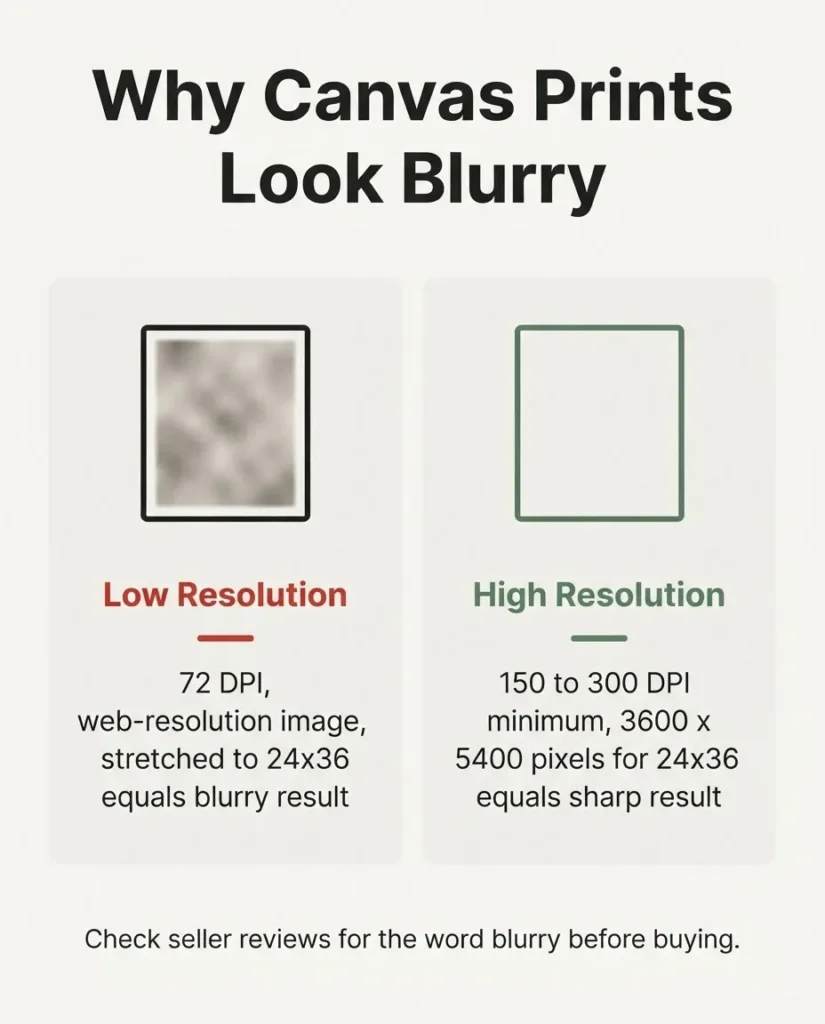
How to spot this risk in a listing: Look at the product photos themselves. If the listing photo looks slightly soft or the fine details in the artwork look smudged rather than crisp, that is a signal. Also check the reviews specifically for the word “blurry” or “pixelated.” Those will be your honest early warning system.
For custom photo prints (where you upload your own image), this is entirely in your hands. Use the highest resolution version of the photo you have, and check the seller’s own resolution calculator if they provide one.
The Four Quality Signals That Actually Matter in a Listing
1. The Canvas Material
The fabric your print is on matters more than most listings let on. There are three main options you will encounter.
Poly-cotton blend is the most common for consumer-grade canvas prints. A good poly-cotton blend combines the texture of cotton (which gives that traditional canvas look and holds ink well) with polyester’s resistance to humidity and shrinkage. When you see “poly-cotton” or “polyester-cotton blend” in a listing, look for the weight: 300 gsm or higher is decent, 360+ gsm is a quality signal.
100% cotton duck canvas is the traditional material and is used by more premium brands. Cotton holds pigment ink beautifully and has a slightly richer texture. If a listing says “cotton duck canvas” or “100% cotton,” that is a positive mark, especially if the weight is above 350 gsm.
Cheap polyester-only canvas is the one to avoid. It is thin, it has less texture, and it does not hold ink as well over time. A listing that vaguely says “canvas” without specifying cotton content or weight is often polyester or a very low-grade blend. Not always, but often enough to be cautious.
2. The Ink Type
This is the single biggest factor in how long your canvas print looks good. As Red River Paper explains in their dye vs. pigment ink breakdown, dye-based inks soak into the canvas fiber and stay chemically active, which means light breaks them down over time. Pigment inks bond solid color particles to the fabric surface and are significantly more stable under UV exposure.
In practical terms: a canvas print made with dye-based inks can show visible fading within 5 to 10 years, especially if it gets any sunlight. Red River’s guidance is that if you want a print to resist fading past 25 years, you need pigment inks, full stop.
A canvas print made with archival pigment inks and a UV-protective coating? Per independent longevity research, that can last 75+ years without noticeable fading under normal indoor conditions. That is a lifetime in a home context.
What to look for in a listing: Words like “archival pigment ink,” “fade-resistant ink,” “giclee,” or “UV-resistant inks” are all positive signals. Vague phrases like “vibrant colors,” “HD printing,” or “high-quality print” with no ink specification usually mean dye-based ink.
A listing that does not mention ink type at all is a yellow flag.
A note on “giclee”: this term comes from fine art printing and technically refers to high-resolution inkjet printing using archival pigment inks. In practice, giclee simply means a high-quality inkjet print on archival materials. Sellers sometimes use it loosely, so it is not a guarantee on its own. But when you see “giclee” combined with the other quality signals here, it is a meaningful indicator.
3. The Frame and Stretcher Bars
Behind every canvas print is a wood frame that keeps it flat and taut against the wall. This is what most people forget to check, and it is where cheap canvases fail.
What you want: Solid wood stretcher bars, ideally described as kiln-dried. As MontCarta explains in their stretcher bar analysis, kiln-dried wood has had its moisture content driven down to below 12% in a controlled process, which significantly reduces the tendency to warp or bow over time. Wood that was not kiln-dried still contains moisture that will move as humidity in your home fluctuates, and the canvas tightened over it will warp or sag accordingly.
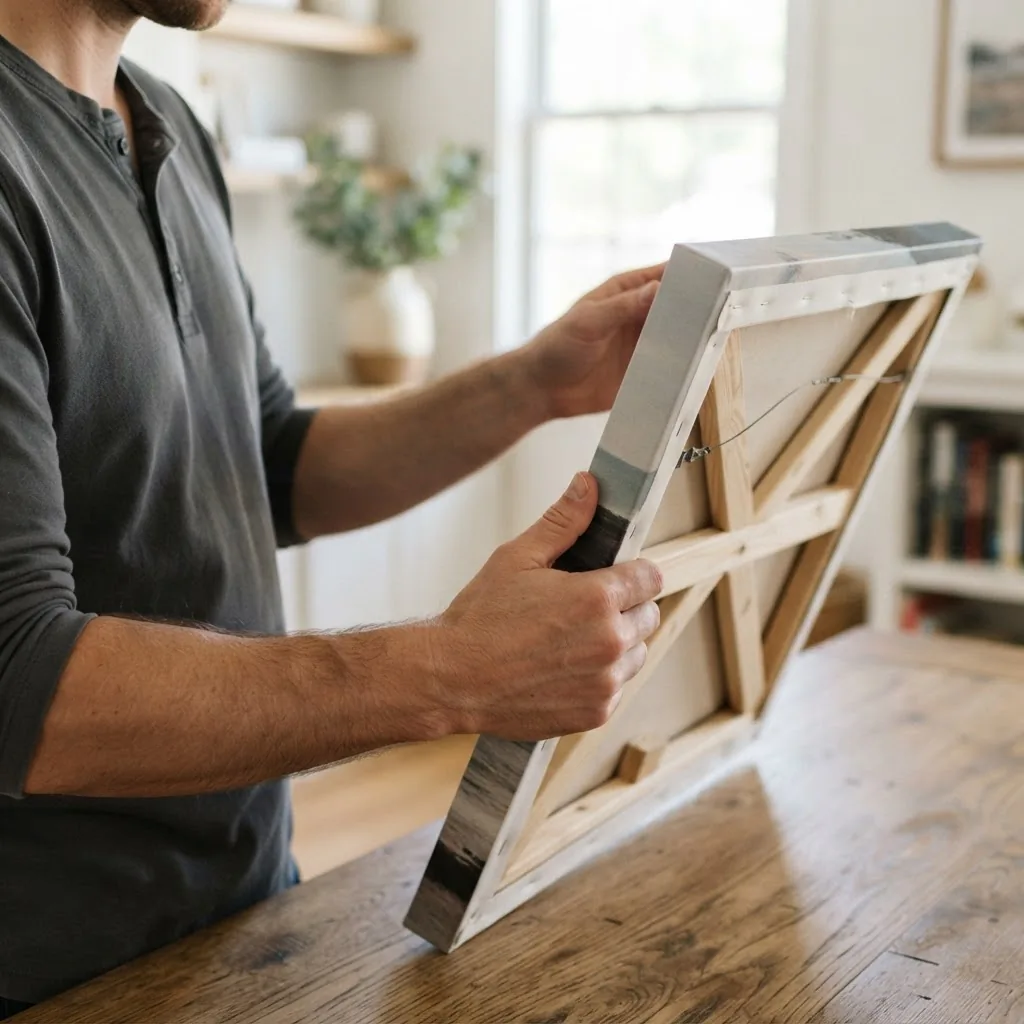
Frame depth is the other thing to check. Standard or “studio wrap” frames are typically about 3/4 of an inch deep. Gallery wrap frames are 1.5 inches deep. For anything 16×20 and larger, the 1.5-inch depth provides better structural support and a more finished look with no separate frame needed. For small accent pieces (8×10, 11×14), a 3/4-inch frame is fine.
What to avoid: Listings that describe the backing as “MDF,” “fiberboard,” or just “wood frame” with no detail are using lower-quality backing material. MDF does not stretch canvas in the same way a solid wood frame does, and it responds poorly to humidity changes over time.
What to look for in a listing: “Solid wood stretcher bars,” “kiln-dried pine,” or “1.5-inch wood frame” in the product specs. Stupell Industries, for example, explicitly states that their canvas is hand-stretched on a 1.5-inch thick wood frame.
4. The Protective Finish
A UV-protective coating or topcoat finish over the printed canvas makes a meaningful difference in longevity. It adds a layer between the ink and the environment, slowing down the fading that sunlight and humidity cause, and making the surface easier to dust without scratching.
You will see listings describe this as a “protective coating,” “UV-resistant finish,” “satin finish,” or “matte finish.” A satin or matte finish also reduces glare, which is practical if your wall gets any natural light. Glossy finishes can look nice in photos but will reflect light in ways that can be distracting in a real room.
If a listing does not mention a finish at all, the canvas may have no topcoat. That is not an automatic deal-breaker for a budget piece you plan to hang in a low-light hallway, but for a piece in a main living area, the protective finish is worth looking for.
How to Read an Amazon Canvas Listing Like a Buyer
The product specs section in an Amazon listing is where you will find (or not find) the four signals above. Here is what a solid listing looks like versus one to be skeptical of.
Green flags in a listing:
- Specifies canvas material (cotton, poly-cotton, and ideally gsm weight)
- Names ink type (archival, pigment, giclee, fade-resistant)
- Specifies frame material (solid wood, kiln-dried pine) and depth (1.5 inch)
- Mentions protective finish or UV coating
- States “Made in USA” with named domestic production (this often, though not always, signals tighter quality control)
- Has a return or satisfaction policy clearly stated
Yellow and red flags:
- No mention of ink type anywhere in the listing
- Frame described only as “wood” with no additional detail
- No canvas weight or material specified
- Review section mentions blurry, soft, pixelated, or washed-out colors
- Extremely low price for a large size with no quality specs to back it up
- Seller has no other listings, limited reviews, and no brand identity
The single most useful thing you can do before buying is search “blurry” or “faded” in the Amazon reviews filter. If those words appear more than once in the one and two-star reviews, they are not isolated incidents.
What Canvas Prints Actually Cost at Each Quality Level
I want to be straight with you about price, because this is a category where you can find genuinely good quality at a mid-range price, and you can also overpay for something that just has a nice lifestyle photo on the listing.
Budget tier (roughly under $40 for a medium-sized piece): This is the widest and riskiest range. Some pieces here are perfectly fine accent prints for a low-traffic wall. Many are dye-ink on thin canvas with a lightweight frame. Use your “green flags / red flags” checklist hard in this range.
Mid-range (roughly $40 to $100): This is where most of the genuinely good buys live. Brands like Stupell Industries operate in this range with domestically produced, properly framed canvas on 1.5-inch wood frames. You start to see pigment inks and real quality control here.
Premium (above $100 for standard sizes): This is where specialty brands, fine art giclees, and larger format pieces live. Worth it if you are buying a statement piece for a room you plan to stay in. Harder to justify for a rental you may move out of in a year.
Two Examples Worth Benchmarking Against
Rather than telling you there is one single best canvas print on Amazon (there is not, because quality and subject matter are both variables), I want to give you two concrete examples of what a listing that checks the right boxes looks like at different price points and styles, so you have a real benchmark to compare other listings against.
A Solid Mid-Range Pick
Stupell Industries is a US-based brand (made in Rhode Island) that uses Mimaki industrial printers, hand-stretches their canvas on 1.5-inch wood frames, and states these specs explicitly in their listings. Their pieces arrive ready to hang with hardware included. For a mid-range pre-made canvas print, they hit the structural specs consistently. This is the kind of brand whose listing format tells you what you need to know upfront, which is exactly what you want to see.

- Dimensions: 36 x 1.5 x 36 Inches
- Wall Art is Ready to Hang with Hardware Free Hanging. No installation required. For Easy Set Up Lean or Layer Artwork on…
- Our stretched canvas is created with the highest standards. We use only the highest quality inks and canvas on our in ho…
If You Want a Framed Option
DesignArt is a Canada-based brand whose canvas listings consistently specify premium quality cotton canvas, fade-resistant ink, and include a hanging kit. Their framed canvas prints (which include a frame border around the wrapped canvas) add a more finished look without requiring you to buy a separate frame. For renters who want something that looks intentional without drilling extra holes, a framed canvas is often the more practical choice.
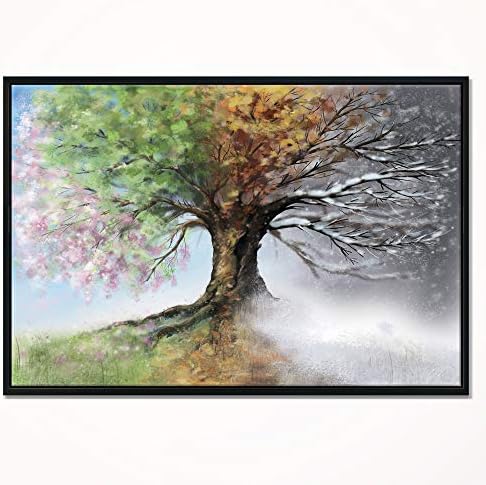
- Style : Traditional Subject : Landscapes, Country Charm Color : Green
- Premium quality cotton canvas. Arrives ready to hang on the wall Easy to Hang
Worth It vs. Skip It: A Quick Reference
| Signal | Worth It | Skip It |
| Ink type | “Archival pigment,” “giclee,” “fade-resistant” | No ink type mentioned, or only “vibrant colors” |
| Canvas material | Cotton duck, poly-cotton blend, 300+ gsm | “Canvas” with no material detail |
| Frame | Solid wood, kiln-dried pine, 1.5-inch depth | “Wood frame” only, or MDF/fiberboard |
| Finish | UV coating, satin/matte finish mentioned | No finish mentioned at all |
| Reviews | Sharp, accurate colors, easy to hang | “Blurry,” “washed out,” “warped” in low ratings |
| Size/price ratio | Specs match or exceed price tier | Very large print, very low price, no specs |
How Long Will a Canvas Print Last?
A canvas print made with archival pigment inks and a UV-protective finish can last 75 years or more indoors without noticeable fading. A budget canvas print made with dye-based inks can begin to fade visibly within 5 to 10 years, especially near a sunny window.
The gap between those two outcomes is not as wide in price as you might expect.
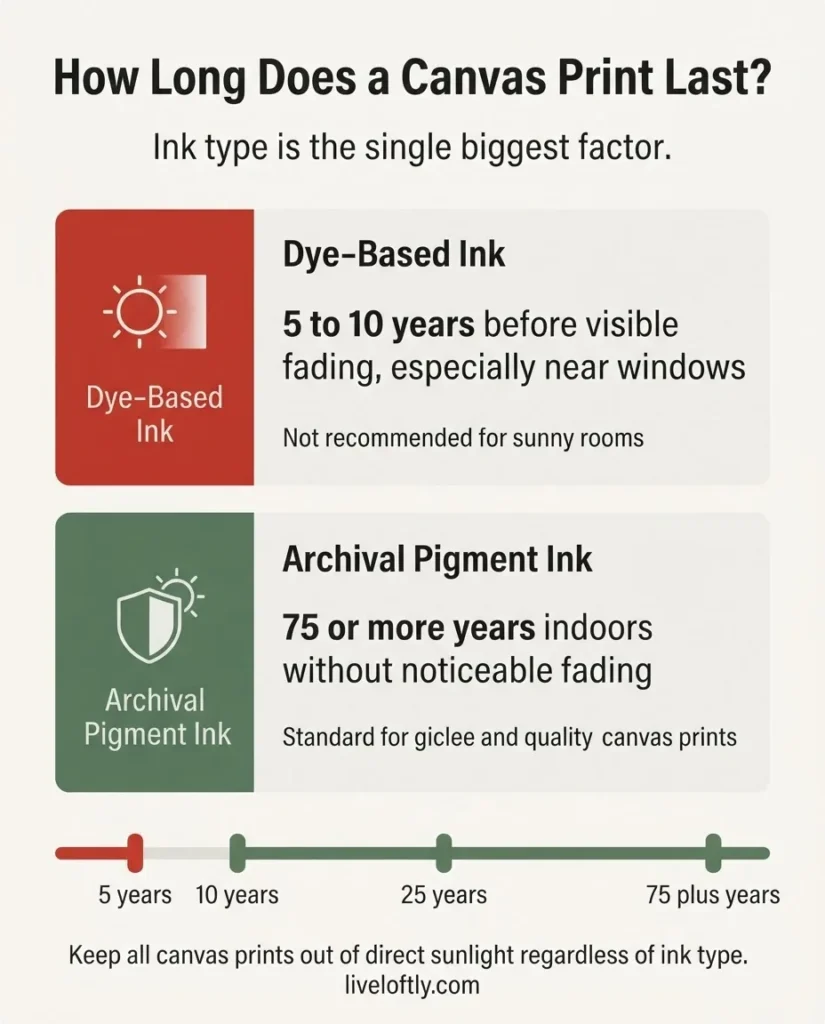
According to Rossetti Art’s canvas lifespan guide, the ink system is the single biggest driver of longevity, and the difference between a dye-ink canvas and a properly made pigment-ink canvas can mean decades of difference in how your wall looks.
The second-biggest factor is sunlight. No canvas print, regardless of quality, should be placed in direct afternoon sun. Even archival pigment inks will age faster under sustained direct UV exposure. If the wall you are eyeing gets a lot of direct light, that is the number one placement factor to think about before you hang anything.
Caring for a Canvas Print (The Short Version)
Canvas prints do not require much, but there are a few things that extend their life considerably.
Dust them gently and regularly, using a dry microfiber cloth or soft duster. 365Canvas’s care guide recommends avoiding any spray cleaners directly on the canvas surface. If you need to address a smudge, a barely damp cloth applied with very light pressure is the limit for most consumer canvas prints.
Keep them away from direct sunlight and away from heat sources like radiators and cooking areas. Kitchens and bathrooms without good ventilation are not ideal for canvas, because humidity fluctuations can eventually affect the tension on the canvas and, in persistent cases, cause very slight sagging.
If you hang a canvas in a bathroom, choose one that explicitly mentions a UV coating or protective finish, hang it away from direct shower splash, and check it seasonally.
A Note for Renters: Is a Canvas Print Worth It?
Yes, with a couple of practical caveats. Canvas prints are among the lighter wall art options. Most medium-sized pieces (16×20, 20×24) weigh between 1 and 4 pounds, which means they can typically be hung with a single appropriate nail or, for very light pieces, a removable adhesive hook rated for the weight.
Command strips and adhesive hooks designed for picture hanging work well for canvas prints under about 3 to 4 pounds. For anything larger and heavier, a single nail in drywall at a stud, or a proper drywall anchor, is safer and more secure than adhesive alone.
The practical buying implication is this: if you are renting and moving every year or two, I would lean toward mid-range rather than budget canvas prints. A better-made piece holds up to being carefully removed, stored, and rehung without the frame or canvas suffering. A cheap thin canvas on a lightweight frame does not always survive a move gracefully. That is one of those things I have learned the hard way when furnishing places I knew were temporary, and it applies directly to canvas art.
The Roundup: Three Tiers to Compare
Here are three concrete examples that represent the quality signals at different tiers. I am presenting them as benchmarks to compare other listings against, not as the only good options. The point is to show you what the specs look like across tiers, so you can use the same reading process on any listing you encounter.
- Dimensions: 36 x 1.5 x 36 Inches
- Wall Art is Ready to Hang with Hardware Free Hanging. No installation required. For Easy Set Up Lean or Layer Artwork on…
- Our stretched canvas is created with the highest standards. We use only the highest quality inks and canvas on our in ho…
- Style : Traditional Subject : Landscapes, Country Charm Color : Green
- Premium quality cotton canvas. Arrives ready to hang on the wall Easy to Hang

- 【Boho Watercolor Mountain Wall Art Set of 3】:Bring nature indoors with this boho wall decor set featuring vibrant waterc…
- 【Framed Botanical Nature Inspired Wall Decor】:Each 12×16 inch piece is professionally framed, ready to hang, and designe…
- 【Boho Colorful Landscape Wall Art】:Perfect for boho wall decor for bedroom, nature room decor, or wall art for living ro…
Frequently Asked Questions
What is the difference between a giclee canvas print and a regular canvas print?
A giclee canvas print uses archival pigment-based inks and high-resolution printing equipment to produce a print that resists fading for decades. A “regular” canvas print typically uses dye-based inks on standard inkjet equipment, which can fade noticeably within 5 to 10 years. Giclee is a meaningful quality signal when it appears alongside other spec details in a listing, but on its own it can be used loosely, so look for it alongside explicit mentions of pigment or archival inks.
What does “gallery wrap” mean on a canvas print?
Gallery wrap means the canvas is stretched and wrapped around the edges of a solid wood frame, so the image continues around the sides and there is no raw edge or border visible. The frame is typically 1.5 inches deep on a true gallery wrap, giving the piece a three-dimensional quality you can hang without any additional framing. A “studio wrap” or “standard wrap” is the same concept but with a shallower frame, usually around 3/4 of an inch, which looks thinner on the wall.
How do I know if a canvas print will arrive blurry?
Check the one and two-star reviews and search the word “blurry” or “soft” in the review filters. A legitimate seller working from a high-resolution digital file should have no quality issues with sharpness. Also look at the listing photos closely: if the details in the canvas photo itself look soft at full zoom, that is the printer’s own photo showing you what you are getting.
Can I hang a canvas print in a bathroom?
Yes, but with caution. Canvas prints with a UV-protective or moisture-resistant finish handle humidity better than uncoated ones. Avoid placing a canvas directly opposite a shower where it will receive direct steam. Choose a well-ventilated bathroom, and check the canvas annually for any change in tension or slight sagging, which is the most common humidity-related issue.
Is it safe to use Command strips to hang a canvas print?
For canvas prints under about 3 to 4 pounds, Command Picture Hanging Strips rated to the weight are a reliable renter-friendly option. Check the weight specification in the product listing before buying, since most list product weight in the details. For anything heavier, a single appropriately rated nail or drywall anchor is the safer choice. Always follow the weight rating on the adhesive strip packaging strictly, as overloading adhesive hooks is the most common cause of wall art coming down unexpectedly.
The Bottom Line
Canvas prints are one of the more honest categories in home decor, once you know what to look for. The spec language is specific, the quality signals are consistent, and the difference between a good piece and a disappointing one is usually right there in the product description if you know what you are reading. Four things: heavy canvas material, archival pigment ink, solid kiln-dried wood frame, and a protective finish. Check the reviews for “blurry” and “warped.” And if a listing can’t tell you what the canvas is made of or what kind of ink was used to print it, keep scrolling.