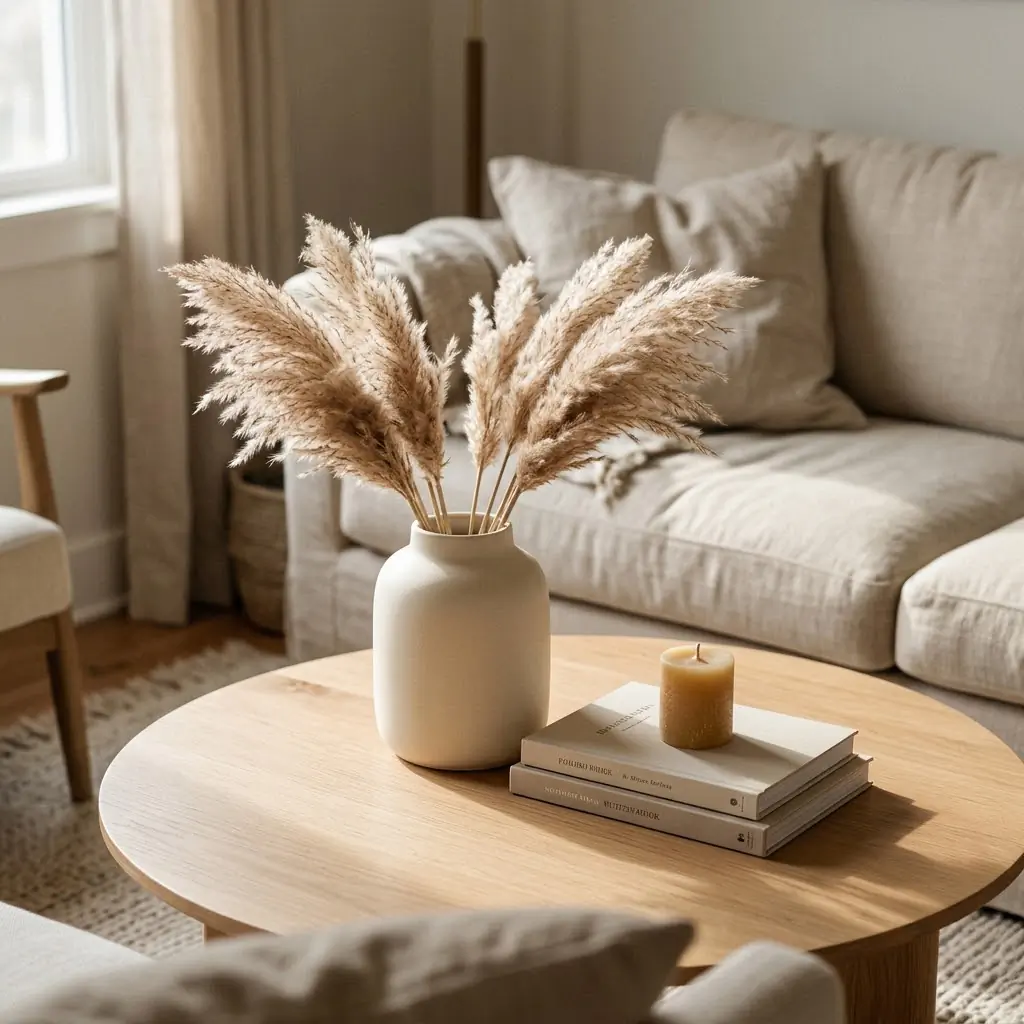
Simple Coffee Table Vase Ideas for Every Style and Budget

There is a certain version of this moment that I think a lot of us have had. You move a vase onto your coffee table, step back, and it just looks… wrong. Not terrible, but off. The room still doesn’t feel the way you wanted it to. You try moving the vase to the left. Then the right. Maybe you add a book under it. Still something.
The truth is, a coffee table vase can be one of the easiest, cheapest ways to make a living room feel calm and pulled-together. But it can also be a small thing that quietly makes a space feel cluttered or awkward if you don’t know a few basic principles behind why some arrangements work and others don’t. This isn’t about having a designer budget or a perfect home. I’ve styled coffee tables in apartments where I paid $400 a month and in places where the coffee table itself came from a curb. Same principles apply everywhere.
So let’s go through it properly, from how to pick the right vase size, to what to put inside it, to how to build a little grouping that feels calm instead of chaotic. I’ll also share the honest worth-it/skip-it notes along the way, because not every pretty vase is actually worth buying.
Before You Buy Anything: Get the Size Right
This is the step most people skip, and it’s the reason the vase they ordered online looks completely wrong once it arrives.
Coffee tables are lower than most other surfaces in a room, typically between 14 and 18 inches tall (roughly 35 to 45 cm). Because you and your guests are looking slightly down at the table rather than at it straight on, a vase that’s too tall will block sightlines across the room and feel imposing. A vase that’s too short will practically disappear. For most standard coffee tables, the sweet spot for a single vase is somewhere between 10 and 12 inches tall (25 to 30 cm). This is a general target, not a law, but it’s a useful place to start. This proportion guide on table vase sizing breaks down the math clearly if you want to get more precise with your specific table height.
One other thing to keep in mind: whatever you put inside the vase adds height too. If you’re using long dried stems or tall faux branches, they’ll push the visual height well above the vase opening. Stems that are 1.5 to 2 times the height of the vase tend to look balanced and intentional rather than crammed or sparse.
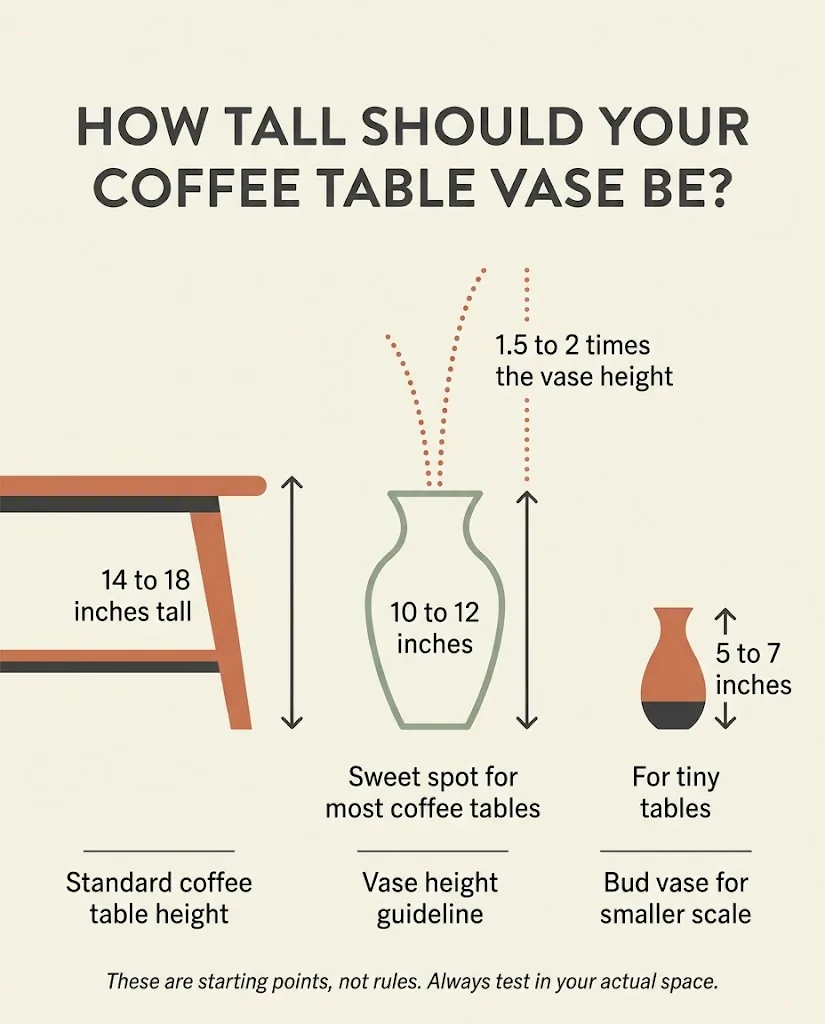
If your coffee table is quite small, say a little round table in a small apartment living room, a single bud vase in the 5 to 7 inch range can actually look more polished than a larger one that overwhelms the surface. Small tables need breathing room, and one small vase paired with one other item (a candle, a small book) is usually the right call.
What to Put IN the Vase (This Part Matters More Than People Think)
People spend a lot of time picking the perfect vase and almost no time thinking about what goes in it. But the fill is what makes or breaks the look, so it’s worth making an intentional choice here.
Fresh flowers are the classic option, and they genuinely do make a room feel alive and welcoming in a way that nothing else quite matches. Grocery store bunches, the kind you can grab for $8 to $15, work beautifully when you trim the stems to slightly different lengths so they fan out naturally. Tulips, ranunculus, and simple white carnations are the ones that tend to punch above their price point. The downside is that you’re replacing them every week or two, which adds up.
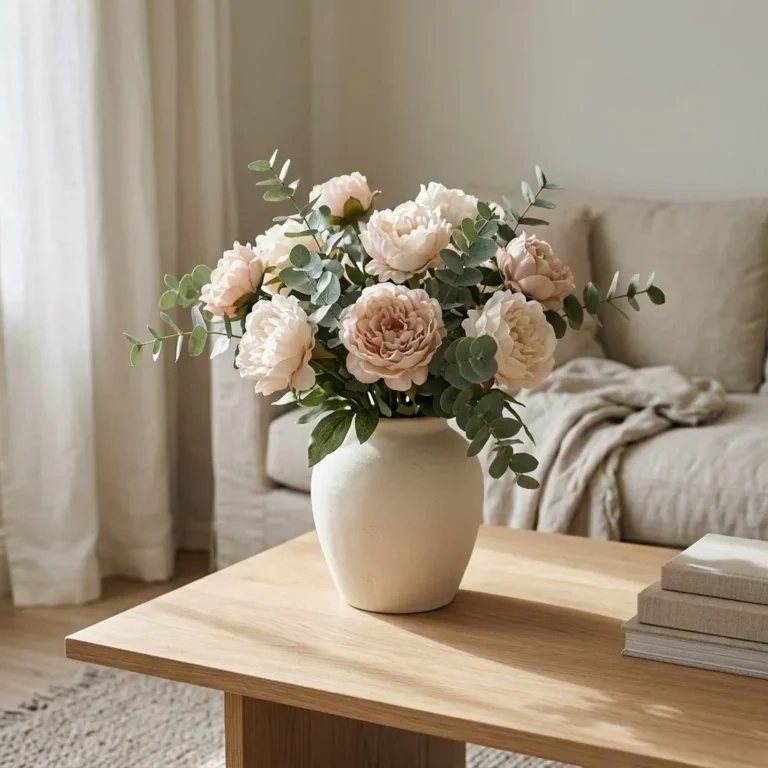
Faux florals have gotten significantly better in recent years. The ones that look convincingly real tend to be made from silk or “real touch” materials and usually run $10 to $40 for a small bundle, though you can find decent ones much cheaper. The tradeoff is honest: high-quality faux looks good indefinitely, but cheap faux looks cheap indefinitely. If you’re buying faux, it’s worth spending a little more on fewer stems rather than filling a vase with a bargain bunch that reads as obviously fake from across the room. As Prestige Botanicals explains in their real vs. artificial flower breakdown, a blended approach, starting with a faux greenery base and adding a few real stems when you want that fresh touch, is one of the smartest ways to get the best of both.

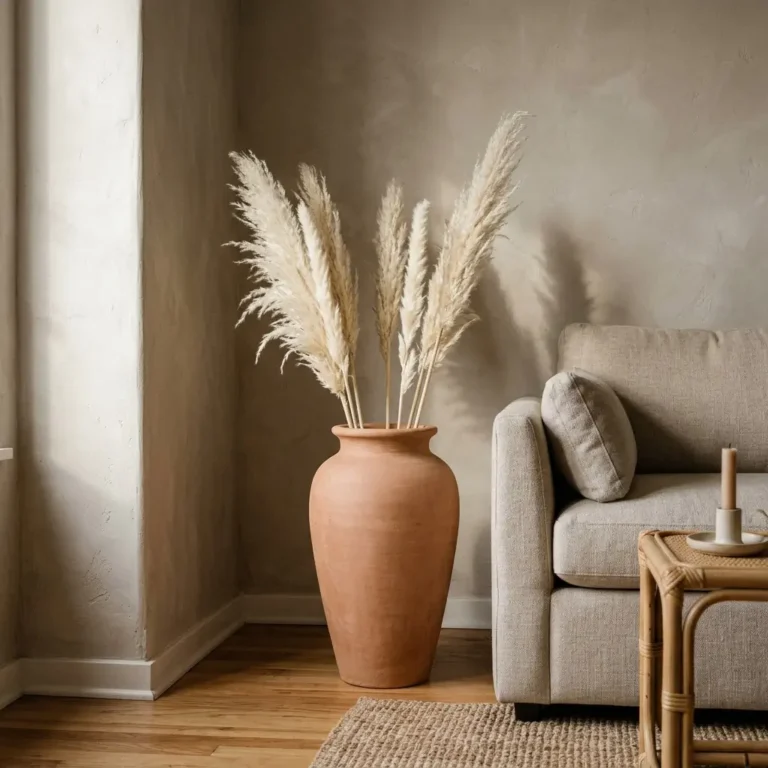
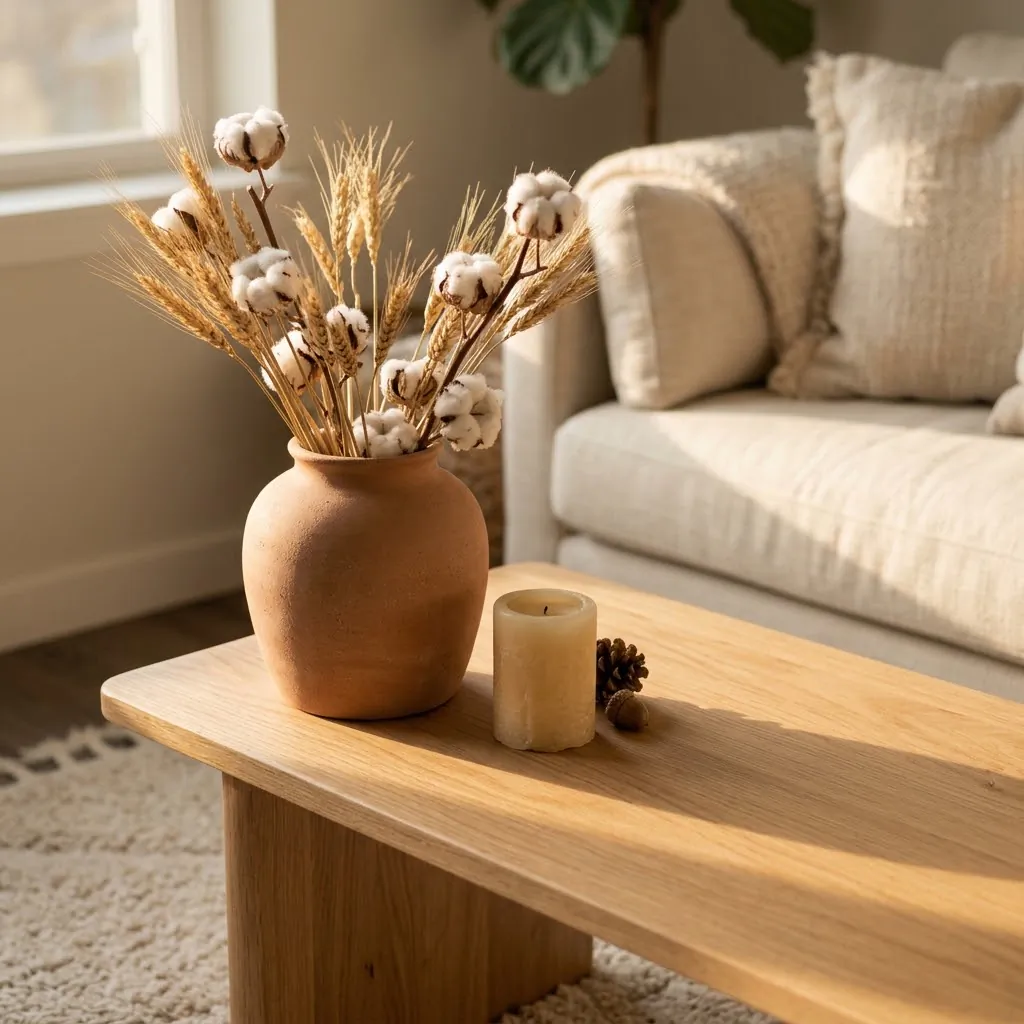
Dried stems and grasses are my personal favorite for coffee tables, especially for renters and people who want a low-maintenance look that still has real texture and warmth. Pampas grass, bunny tails, dried wheat, dried eucalyptus, and cotton stems all work well and last for months without any water or care. They look especially good in terracotta, ceramic, or amber glass vases where the warm tones complement the muted natural colors of the stems. You can find dried pampas grass and similar stems at craft stores, on Etsy, and at many garden centers. The Spruce has a solid rundown of ways to use pampas grass in home decor, including in vases and as tabletop displays, if you want to see the range of options.
Branches and single leaves are a budget decorator’s secret. A branch of eucalyptus, a few magnolia leaves, or even an interesting twig you found outside can look intentional and sculptural in a simple glass or ceramic vase. Free is a hard price to beat.
Nothing at all is a perfectly valid choice for a vase with a beautiful shape. Some vases, especially sculptural ceramic or interestingly shaped glass, look better empty. If you’re going this route, the vase needs to have enough visual presence to hold attention on its own.
Picking the Right Vase Material for Your Style
The material and finish of a vase do a lot of heavy lifting in terms of how it reads in a room. Understanding what each material communicates helps you make smarter choices, especially when you’re buying on a budget.
Ceramic vases add warmth and tactile depth in a way that glass can’t. Matte ceramic in cream, sage, or earthy tones pairs with almost everything and is especially at home in boho, minimalist, Japandi, and cottagecore spaces. Ceramic is generally sturdy and forgiving, and thrift stores almost always have decent ceramic vases for a dollar or two.
Glass reads cleaner and more modern. Clear glass lets stems and water show through, which adds visual interest if you’re using fresh flowers with nice stems. Tinted or smoked glass, in amber, sage, or dusty rose tones, is having a moment right now and adds color without committing to a bold statement piece. Glass tends to be more fragile, which matters in a small space where kids or pets are involved.
Terracotta has that warm, earthy, slightly rustic character that works beautifully in boho, Mediterranean, and organic modern spaces. It’s usually very affordable and pairs naturally with dried stems. Unglazed terracotta is not watertight on its own, so use it for dry arrangements only, or place a small glass jar inside if you want to use it with fresh flowers.
Metal vases in brass, matte black, or brushed nickel add a more contemporary or industrial edge. They pair well in modern and eclectic spaces but can feel cold in rooms that are already lacking warmth.
The Sagebrook Home vase and jars buyer’s guide does a solid job of explaining how different materials interact with different room styles if you want to go deeper on the material question. It’s a useful reference when you’re trying to figure out why a vase that looked beautiful in a photo doesn’t feel right in your actual room.

The One Styling Principle That Makes Everything Click
Here’s the thing I wish someone had told me early on: single objects on a coffee table almost never look as good as a small, thoughtful grouping. Not because you need more stuff, but because the eye finds grouped objects easier to read as intentional.
The principle that makes groupings work is simple: use odd numbers. Three items almost always looks better than two or four. Five looks more natural than six. This isn’t a design snob rule; it’s just how our eyes process clusters of objects. Even numbers tend to feel rigid and paired, which reads as stiff rather than styled. The 3-5-7 rule in decorating is the formal name for this principle, and it applies beautifully to coffee table vignettes.
In practice for a coffee table, this usually means pairing your vase with two other objects.
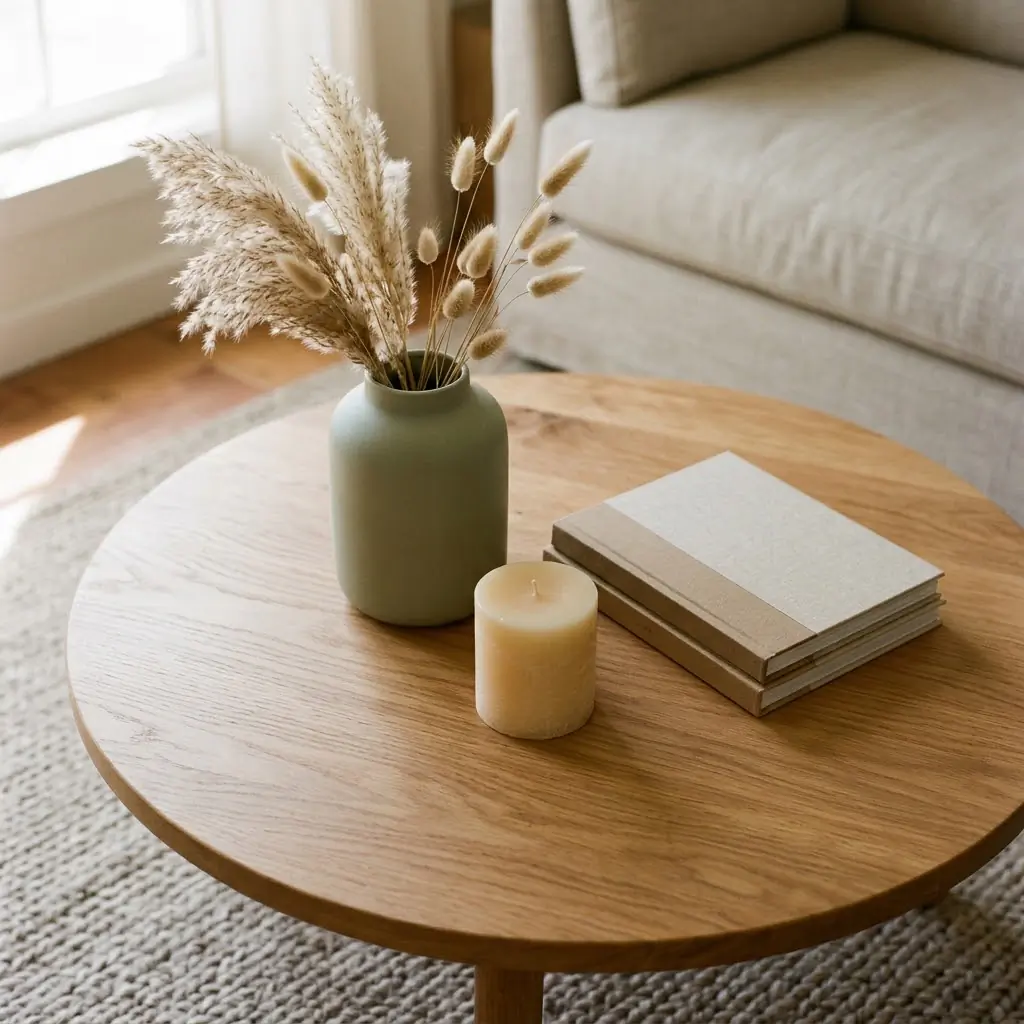
A simple version might be: a medium ceramic vase with dried stems, a small candle, and a low stack of two or three books. The vase provides height, the candle provides warmth and light, and the books provide a grounded base layer. The group feels complete without feeling crowded.
For very small coffee tables, even a pairing of just the vase and one other item (a single candle, a small tray) is better than the vase alone. The key is varying the heights so the eye has somewhere to travel.
19 Coffee Table Vase Ideas Worth Trying
Here are specific ideas organized loosely by style and approach, so you can find the ones that fit where you are right now.
For the minimalist: A single tall-ish vase in matte white or cream ceramic, holding one or two dried stems. No tray, no accessories. Let the negative space work. This looks especially good on a round or small coffee table.
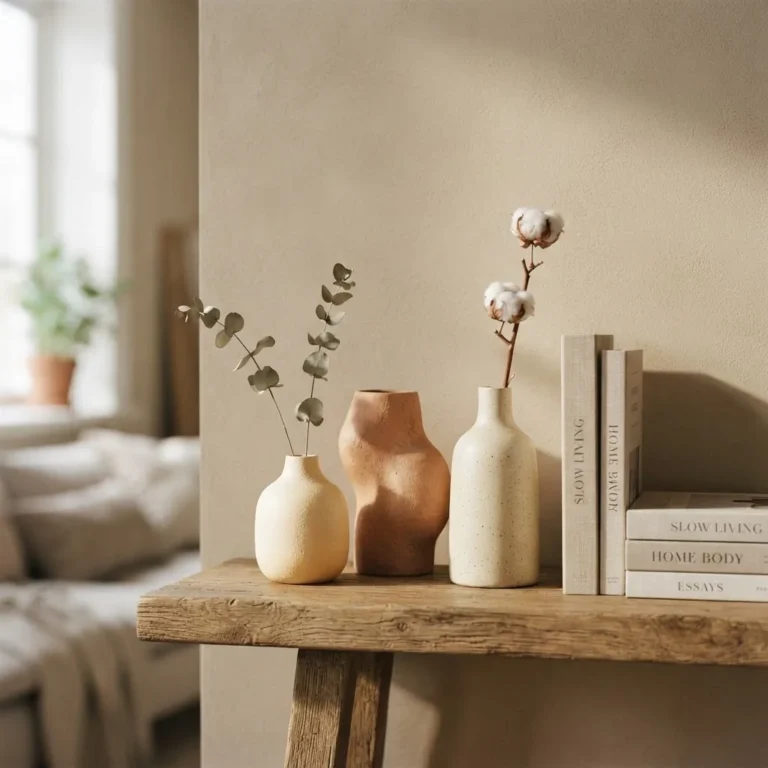
For the boho: A grouping of three terracotta or earth-toned vases in varying heights. Fill the tallest with pampas grass or dried bunny tails, leave the shortest empty, and put a small woven item or candle beside the group.
For the budget-tight renter: Grab a clear glass vase from a thrift store (they’re almost always available for under $2), fill it with grocery store stems, and pair it with a secondhand candle and one small book from your shelf. Total cost: under $15, often much less.
For the cottagecore look: A small ceramic pitcher-style vase filled with a casual, wildflower-style bunch. Dried lavender or dried wildflowers work even better than fresh here. Add a small stack of nature-themed books nearby.
For the coastal feel: A simple clear or pale blue glass vase with white dried branches or cotton stems. Pair with a small bowl of shells or smooth stones you’ve collected.
For the modern-neutral apartment: A matte black or charcoal ceramic vase with a single sculptural dried stem (pampas works, as does a single dried palm leaf). Very spare, very intentional.
For the warm Japandi-inspired space: A bud vase in pale matte ceramic with a single stem of dried botanicals. Place on a small wooden tray with a simple tea light. That’s the whole arrangement.
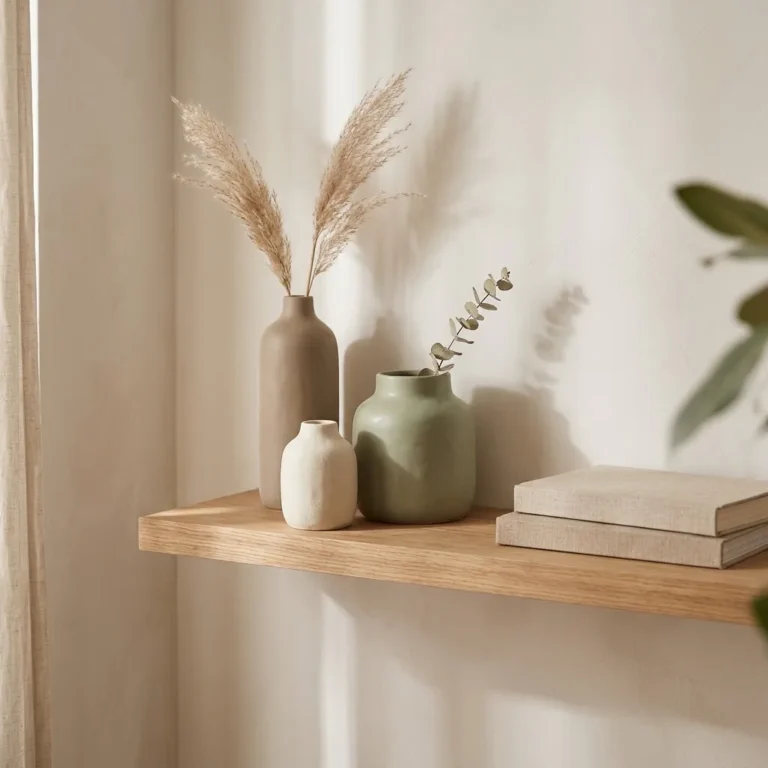
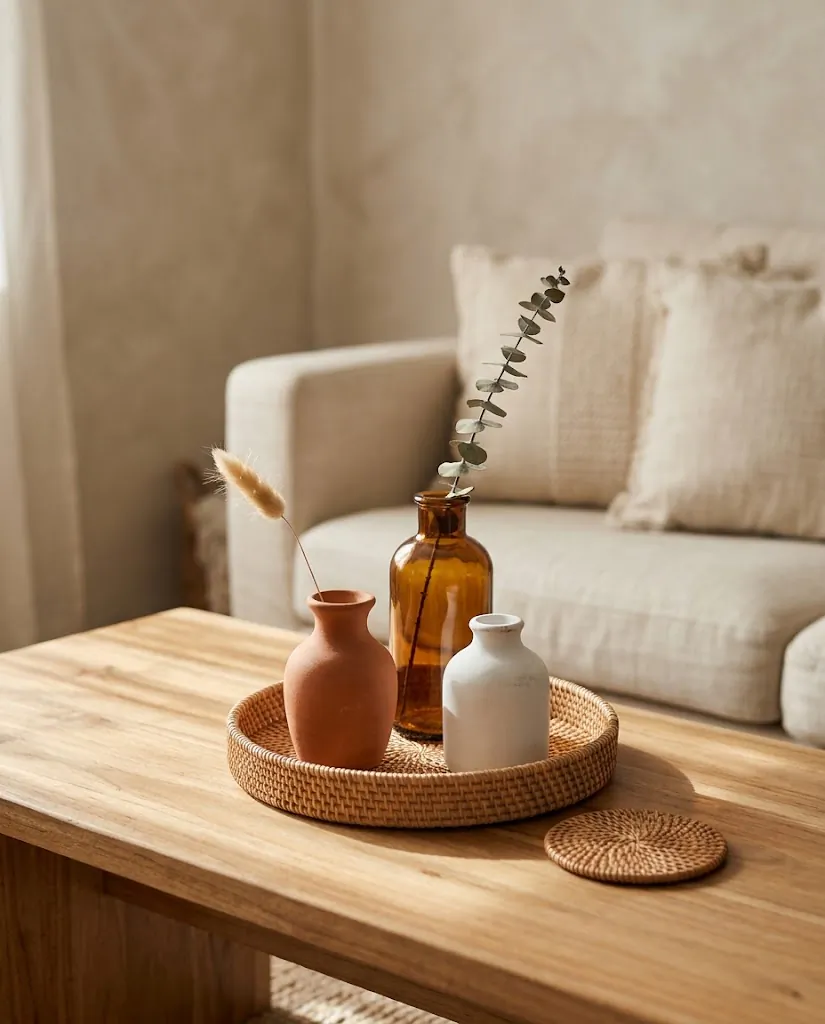
For a small bud vase grouping: Three bud vases of varying heights, all in similar tones (all white, all amber glass, all terra cotta), each holding a single stem. Spread them slightly rather than clustering them tightly so the grouping breathes.
For the seasonal refresh in fall: Swap your summer fill for dried wheat, cotton stems, or a small branch of preserved autumn leaves. You don’t need to replace the vase, just the contents. This is the cheapest seasonal refresh you can do.
For a spring refresh: A simple glass vase with a bunch of tulips from the grocery store. Trim the stems at an angle and change the water every day or two. The whole look costs less than $10 and lasts one to two weeks.
For a moody winter look: A dark ceramic or smoked glass vase with bare branches (birch or eucalyptus both work) and a beeswax pillar candle nearby.
For the high-impact single statement piece: One sculptural vase with an interesting silhouette, left completely empty. This only works if the vase has genuine presence on its own.
For the tray-based arrangement: Place a small decorative tray on the coffee table first, then build your grouping inside it. A vase, a candle, and one small object. The tray contains the vignette and makes the whole thing look deliberate, which is especially useful when you have a larger coffee table that tends to look bare.
For the mixed-texture grouping: A glass vase alongside a ceramic candle vessel alongside a small woven item. Three different materials, all in the same neutral tonal range, creates depth without color chaos.
For the all-dried arrangement: A bundle of mixed dried stems, pampas grass, dried eucalyptus, and cotton stems mixed together in a wide-mouth ceramic vase. This look is low-maintenance, warm, and works across many different style directions. The dried floral trend has been genuinely enduring in home decor because it delivers real texture and presence without the upkeep of fresh flowers.
For the beginner who doesn’t know where to start: Start with just one ceramic or glass vase in a neutral color (white, cream, or clear). Add whatever stems feel accessible to you, even a single stem from outside. Put a small candle next to it. That is a styled coffee table. Genuinely.
For the person with pets or small kids: Skip the tall, tippy vases. Go with a low, wide-based ceramic vessel that’s heavy enough to not fall easily. Dried stems work better than fresh flowers here, especially if you have cats, since some fresh flowers (lilies, tulips, daffodils) are toxic to pets.
For the thrift-first decorator: Thrift stores are genuinely great for ceramic and glass vases. Check the bottom for a “Not for Food Use” stamp before buying older or handmade-looking pieces, since this can signal lead-containing glazes. For a purely decorative vase where nothing food-related is going inside it, older ceramic is generally fine for display, but it’s still worth knowing what you’re buying. The FDA’s guidance on lead-glazed ceramics explains what to look for, particularly with brightly decorated or handmade traditional pottery.
For the person who’s tried everything and it still looks off: The most common reason a coffee table vase arrangement looks wrong is either that the vase is the wrong height (usually too tall for the table), the fills are too sparse or too cramped, or there’s no variation in height across the grouping. Try lowering everything by 2 to 3 inches and see if that helps. Usually it does.
Two Mistakes That Are Very Easy to Make
The first is choosing a vase that’s too tall. It’s easy to do because tall vases photograph beautifully and look dramatic in a store. But on a coffee table at living-room height, a vase that’s 15 or 16 inches tall will block sightlines, feel imposing, and make the whole room feel smaller. Stick to the 10 to 12 inch range for your primary vase, and if you want height in the room, find it through lamps or shelving instead.
The second is over-filling the vase. Whether you’re using fresh flowers, faux stems, or dried grasses, the instinct is often to pack the vase full because it feels more abundant. But most vases look better with fewer, thoughtfully placed stems that have room to breathe. The general rule of 1.5 to 2 times the vase height works here: if your vase is 10 inches tall, your stems should extend to about 15 to 20 inches above the opening. Let the stems fan out loosely rather than forcing them into a tight bundle.
A Note on Refreshing Your Coffee Table by Season
One of the things I love most about using a vase as the anchor piece on a coffee table is how easy it makes seasonal refreshing without spending much money. The vase itself stays. The fills, or the companion pieces, are what change.
Spring: a grocery store bunch of tulips or ranunculus. Summer: a loose, slightly wild arrangement of whatever is growing near you, or a bright faux stem in a summer color. Fall: dried wheat, cotton stems, or dried orange slices as a companion piece. Winter: bare branches, dried eucalyptus, or a sculptural empty vase with a simple candle.
This approach means you’re spending $5 to $15 on a seasonal refresh rather than replacing your whole coffee table situation four times a year. For renters and budget decorators especially, this is the model that actually works in real life.
The Short Version, If You Need It
You don’t need an expensive vase or a designer eye to make your coffee table look good. You need the right size vase for your table (roughly 10 to 12 inches tall for a standard coffee table), a thoughtful fill choice, and one or two companion pieces to build a small grouping. Keep the heights varied, stick to odd numbers of objects, and leave some breathing room. That’s really it.
The coffee table is one of the most looked-at surfaces in any living room, and it’s also one of the easiest and cheapest to style well. Start simple, edit ruthlessly, and trust that a calm, minimal arrangement almost always looks better than a crowded one.