What to Put in a Tall Floor Vase (16 Honest Ideas)

There is a specific kind of decorating frustration that I think a lot of us know well. You have a corner in your living room, or just inside your front door, or beside your bedroom window, and nothing you put there looks right. A plant died. A chair made the room feel smaller. A lamp cord had nowhere to go. So the corner just sits there, awkward and unfinished, quietly bugging you every time you walk past it.
A tall floor vase is one of the most genuinely useful solutions to that problem. Not because it is a magic trick, but because it does a specific job very well: it gives an empty vertical space something intentional to anchor it, without taking up floor real estate the way furniture does. And because it requires zero wall holes, zero hardware, and zero landlord permission, it is one of my favorite tools for decorating a rental.
The tricky part is not deciding to get one. It is knowing what to put in it, what size to choose, and how to make it look purposeful rather than like you just shoved something in a corner and hoped for the best. That is what this guide is actually about.
Before you buy anything: getting the size right
The single biggest styling mistake people make with floor vases is going too small. A vase that is 16 inches tall will disappear next to a sofa. It will look like it belongs on a bookshelf, not on a floor. For a vase to read as an intentional floor piece and not like something that fell off a table, you generally want it to be at least 24 inches tall. If your ceilings are a standard 8 feet, the sweet spot is 24 to 36 inches. If you have higher ceilings of 9 or 10 feet, you can go up to 36 to 48 inches without the vase looking lost. This vase sizing guide breaks down the proportions by ceiling height in a way I think is genuinely helpful if you are measuring before you buy.
A useful rule of thumb for filler height: whatever you put inside the vase, plan for the total visual height (vase plus stems or branches) to be about 1.5 to 2 times the height of the vase itself. So a 30-inch vase looks best with stems that add another 30 to 45 inches of height above it.
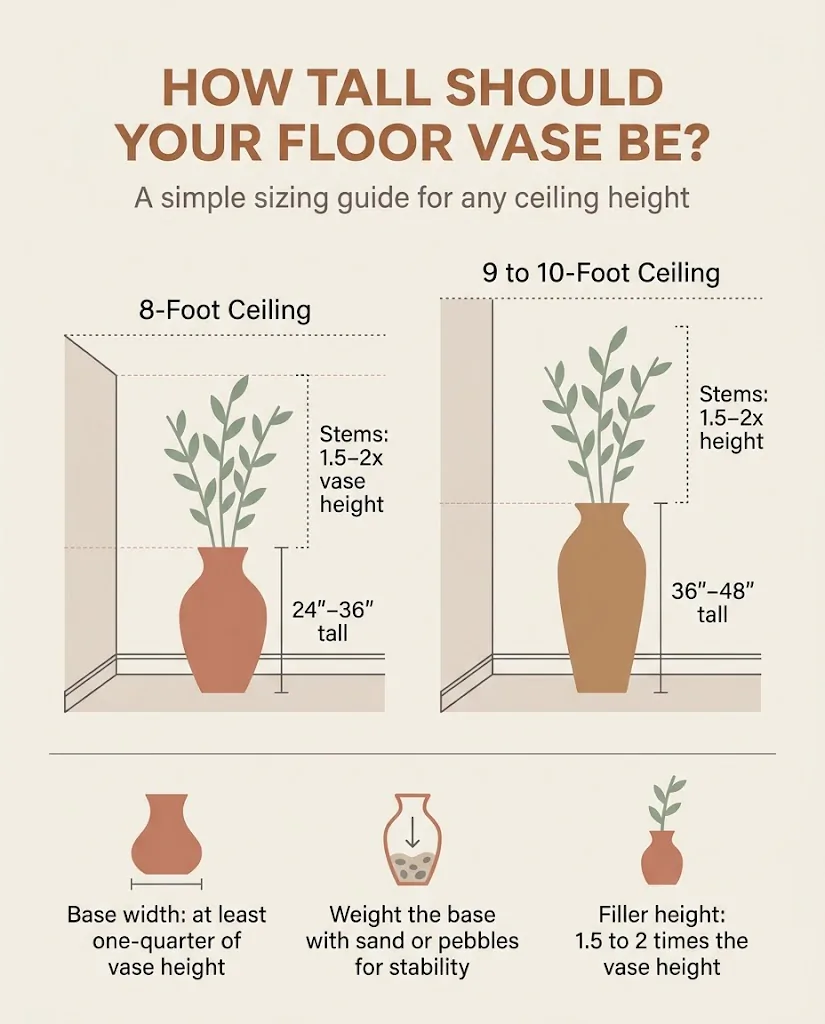
That combined silhouette is what draws the eye upward and makes the whole thing feel intentional rather than stubby.
Base width matters too, especially in a rental where you cannot bolt anything to the floor. Look for vases where the base width is at least one-quarter of the vase’s height. Tall and narrow with a tiny base is a recipe for something tipping over, which brings me to a practical note I want to get out of the way early.
A word on stability (this matters more than it sounds)
Tall vases can tip. If you have a pet, a child nearby, or a high-traffic hallway, a top-heavy vase with a narrow base is a genuine hazard, not just an inconvenience. The easiest fix is also completely renter-safe: fill the bottom of the vase with a zip-lock bag of fine sand or smooth pebbles. This lowers the center of gravity significantly without touching your floors. If the vase is on a hard floor and you want extra peace of mind, museum putty under the base will hold it firmly in place and peel away clean with no damage. This practical breakdown of how to keep a vase from tipping covers the main options and is worth a quick read before you place anything in a high-traffic area. I would not skip this step in a small apartment where a tipped vase can catch a corner or a knee.
Once you have the size and stability sorted, the styling decisions get a lot more fun. Here are 16 honest ideas for what to put in a tall floor vase, organized loosely from the most classic to the most unexpected.
The Filler Ideas
H2: Dried and Natural Fillers That Look Expensive and Cost Very Little
1. Pampas grass
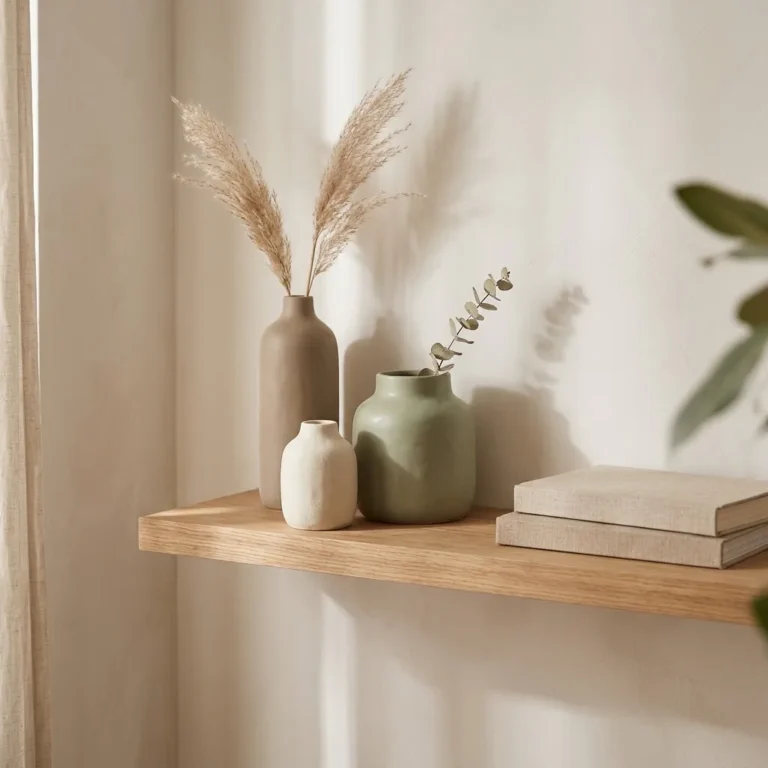
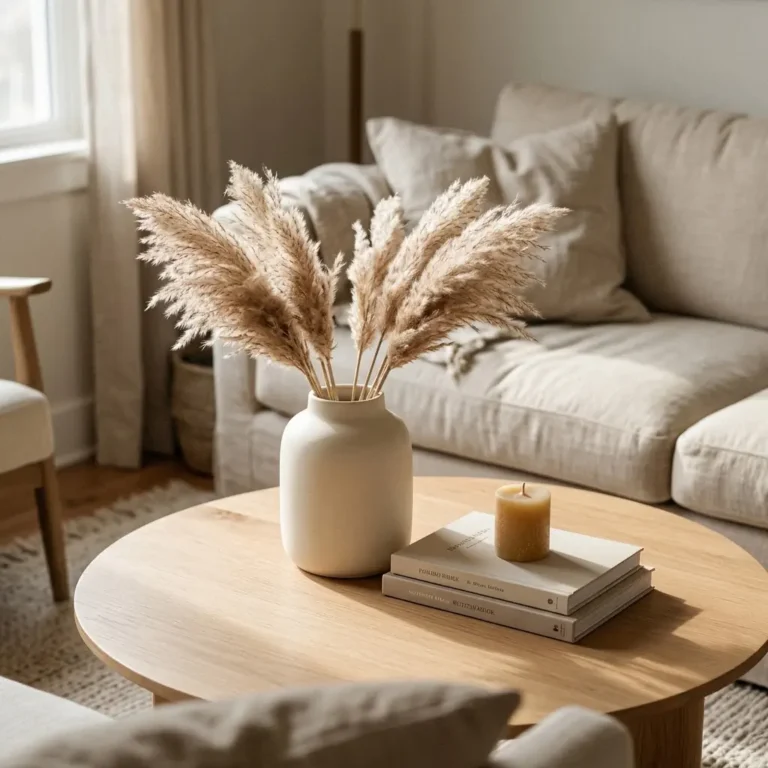
Pampas grass is not going anywhere as a decor staple, and for good reason. The feathery plumes add a warm, organic softness that works in almost every style of room, from boho apartments to minimalist Scandinavian spaces. A few stems in a wide-mouthed ceramic vase look genuinely beautiful without a lot of effort.
What most articles skip over is the care part. Dried pampas grass sheds, and if you bring it inside without treating it, you will find fluff on every surface within a week. The fix is simple: shake each stem outside before bringing it in, arrange it in your vase, then mist the plumes thoroughly with a firm-hold hairspray. Re-spray every six months. Do that and the plumes can last three to five years with almost no maintenance. This thorough guide to pampas grass care and conditioning covers the shedding issue in detail and is one of the most complete resources I have found on the subject. Dried pampas stems typically start around $20 for a bundle of five reeds, and faux versions are available year-round if you prefer zero shedding risk.
2. Tall dried branches
Bare or lightly leafed branches are one of the most calming things you can put in a floor vase. Birch branches with their white-and-gray bark look beautiful in a neutral room. Willow branches add a slightly more romantic curve. Olive branches with their small silvery-green leaves work beautifully for a Mediterranean or earthy look. You can often find these at craft stores, floral supply shops, or even foraged from your own yard in season. Stripped of leaves for winter, they look intentionally sculptural rather than dead.
3. Dried eucalyptus
Dried eucalyptus is one of the budget-friendlier filler options that consistently looks more expensive than it is. The dusty blue-green tones pair beautifully with terracotta, white ceramic, and natural rattan vases. Fresh eucalyptus will dry naturally in the vase over a week or two without water, shifting from bright green to a muted sage. It has a faint, pleasant scent when it first goes in. Bundles of fresh eucalyptus from the grocery store are often $5 to $10, and dried versions on Etsy are easy to find in taller stem cuts designed specifically for floor vases.

4. Dried wheat or grain stems
This is the quiet budget option that almost nobody talks about, but it works beautifully. Bundles of dried wheat or barley have a warm golden tone that is perfect for fall but honestly looks good year-round against a neutral wall. A large bundle costs very little, fills the vase quickly, and adds a texture that looks handpicked and considered rather than generic. This is especially good for cottagecore or farmhouse-leaning spaces, but it is softer and less “barn” than it sounds.
5. Cotton stems
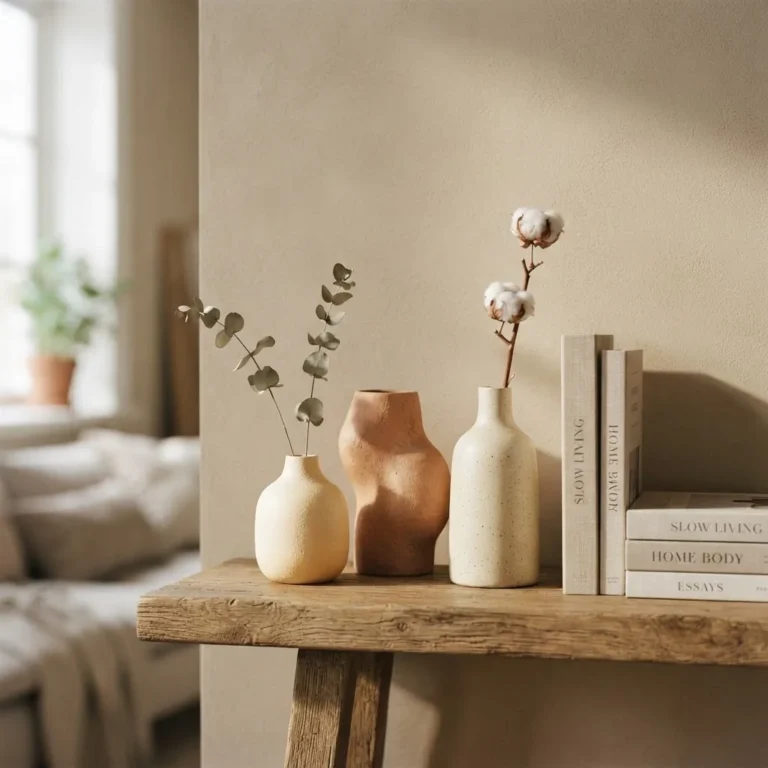
Cotton stems with their fluffy white bolls are one of those fillers that photograph beautifully and look just as good in person. They work across multiple styles: farmhouse, coastal, boho, even modern if the vase is clean-lined. A bundle of real dried cotton stems runs about $10 to $20 and lasts for years. Faux versions are essentially identical to the eye and last even longer.
6. Tall dried grasses (miscanthus, fountain grass, bunny tails)
Beyond pampas, there are several other dried grasses that look striking in a tall floor vase without the same high-profile price tag. Miscanthus (silver grass) has a feathery plume similar to pampas but tends to be more affordable. Bunny tail grass is smaller and fluffier, better as a complement to a taller stem. Dried fountain grass has a gentle droop that adds movement. Mixing two or three types of dried grass creates a layered, natural-looking arrangement that looks like it took more effort than it did.
H2: Faux Botanicals: When You Want Zero Maintenance and Real-Looking Results
7. Quality faux branches (the skip-it-or-splurge decision)
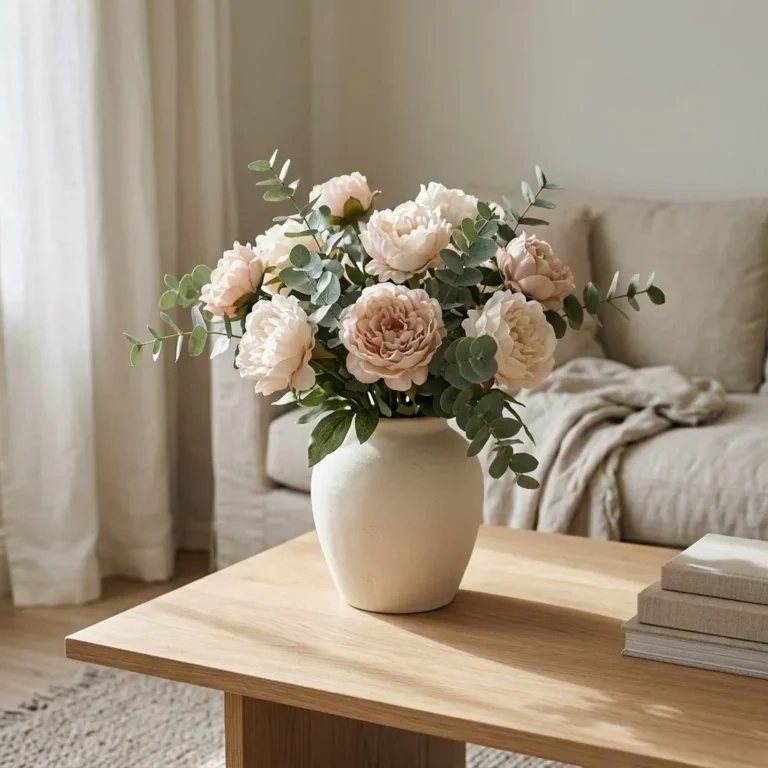
Here is where I want to be honest with you, because this is where a lot of people waste money. Cheap faux branches look cheap. There is no styling trick that makes plasticky fake leaves look intentional. If you are going to use faux botanicals, the quality of the materials matters more than almost anything else. Look for stems made with fabric or silk leaves with realistic vein detail, wired stems that you can bend into natural shapes, and color variation in the leaves rather than a single flat green.
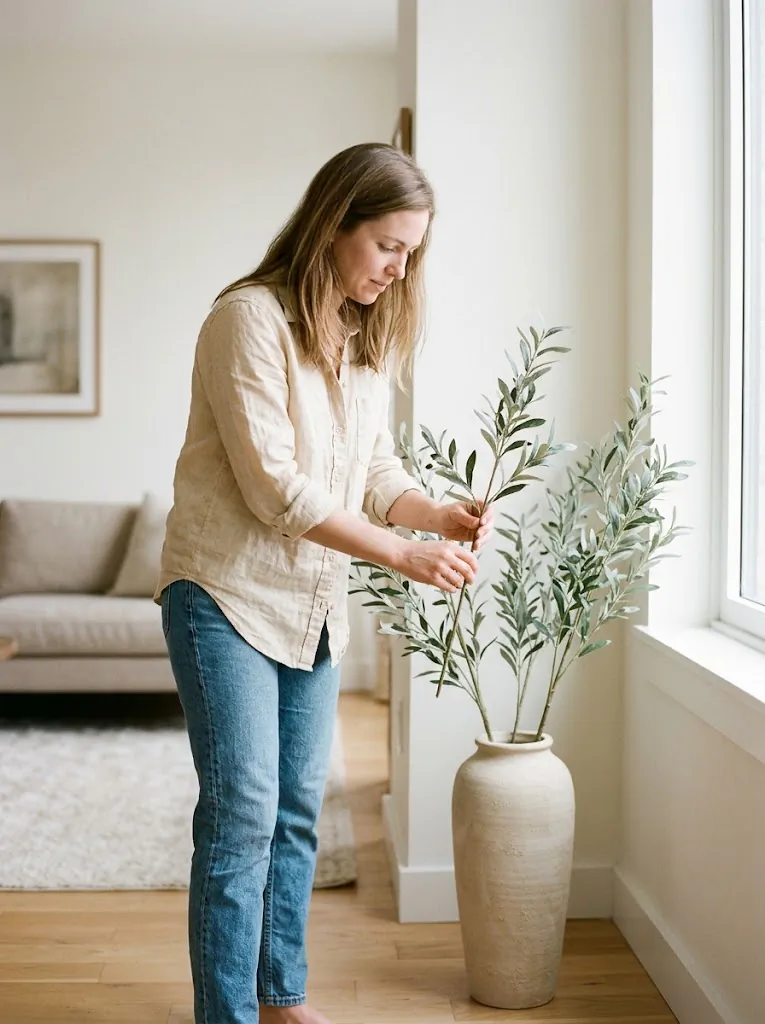
The better faux stems take a vase from looking like an office lobby display to looking like someone actually styled it. Afloral’s room-by-room guide to styling large vases with faux stems shows the difference good materials make, with specific stem suggestions by room. It is worth browsing even if you end up buying elsewhere, just to see how much the stems themselves drive the final look.
8. Tall faux olive branch stems
Faux olive branches have become a go-to for good reason. The muted, dusty green and the loose, natural drape of the leaves looks organic and unfussy in a way that a lot of faux botanicals do not. In a terracotta or natural ceramic vase, a cluster of tall olive branches reads more like a real indoor plant than like artificial decor. This is a good “worth it” splurge in the $15 to $30 per stem range. You only need three to five stems in most floor vases.
9. Faux pampas grass (for the shedding-averse)
If the shedding issue with real dried pampas is not something you want to manage, good faux pampas grass has gotten genuinely convincing. Look for versions with multiple plume layers rather than a single flat plume, and choose stems that are at least 36 to 40 inches tall for a floor vase so they clear the rim with room to spare. Muted off-white is the most versatile. Blush and dusty rose faux pampas work well in boho and romantic spaces but feel trendier and may date faster.
H2: The “Empty Vase” Approach (Yes, This Can Look Intentional)
10. Leave it empty
I want to spend a moment on this because a lot of people feel like an empty vase means a failed vase, and that is not true. A floor vase with a beautiful shape, interesting texture, or striking glaze can stand completely alone as a sculptural object, the same way a piece of pottery or a sculpture would. The key is that the vase itself has to be doing the visual work. A plain, generic cylinder with nothing in it will look forgotten. A hand-thrown terracotta vase with a natural glaze, or a ribbed concrete piece, or a rattan-wrapped ceramic, will look considered and calm.
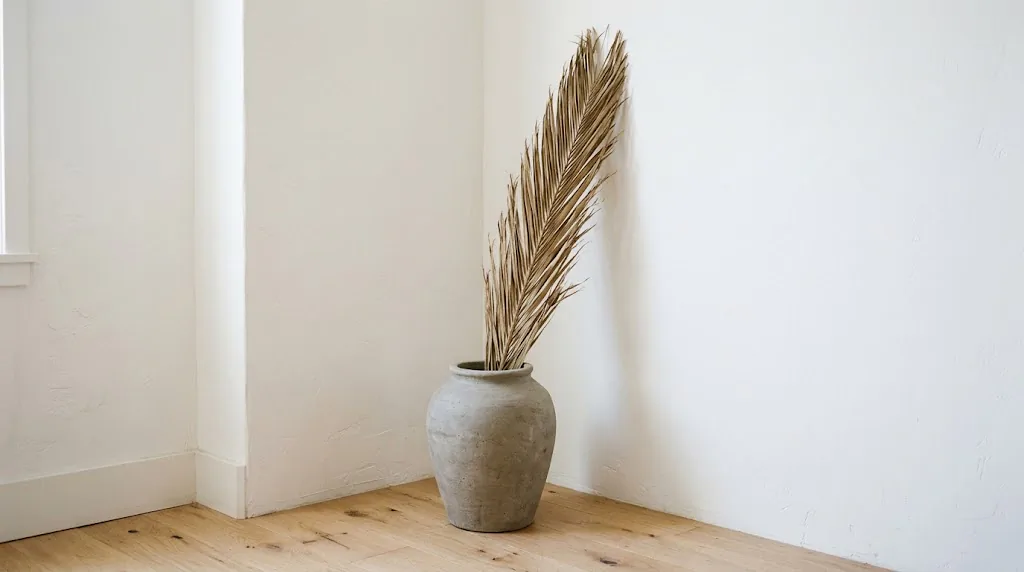
If you want to try the empty approach, pair the vase with something nearby, a textured throw on the sofa, a small stack of books, a low plant. The vase does not need to fill the space by itself. It just needs to belong to a considered corner.
11. A single sculptural stem or branch
Somewhere between “full arrangement” and “empty vase” is one of my favorite approaches: a single dramatic stem. One tall dried palm leaf, one arching willow branch, one oversized preserved leaf like a banana leaf or monstera. The asymmetry of a single stem in a wide-mouth vase looks intentional in a way that a crowd of fillers sometimes does not. This is a very effective approach for minimalist, Japandi, or modern-leaning rooms where “less” is genuinely the point.
H2: Budget-First Filler Ideas (Under $20 to Fill the Whole Vase)
12. Grocery store stems, dried in place
Fresh eucalyptus, baby’s breath, dried wheat, or even tall tropical leaves from the grocery store floral section can go directly into a floor vase with no water and simply dry in place over a few weeks. The colors shift as they dry, going from bright to muted, which actually looks more intentional for many decor styles. This is a legitimate $5 to $10 approach that works. It does require accepting that you will replace the stems seasonally, but that is also an easy way to keep your decor feeling fresh without buying anything major.
13. Tall branches from outside
If you have access to a yard or park setting, long stripped branches from birch, maple, or cherry trees in late winter or early spring can look genuinely beautiful in a tall vase. Stripped bare and arranged loosely, they add height and movement without any cost. Sand the cut ends lightly, let them dry for a few days before bringing them inside, and they will hold their shape well. This is not going to work in every apartment, but if you have access to the materials, it is one of the most natural-looking fillers you can use.
14. Mixed dried bundle from a craft store
Hobby Lobby, Michaels, and similar craft stores regularly carry bundles of dried botanicals, wheat stems, dried lavender, and filler grasses at prices that are significantly lower than specialty decor shops. A bundle of dried wheat stems runs about $8. Dried lavender bundles are around $6 to $12. Combine two or three types and you have a layered, intentional-looking arrangement for under $25. This large vase filler idea roundup covers many of the budget options in one place if you want more ideas before your next craft store trip.
H2: Styling by Room (How Placement Changes Everything)
15. The living room corner
In a living room, the floor vase is most often working in a corner, beside a sofa arm, or flanking a fireplace. The goal is to draw the eye upward and give the corner a purpose. In small spaces, do not push the vase flush into the corner. Bring it forward by 6 to 12 inches so it reads as a decorative object in the room rather than something you shoved out of the way. Pair it with something at a different scale nearby, a low side table, a floor lamp, a textured pouf, to create a corner vignette rather than a lone object.
For small apartments specifically, a vase in the 24 to 28 inch range is usually the right call. Anything taller in a small room starts to compete with the ceiling and can make the space feel crowded vertically rather than expanded.
16. The entryway
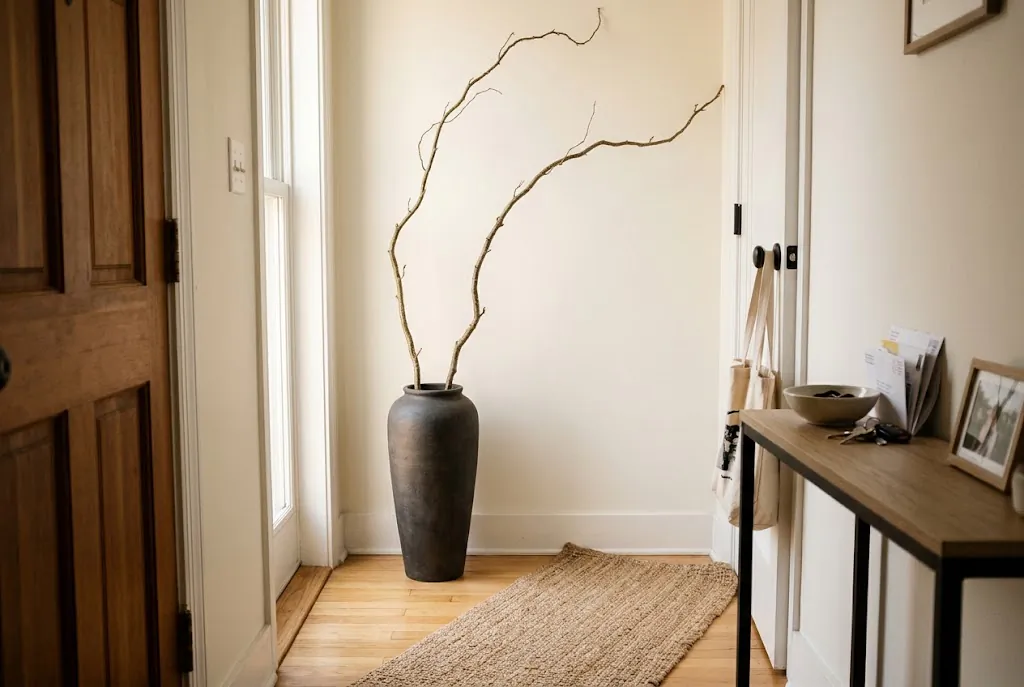
A tall floor vase in an entryway sets the mood the moment someone walks in, including you, every single day. The entryway is where a vase can go a little bolder. A deeper color, a more dramatic shape, a single arching branch. Because the entryway is not a space where you sit and linger, the visual impact can be a bit louder than what you might want in a bedroom. A 28 to 36 inch vase with one tall dramatic stem or a handful of pampas plumes works beautifully here and does not require much floor space.
H2: A Few Honest Notes on What to Skip
Cheap plastic vases with visible seam lines. Even the best filler cannot save a vase that looks like it came from a party supply shop. Spend a little more on the vessel itself and go budget on the filler, not the other way around.
Overfilling. A floor vase crammed with 20 stems and three different types of filler looks busy, not abundant. Edit. Odd numbers of stems (3, 5, or 7) arranged at slightly varied heights look more natural than an even, symmetrical bunch. The rule of odds in interior design is one of those styling principles that genuinely makes a visible difference and is worth understanding before you finalize your arrangement.
Fake UV-faded colors. If a faux stem has a bleached-out, sun-faded appearance that looks unintentional rather than styled, skip it. The best faux botanicals have subtle color variation that reads as real. The worst have a single flat hue that reads as plastic from six feet away.
Very tall, very narrow vases with small bases in a home with pets or young children nearby. The tip risk is real. Prioritize a wider base, weight the bottom, and place it in a low-traffic area whenever possible.
Putting it all together
The honest truth about tall floor vase decor ideas is that the vase, the filler, the placement, and the surrounding context all work together. None of them succeed in isolation. A beautiful ceramic vase with cheap filler in an awkward spot still looks off. A budget vase with good proportions, quality dried stems, and thoughtful placement can look genuinely expensive.
Start with the right size for your ceiling height, add weight to the base if it needs stability, choose fillers that suit your actual style rather than whatever is trending, and let the corner breathe. You do not need to fill every inch of that vase or surround it with five other objects. One good floor vase in the right spot, filled with the right thing, is one of the easiest ways I know to make a room feel finished and calm. And that is the whole point.