13 Ways to Style Candle Holders on a Mantel on Any Budget

There is a particular kind of moment that happens when you stand in front of your own mantel and realize you have no idea what to do with it. You have a few candles. Maybe a holder or two from a past life. Something gathered dust and something else you bought on impulse. And somehow, none of it looks like the calm, warm vignette you had in your head.
I have been there more times than I can count, in apartments with shelves so narrow a pillar candle barely fit, in rentals where the “mantel” was actually just a thin ledge above an electric fireplace insert. Mantels are one of the most versatile surfaces in a home, but also one of the most misunderstood. Most people either overcrowd them or leave them completely bare. The sweet spot is in the middle, and candle holders are one of the most accessible, affordable, and forgiving tools you have to find it.
This is not about spending a lot. A few well-chosen holders, a little bit of intention, and some understanding of how proportion and grouping work will take you further than any expensive decor haul. Here are 13 approaches that actually work, with honest notes on what to skip along the way.
Before You Start: Know Your Mantel
Before you decide on a single candle holder, take a few measurements. Standard mantel shelves sit roughly 54 to 60 inches from the floor, according to mantel sizing reference guides, but the depth of your shelf matters just as much as the height above it. If your shelf is shallow (under 5 or 6 inches), you are working with pillar candles and smaller holders only. Anything taller than about 12 to 14 inches risks looking unstable or precarious. If you have a generous 10-to-12-inch-deep shelf, you have room to layer and build real depth.
Also note whether your fireplace is functional, gas, or electric. If you have a working wood-burning fireplace, safety rules around real candles on the mantel change significantly. I will cover that specifically in the section on safety below.
1. Vary Your Heights and Resist the Urge to Match
The most common mantel candle mistake is buying a matching set of three identical holders and placing them at even intervals. It looks like a hotel lobby or a catalog shot from a brand you are not sure you like. Real-looking, pulled-together mantels use varied heights in the same way a good bookshelf uses varied-height books.
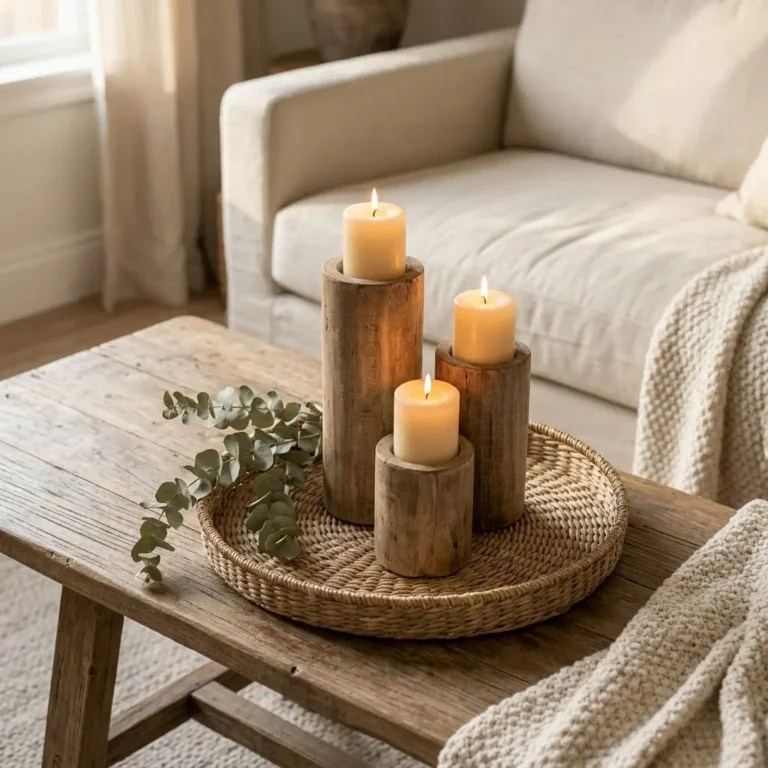
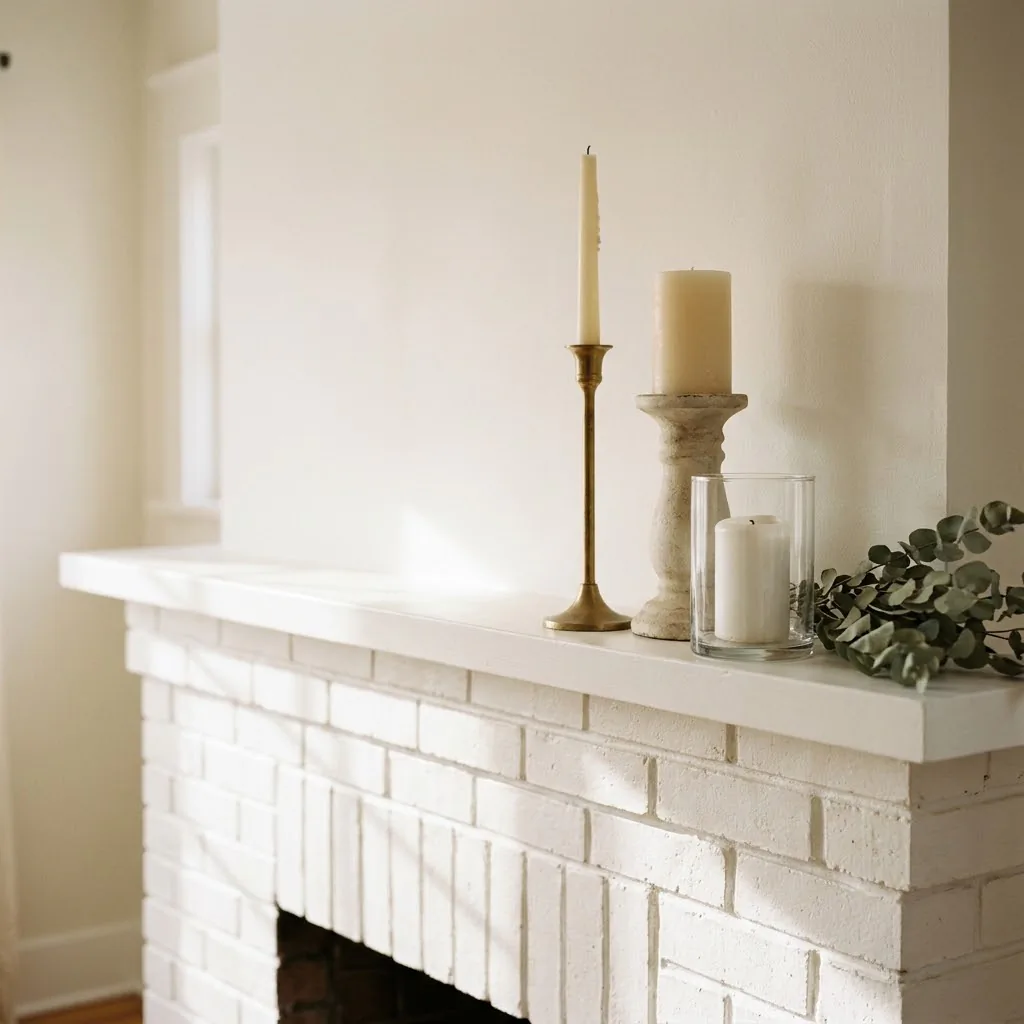
For candle holders specifically, try using a tall taper holder (9 to 12 inches), a medium holder (5 to 7 inches), and a low pillar plate or small votive grouped together. The eye reads the gentle staircase shape as intentional without it looking stiff. You do not need to match the finish either. A brass taper holder next to a ceramic low pillar holder next to a simple glass hurricane reads as curated, not chaotic.
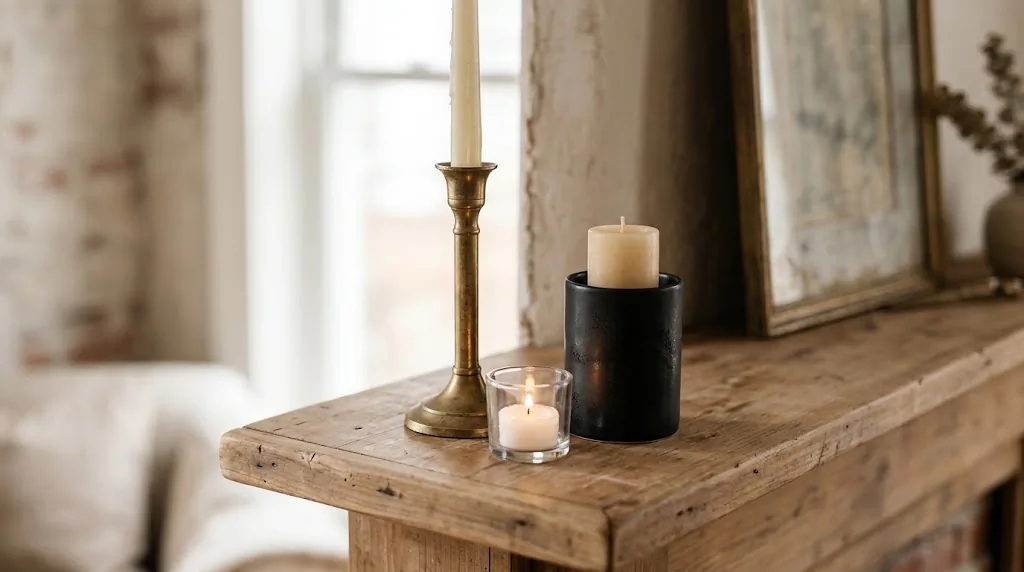
2. Group in Odd Numbers
This is one of the oldest rules in interior design and it holds up for a reason. The rule of odds states that items grouped in odd numbers, especially 3s, 5s, and 7s, feel more natural and visually balanced than even groupings because the eye naturally seeks a center point. Two candlesticks feel symmetrical and stiff unless you are going for a deliberately formal look. Three feel like a moment.
On a typical apartment-length mantel of about 48 to 60 inches, a cluster of three candle holders in varied heights placed slightly off-center usually reads best. On a longer mantel, two clusters of three with breathing room between them works well, especially if one cluster sits slightly higher (propped on a book or small box) than the other.
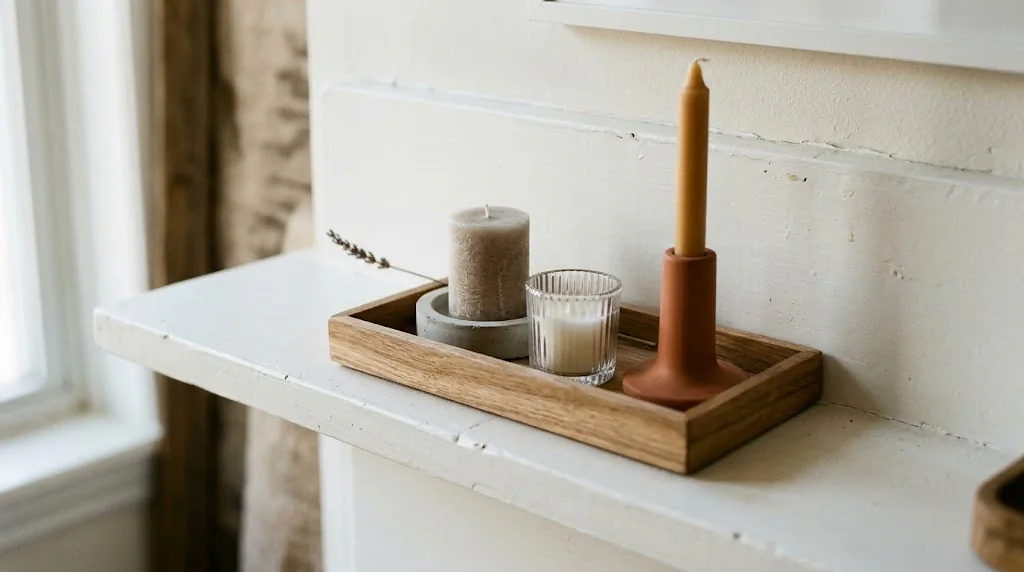
3. Use a Tray to Anchor a Grouping
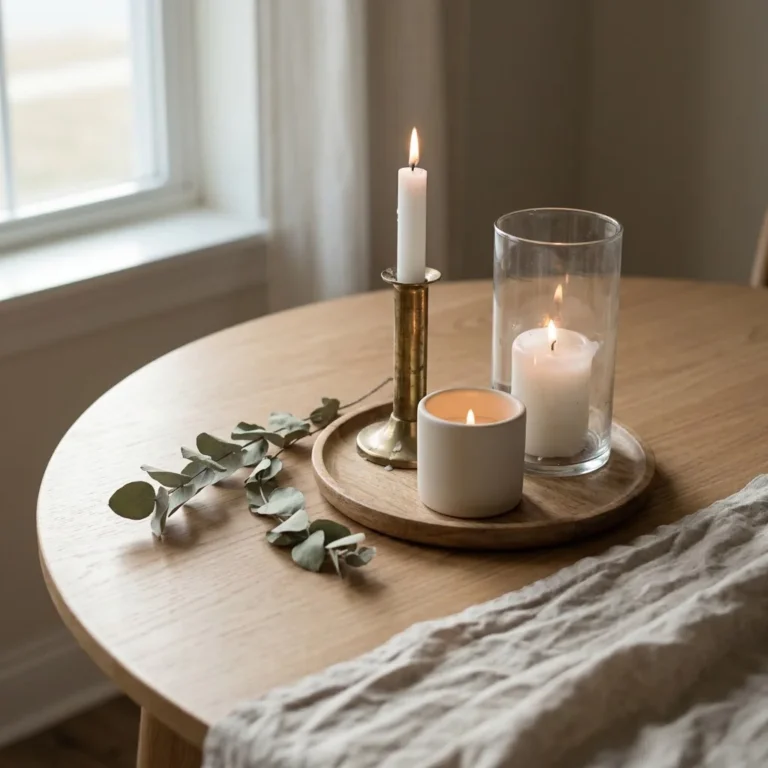
If your candle holders feel scattered or unrelated to each other, place them on a tray. A wooden tray, a small marble slab, or even a simple rectangular ceramic dish works. The tray tells the eye that these items belong together, which instantly makes a loose arrangement look more composed. It also has a practical benefit: wax drips onto the tray instead of onto your mantel shelf, which matters if you are renting and need to return that surface to its original condition.
For a narrow mantel, a small tray that holds two or three tea-light holders or a pair of short votives is all you need. It reads as intentional even when the individual pieces are simple.
4. Let One Piece Be Taller Than Everything Else
On a mantel, height creates drama, and drama creates a focal point. If everything sits at roughly the same level, the whole surface reads as flat, no matter how pretty each individual piece is. Let one item on your mantel be noticeably taller than everything else. That anchor piece does not have to be a candle holder. It could be a tall vase, a framed print, or a dried branch arrangement. But if you want candle holders to do the heavy lifting, a tall tapered candlestick (18 to 24 inches in a slim brass or iron holder) will absolutely earn its place.
5. Try Brass. It Works With Almost Everything.
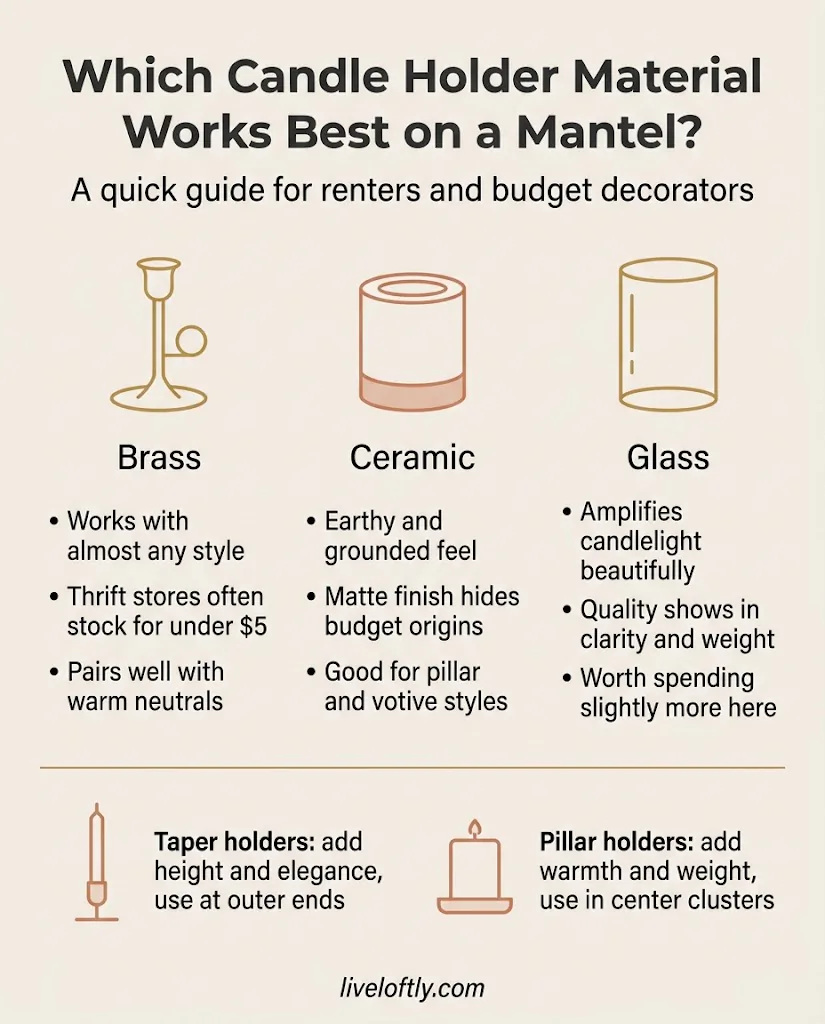
If I had to pick one candle holder material that earns its keep in the widest range of spaces, it is unlacquered or vintage-style brass. It works in a warm minimalist room. It works in cottagecore. It works in a boho layered space. It works next to white walls and next to dark painted walls. Thrift stores reliably stock vintage brass candlesticks for under $5 each, often for closer to $1 or $2, and even if they are tarnished, a little brass polish (or honestly, just leaving them as-is for a warm aged look) brings them right back.
Modern reproductions are widely available for $15 to $35 per pair at mass retailers, and while they are not quite the same weight as vintage, they style just fine. If you find tarnished thrift store pieces and want to unify a mismatched set, a coat of rattle-can metallic spray paint in a single warm gold or antique brass tone works surprisingly well and costs about $6.
6. Mix Pillar and Taper Styles Intentionally
Pillar candles and taper candles have different visual personalities. Pillar candles (the fat, freestanding kind) read as grounded, cozy, and weighty. They pair well with earthy, textural holders made from concrete, ceramic, or natural wood. Taper candles are elegant, slender, and upward-moving. They add height without visual bulk.
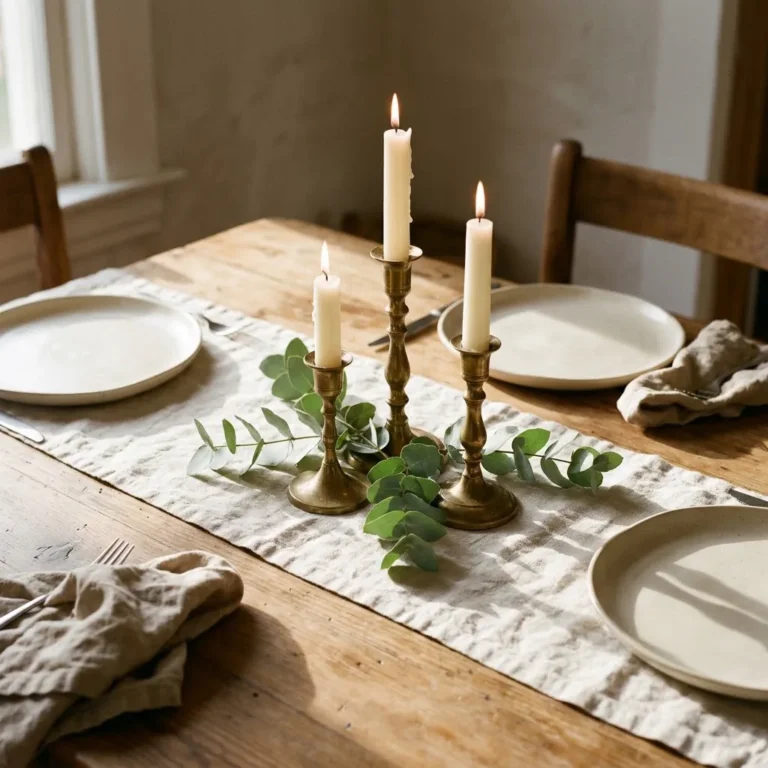
On a mantel, mixing both types creates a more interesting arrangement than using only one. A general guideline: place a pair of taper holders at the outer ends of your arrangement to draw the eye outward and create visual width, then bring pillar or votive holders into the center cluster to add warmth and ground the grouping.
7. Add Greenery or a Natural Element
A candle holder arrangement on its own can feel a little sterile, especially in an all-white or very minimalist space. Tucking in a small natural element, a sprig of eucalyptus, a few stems of dried pampas, a small potted succulent, or even a smooth river stone, makes the whole grouping feel more alive and less like a showroom.
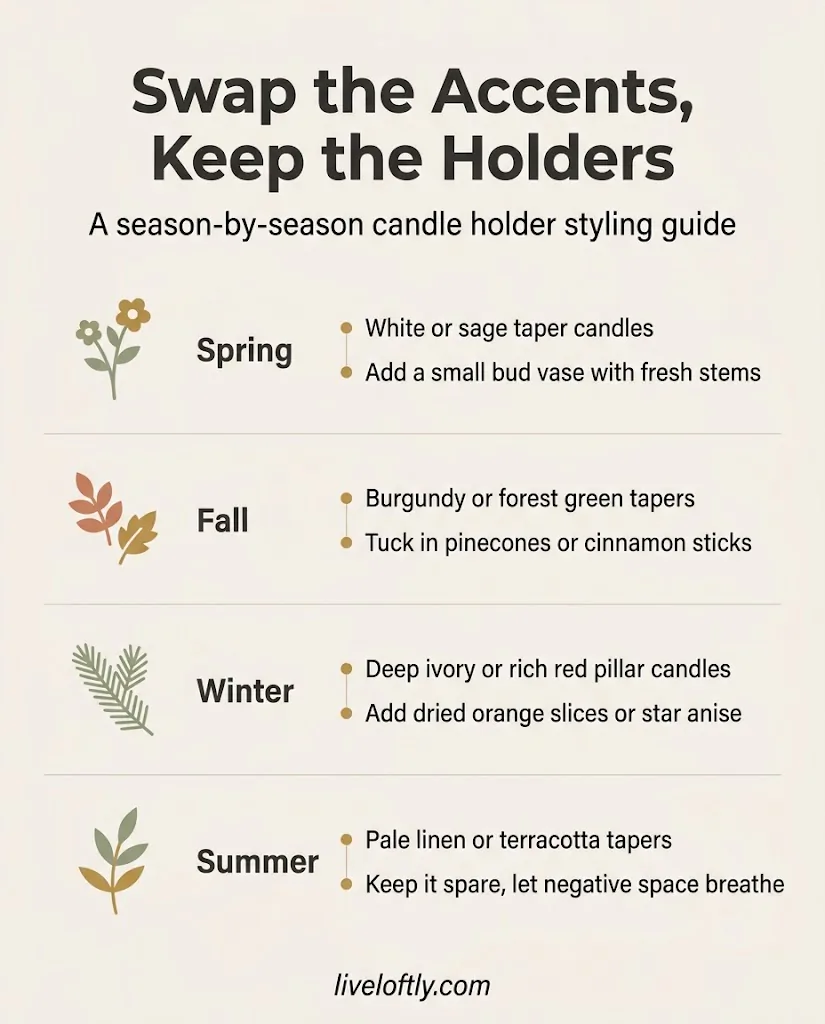
This is also an easy way to refresh your mantel seasonally without buying anything new. Swap dried lavender for pinecones in winter, or eucalyptus for a small bundle of fresh rosemary in spring. The candle holders stay. Only the accent changes.
8. Consider Flameless Candles, Especially Above a Working Fireplace
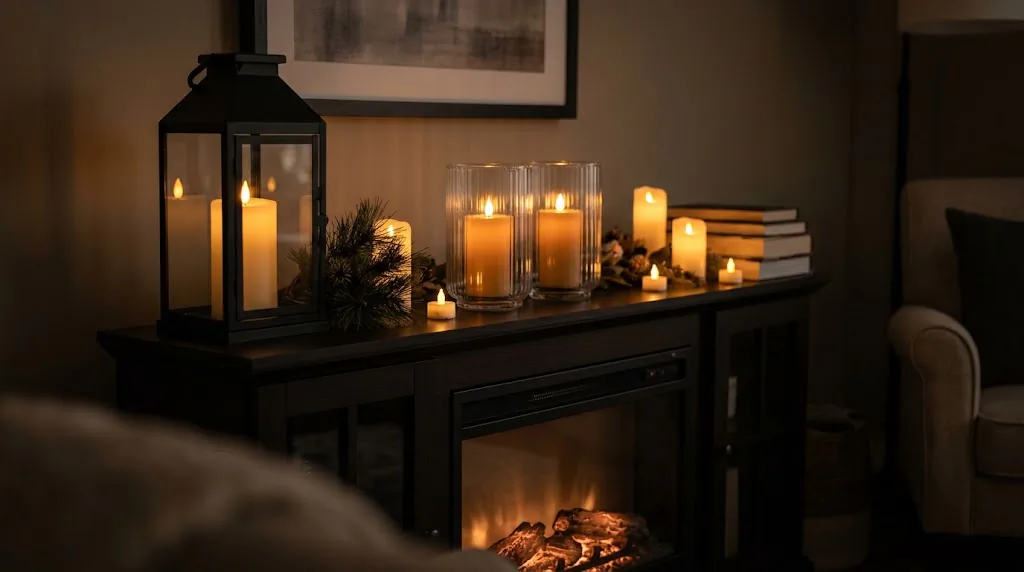
Here is the honest safety conversation. If you have a working wood-burning fireplace, burning real candles on the mantel shelf directly above it is a meaningful risk. The U.S. Fire Administration reports that on average, 20 home candle fires are reported every single day in the United States. Mantels above active fireplaces can experience heat, rising embers, and draft conditions that make open flames on the shelf genuinely dangerous.
For working fireplaces especially, flameless battery-operated candles are not a compromise. They are a smart, aesthetically valid choice. Modern flameless candles have come a very long way. Many have realistic flickering LEDs, timer functions, and remote controls. Some even have a faint scent. They look beautiful in lantern-style holders or in hurricane glass, and you can leave them on without worry. For renters especially, this also means no wax drips to deal with at move-out time.
If you do burn real candles on a non-working or electric fireplace mantel, the National Candle Association recommends keeping burning candles at least 12 inches away from curtains, books, and any flammable material, keeping multiple candles at least 3 inches apart, trimming wicks to 1/4 inch before each use, and never leaving a burning candle unattended.
9. Layer in Front of Something Taller
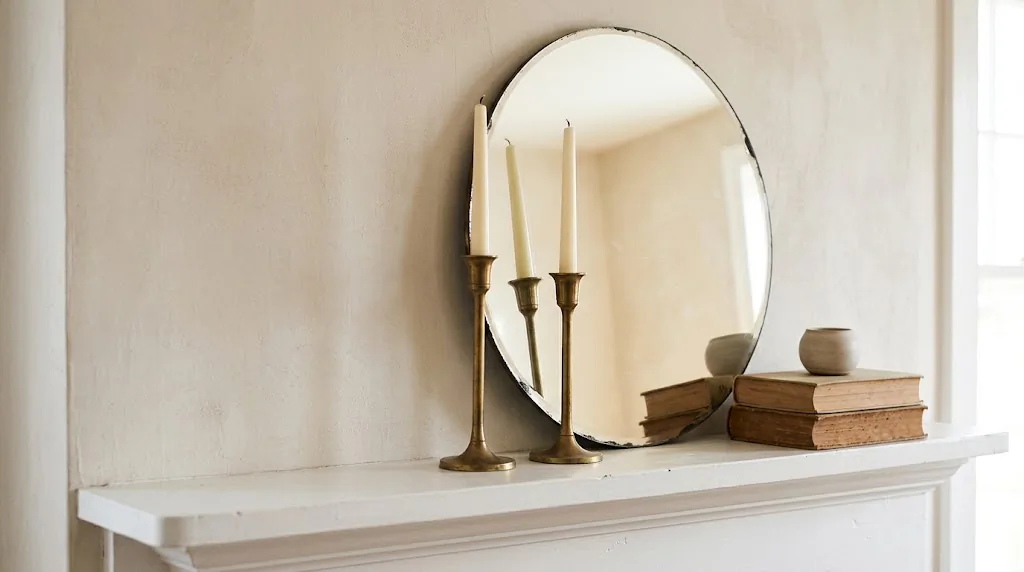
One of the things that makes a mantel arrangement look flat is that everything sits in a single row. Think about giving your candle holders something to lean against or sit in front of. A framed print, a simple leaner mirror, or a tall architectural element behind your grouping immediately adds depth. The candle holders in the foreground pop against whatever is behind them because your eye reads multiple visual planes instead of one.
For renters who cannot hang anything above the mantel: a leaner mirror or an unframed canvas print on the mantel shelf itself, tilted slightly back, works just as well as a wall-mounted piece and requires zero holes.
10. Try a Row of Matching Votives for Minimalist Impact
If you love a clean, minimal look and the idea of grouping mixed pieces feels fussy to you, try the opposite approach. A row of five or seven identical small votive holders (same size, same finish, same candle color) placed in a neat line creates a very striking, intentional look. The uniformity is the point. It works particularly well in modern, Scandinavian, or minimalist-leaning spaces where the mantel is otherwise very spare.
Glass votives with a simple white or ivory candle are an extremely easy place to start. You can find sets of six simple glass votive holders for around $10 to $20 at most home goods stores.
11. Leave Negative Space
This one feels counterintuitive when you are decorating on a budget and want the mantel to look “done.” But negative space, the empty air around and between your pieces, is not empty at all. It is what lets each individual piece breathe and be seen. A mantel crowded to every edge with stuff reads as anxious. A mantel with three well-chosen pieces and open air around them reads as calm and considered.
As a practical rule: if your candle holders and any other mantel pieces together cover more than about two-thirds of the mantel length, pull something off and live with it for a day. You will almost always find the editing made it better.
12. Make a Budget Candle Holder Look More Expensive
A budget candle holder looks cheap when it wobbles, when it has shiny plastic undertones, or when it is the exact same scale as everything else. Here is what actually helps. Paint cheap ceramic holders in a matte finish (chalk-style spray paint, about $8 to $12 a can, adheres well to ceramic) and they read as something from a boutique home goods shop. Place cheap holders on a raised surface, a small book, a wood round, a thick ceramic tile, to elevate them literally and visually. Mix one budget piece with one genuinely well-made piece and the better piece raises the perception of both.
The pieces worth spending a little more on for a mantel: the tallest holder in your arrangement, since it gets the most visual attention, and any holder that is glass or hurricane-style, since quality shows in the clarity and weight of glass.
13. Swap for the Seasons Without Starting Over
One of my favorite things about using candle holders as a primary mantel element is that they are the bones of the arrangement, not the whole thing. The holders stay. The candles, the small accents tucked around them, and the colors you reach for change with the season.
In the fall and winter, go with deep taper candles in burgundy, forest green, or warm ivory, and tuck in a few pinecones or a small bundle of cinnamon sticks. In spring and summer, switch to white or sage candles, add a small bud vase with fresh stems, and let the arrangement feel lighter and airier. The transition takes ten minutes and costs almost nothing. This is also a genuinely useful approach for renters who want a mantel that feels seasonal without accumulating a lot of stuff.
A Note on Buying Candles for a Styled Mantel
If you are buying candles specifically for a styled mantel where you plan to actually burn them, it is worth knowing a little about what you are looking for in the candle itself, not just the holder. The U.S. Consumer Product Safety Commission banned candles with lead-cored wicks from manufacture and sale back in 2003, so that specific risk is largely off the table for US-sold candles today. However, quality still matters. The National Candle Association’s safety standards page explains that candles meeting ASTM F2417 (fire safety) and ASTM F2058 (holder safety) have been tested against established safety benchmarks. For display-only candles, none of this applies, and you can prioritize look and price without worry.
The Styling Principle That Ties Everything Together
If you take nothing else from this post, take this. The goal of candle holder styling on a mantel is not to fill the space. It is to create a moment. One well-chosen grouping with varied heights, an odd number of pieces, a natural element tucked in, and some breathing room around it will always look more intentional than a mantel loaded to every edge.
You do not need a designer. You do not need an expensive set. You need a little bit of patience and the confidence to edit.
Start with three holders in different heights. Group them slightly off-center. Add one natural element. Step back and look. Adjust one thing. That is it. That is the whole process.
Your mantel does not need to be finished. It just needs to feel like you.