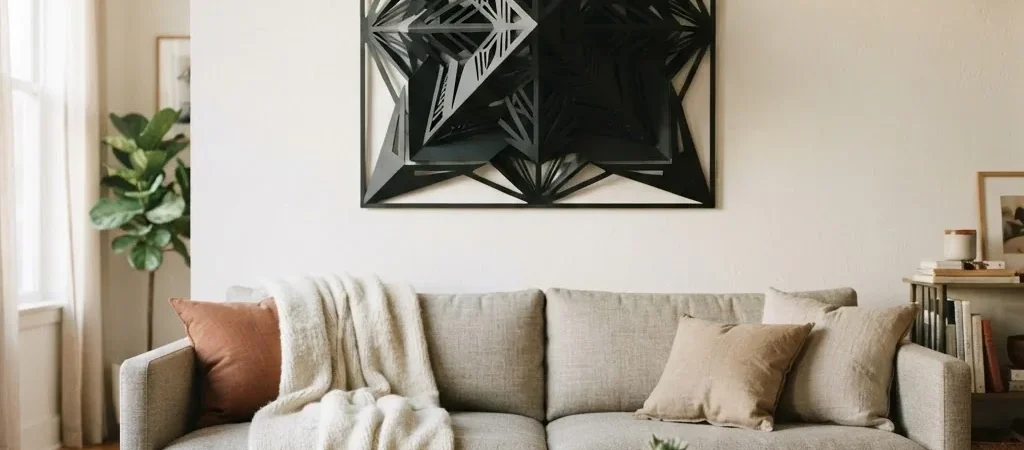
The short answer is yes, metal wall art can absolutely be worth it, but only if you buy the right kind. A lot of it fails the “is this actually worth it, or does it just look good in the photo?” test. The finish looks rich on screen and scratchy in person. The size is way off from what you pictured. The mounting hardware is a mess. But when you know what to look for, metal wall art is one of the more durable and low-maintenance decor buys you can make. This guide tells you exactly what separates the worth-it pieces from the skip-it ones.
What Is Metal Wall Art, Actually?
Before we get into quality signals, it helps to know that “metal wall art” covers two pretty different things, and buyers mix them up all the time.
The first type is sculptural or cutwork metal art: decorative pieces made from cut or formed steel, iron, or aluminum, shaped into flowers, geometric panels, abstract designs, leaves, or sunbursts. This is the 3D, tactile kind you hang on your wall like a sculpture. It is what most people picture when they Google this topic.
The second type is metal photo prints: photographs or graphic images printed onto a flat aluminum panel using a dye-sublimation process.
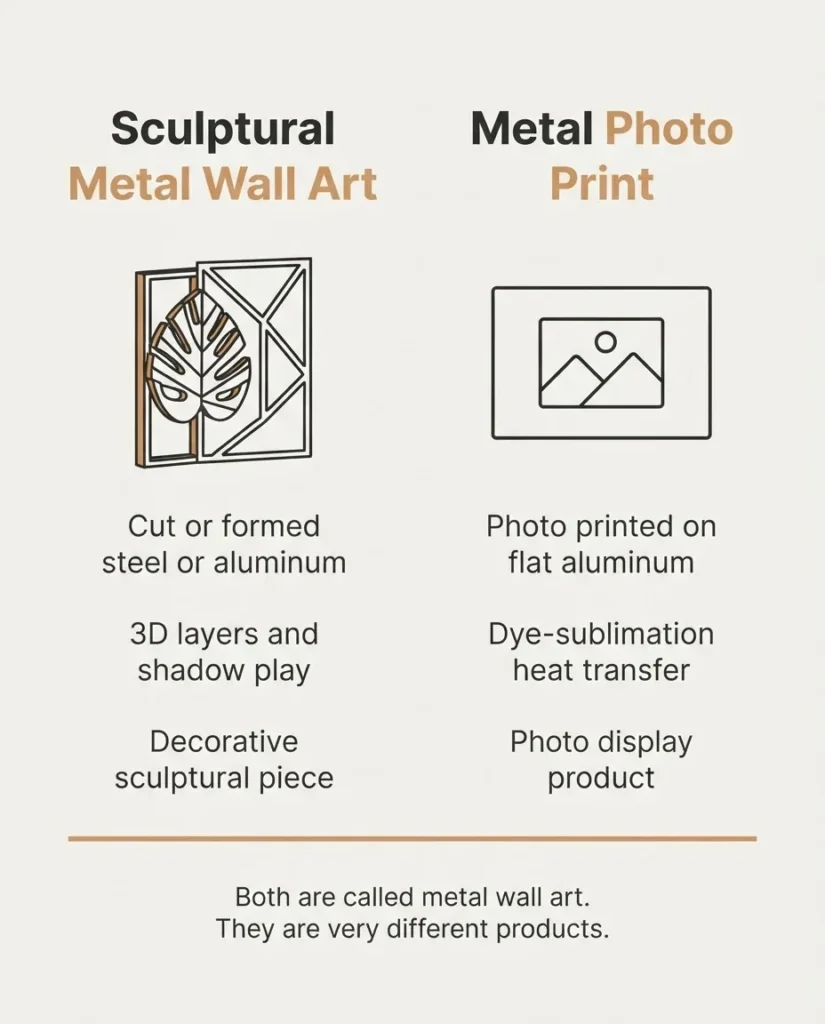
As rustyrooster metal explains in their acrylic vs. metal wall art breakdown, these are typically made from steel, aluminum, or copper panels and are more of a photography display product than a decorative sculpture.
This article focuses primarily on the first type, sculptural and cutwork metal wall art, because that is what the majority of buyers are shopping for when they ask whether it is worth it. The sizing rules, quality signals, and honest verdicts below apply to that category.
Is Metal Wall Art Good Quality, or Is It Usually Cheap?
Here is the honest answer: both exist, and the price does not always tell you which you are getting. I have seen genuinely well-made pieces at accessible prices and overpriced pieces that wobble when you bump the wall. The material and finish are what actually tell you.
Metal type matters, but not as much as the finish.
Most metal wall art sold at mainstream price points is made from one of three metals: steel (often called iron in listings), aluminum, or a mix of both. Aluminum is naturally rust-resistant and lighter, which makes it easier to hang and less of a risk in a humid bathroom or laundry room. Steel is heavier and feels more solid but requires a good protective coating to stay rust-free, especially if you are putting it anywhere with moisture exposure.
Here is the thing most listings bury: the metal type matters less than what is on top of it. That is the finish, and the finish is everything.
Powder coat vs. spray paint: the most important quality signal nobody talks about.
When you are scanning a product listing for metal wall art, the single most useful word to look for is “powder-coated.” Powder coating is a process where a dry powder is electrostatically applied to the metal and then baked in an oven at high heat. The result is a thick, uniform, extremely durable coating that bonds directly to the metal surface. It resists chipping, fading, moisture, and scratches far better than a standard spray-applied liquid paint. As SendCutSend’s detailed breakdown of powder coating vs. paint explains, spray-painted metal exposed to outdoor elements typically needs repainting every 2 to 4 years, while a properly powder-coated finish can survive 15 to 20 years even in direct UV exposure.
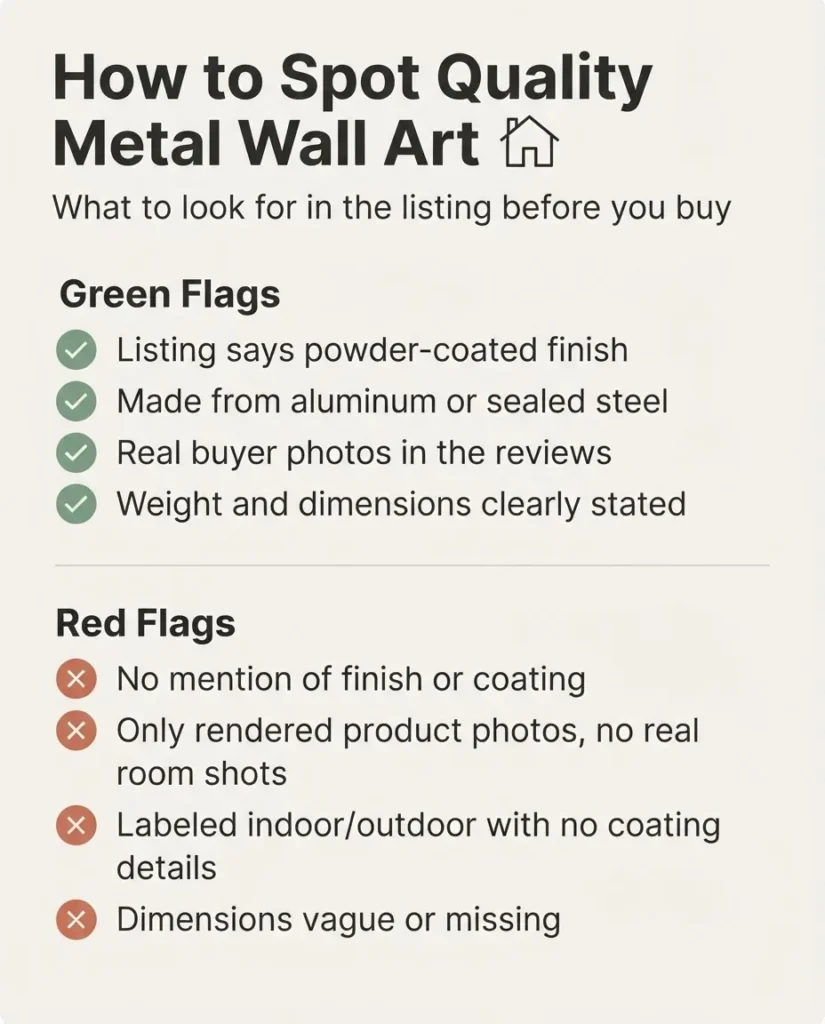
For indoor wall art, this matters slightly less than it would for outdoor pieces, but it still tells you a lot about the overall build quality of the piece. A manufacturer who powder-coats is investing more in the finish process. One that spray-paints is cutting corners. If the listing says nothing about the finish, that is a yellow flag. If it says “powder-coated,” that is a green one.
What Are the Price Tiers, and What Should You Expect at Each?
Knowing what is realistic at each price range saves you from overpaying for something ordinary and from being blindsided by a cheaply finished piece.
At the budget end (roughly under $30), you are looking at small multi-piece sets, simple cutwork flower clusters, or lightweight hanging art in the 6 to 16-inch range. The metal is usually thinner, the finish is often a basic paint rather than powder coat, and the hardware can be minimal. That does not make these pieces worthless. For a bathroom, a hallway, or a small bedroom wall, a well-chosen budget piece can absolutely do the job. The key is keeping your expectations in line: these are accent pieces, not statement pieces.
At the mid-range (roughly $30 to $100), the construction meaningfully improves. You start to see heavier gauge metal, more intricate cutwork or 3D layering, and more consistent powder-coat finishes. Pieces in this range are genuinely the sweet spot for most renters and first-time homeowners. You can get a substantial piece with real visual presence without committing to a high-end price.
At the premium end (roughly $100 and up), you are getting large-format statement pieces, often in the 48-inch to 60-inch range, with multi-layer 3D construction, more complex designs, and heavier build quality. These earn their price when the construction backs it up. However, just because a piece costs more does not guarantee better quality. Always check the finish description and buyer reviews before spending at this level.
Size Guide: How to Pick the Right Size Without Guessing
This is where a lot of people make costly mistakes, and I get it. Measuring before you buy feels like extra work when you just want to order something. But wall art that is too small for its wall looks like a postage stamp, and art that is too large for the space it sits above looks crowded and off. Getting the size right is genuinely the most important decision you will make.
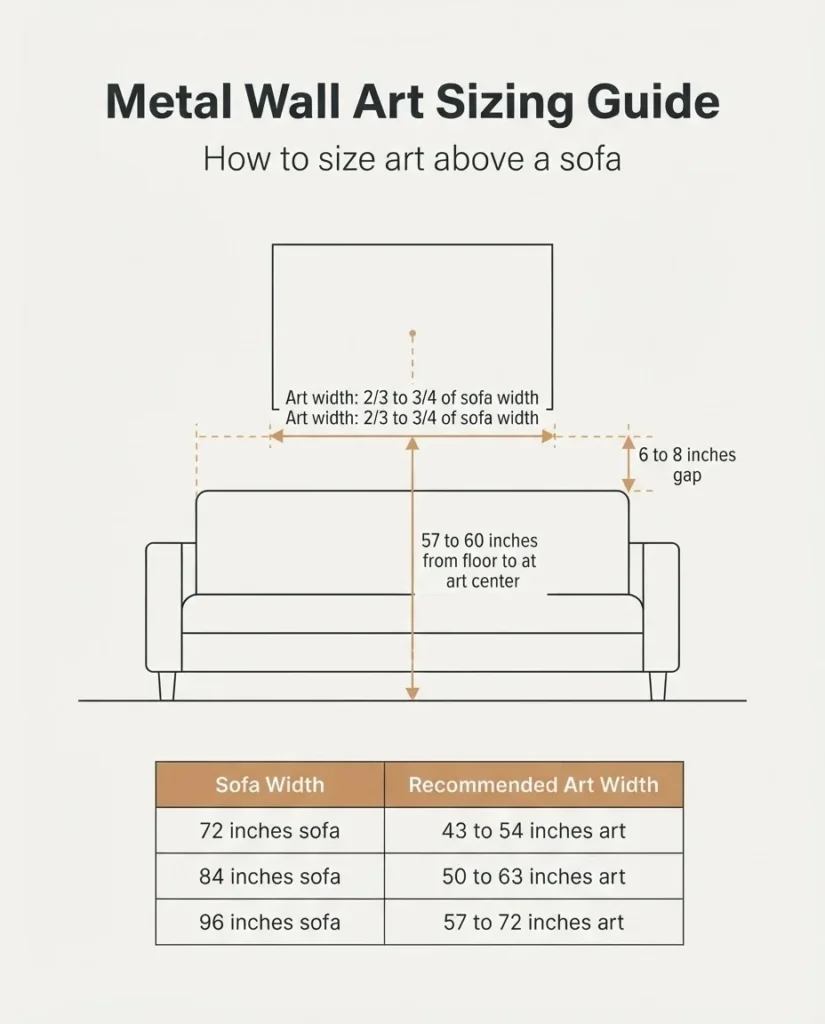
According to Nations Photo Lab’s detailed wall art size guide, a useful formula for art above a piece of furniture is to aim for a piece that is roughly 60 to 75 percent of the furniture’s width. For a sofa, that means a piece hanging above an 84-inch sofa should be roughly 50 to 63 inches wide. For a twin bed (around 38 inches), the recommended art width is 22 to 30 inches. For a queen bed, it is 34 to 45 inches.
If you are hanging on an empty wall with no furniture below it, the art should fill roughly 60 to 75 percent of the wall’s total width. And regardless of the furniture or wall situation, the general rule for hanging height is that the center of the piece should sit about 57 to 60 inches from the floor, which is roughly eye level for most people standing.
Here is a quick sizing cheat sheet:
| Furniture Below the Art | Recommended Art Width |
| 72-inch sofa | 43 to 54 inches |
| 84 to 96-inch sofa | 50 to 72 inches |
| Queen bed | 34 to 45 inches |
| King bed | 43 to 57 inches |
| Fireplace mantel | Match the opening width |
| Empty wall (100 inches wide) | 60 to 75 inches |
For 3D sculptural metal pieces specifically, keep in mind the visual footprint extends a bit beyond the listed dimensions because the elements protrude from the wall.
A 40-inch piece with 3D branches will read as slightly larger than a flat 40-inch canvas print. That works in your favor for creating presence, but measure the space generously.
Weight and Hanging: The Practical Reality for Renters
This is the part of the metal wall art conversation that almost nobody covers honestly, and it matters a lot if you are renting.
Small to medium metal art pieces (under about 24 inches) typically weigh 1 to 5 pounds. These hang just fine on a standard picture hook rated for the weight, and many come with adhesive strips or small nails included. Large 3D statement pieces in the 48 to 60-inch range can weigh anywhere from 8 to 25+ pounds depending on the metal gauge and construction. For these heavier pieces, you need to take the wall situation seriously.
As Colorado Art Services’ drywall load capacity guide explains, standard plastic expansion-style drywall anchors handle roughly 25 to 75 pounds depending on type, while anchoring directly into a stud is the most secure option for heavier pieces. For renters worried about wall damage, the approach is to use the minimum hardware needed for the piece’s actual weight, check what mounting hardware the piece includes before you buy, and note whether the piece comes with a mounting template (many larger pieces do, which makes centering much easier).
One honest return-risk note: large metal art can be difficult to return if it does not look right in your space. The pieces are often large and awkward to repack. That is not a reason to avoid buying, but it is a reason to measure carefully, read the return policy before ordering, and look at real buyer photos in the reviews rather than just the polished listing images.
Indoor vs. Outdoor: Do Not Mix Them Up
A lot of metal wall art is labeled as suitable for both indoor and outdoor use, and some of it genuinely is. But “outdoor safe” is not a binary yes or no; it depends heavily on the finish and the metal.
For outdoor use, you want either aluminum (which naturally resists rust by forming a thin protective oxide layer on its surface) or steel with a proper powder-coat finish that fully seals the surface. As WallArtsMetal’s guide to weather-resistant outdoor options notes, aluminum naturally resists rust, stainless steel offers high corrosion resistance, and powder-coated iron provides a tough, weatherproof finish when applied correctly.
What you want to avoid outdoors is a thin spray-painted steel piece marketed as “indoor/outdoor” without any specific coating details. This type of piece will rust at cut edges and scratches within a season or two, especially in humid climates. If you are in Chattanooga like I am, or anywhere with hot, humid summers, this is not a theoretical risk. It is a near-certainty with cheap unprotected steel.
For purely indoor use in a dry room, the rust risk is minimal regardless of metal type, as long as you keep it away from direct moisture (like right next to a shower or sink without ventilation).
Keeping It Looking Good: Care and Cleaning
This is one of the things I appreciate about metal wall art: it is genuinely low-maintenance compared to canvas or fabric-based decor. Dust does not embed in it, and a quick wipe brings it right back.
For routine care, a soft microfiber cloth is all you need to remove dust. For light smudges, a lightly damp cloth with plain water works well. For anything stickier, a drop or two of mild dish soap in warm water, applied gently with a soft cloth, handles it without damaging the finish. As Story in Steel’s metal art care guide outlines, the things to avoid are abrasive scrubbers, steel wool, harsh chemical cleaners, and anything acidic or alkaline, because these can strip the protective finish and invite rust at the bare metal underneath.
One practical note: 3D sculptural pieces with lots of overlapping layers and small gaps between elements collect dust in those crevices. A soft-bristled paintbrush or a can of compressed air handles that better than a cloth.
A Few Pieces Worth Considering
Now that you know what to look for, here are three specific picks across the price range, chosen based on verified buyer feedback and construction details, not just the listing photos.
For a budget accent piece, the Pigort 3 Pieces Metal Flowers Wall Art in the Rustic Farmhouse style (ASIN B0D3V281WP) is Amazon’s current best-seller in the wall sculpture category with close to 3,000 reviews and a 4.6-star rating. Each piece measures 6 by 13.7 inches, making this a good fit for smaller walls, bathrooms, or hallways where you want a grouping without a huge footprint. At under $25, the expectations should be calibrated accordingly, but buyers consistently report that it looks better in person than the listing suggests. It is a painted metal piece rather than powder-coated, which is standard at this price, so treat it as an indoor-only accent rather than anything near a moisture source.

- Premium Quality: Crafted with care, these 6×13.7 inch metal wall art pieces are made to impress.
- Natural Themed Design: Beautifully designed with minimalist black flower silhouettes, these wall decors bring a touch of…
- Versatile Placement: Perfect for your home, bedroom, dining room, or any living space, these wall arts effortlessly enha…
For a mid-range set with a more natural feel, the Zhengmy 2 Pcs Metal Leaf Wall Art Vine Branch Decor in Gradient Green (ASIN B0CKWYXNT9) has over 3,700 reviews and a 4.4-star rating, which is a solid signal for a piece in this category. The symmetrical olive-branch-style panels are designed to be hung as a pair flanking a doorway, entryway, or on either side of a focal wall. Buyers consistently highlight that the gradient paint finish looks richer in person than expected, and the pieces are lightweight enough that small standard hooks handle them without issue.

- Long Lasting Metal Wall Art: the leaf metal wall art is made of painted metal material, not easy to break, corrode or fa…
- Eye Catching Modern Style: the decorative metal wall decor features a symmetrical set of 2 branches, looks simple and st…
- Suitable Size: each branch metal wall art decor measures approx. 40 x 18 x 0.1 cm/ 15.75 x 7.09 x 0.04 inches, a beautif…
For a large-format statement piece, the JFUJFU Large Black & Gold 3D Metal Wall Art with Geometric Round (ASIN B0FQ3M1P61) is a premium-tier option that delivers genuinely on its listing promise. It is crafted from durable steel with an electrostatic matte powder-coat finish in black and gold, which is exactly the quality signal I want to see at this price range.
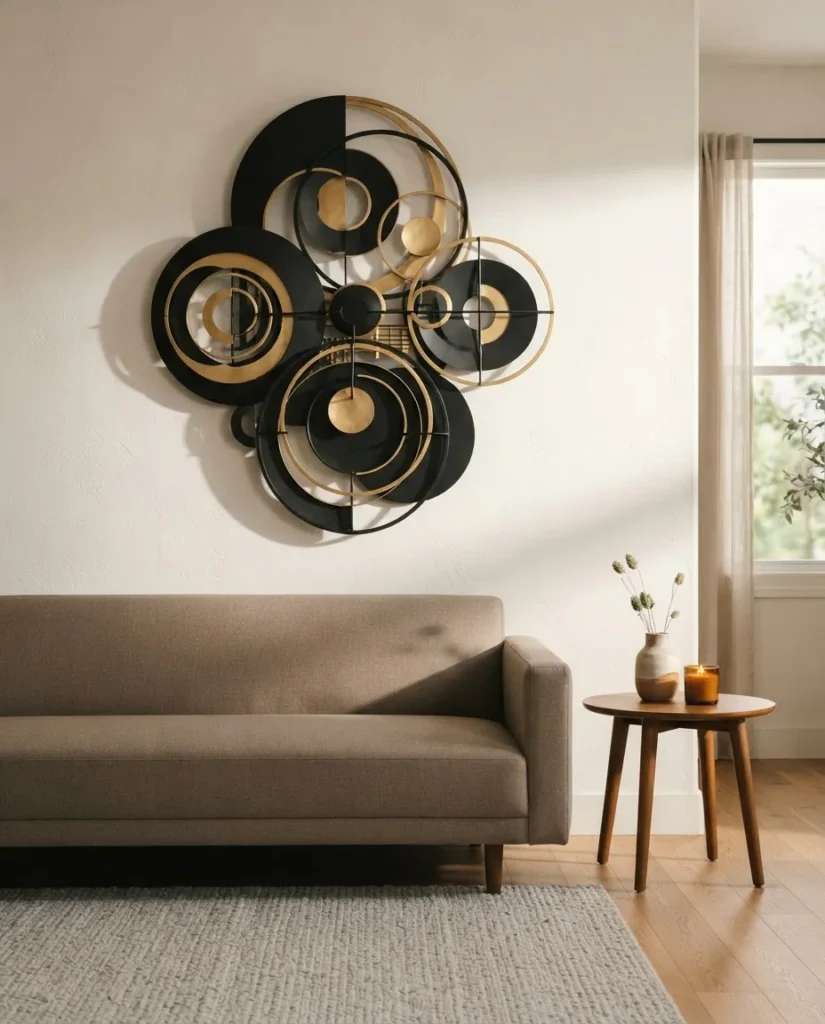
The 3D layered structure creates real shadow play when lit, which makes it look far more expensive than many pieces at twice the price. It can hang horizontally or vertically, which is a practical flexibility worth noting for rooms where the wall orientation varies.

- 【3D Design】 The large 3D structure creates captivating shadow play under lighting, adding dynamic movement to any space.
- 【Premium Materials】 Crafted from durable steel, it is rust-proof, moisture-resistant, and built to last.
- 【Elegant Color Gradient】 The harmonious blend of black and gold tones makes it a perfect complement to modern interior d…
Worth It vs. Skip It: My Honest Verdict
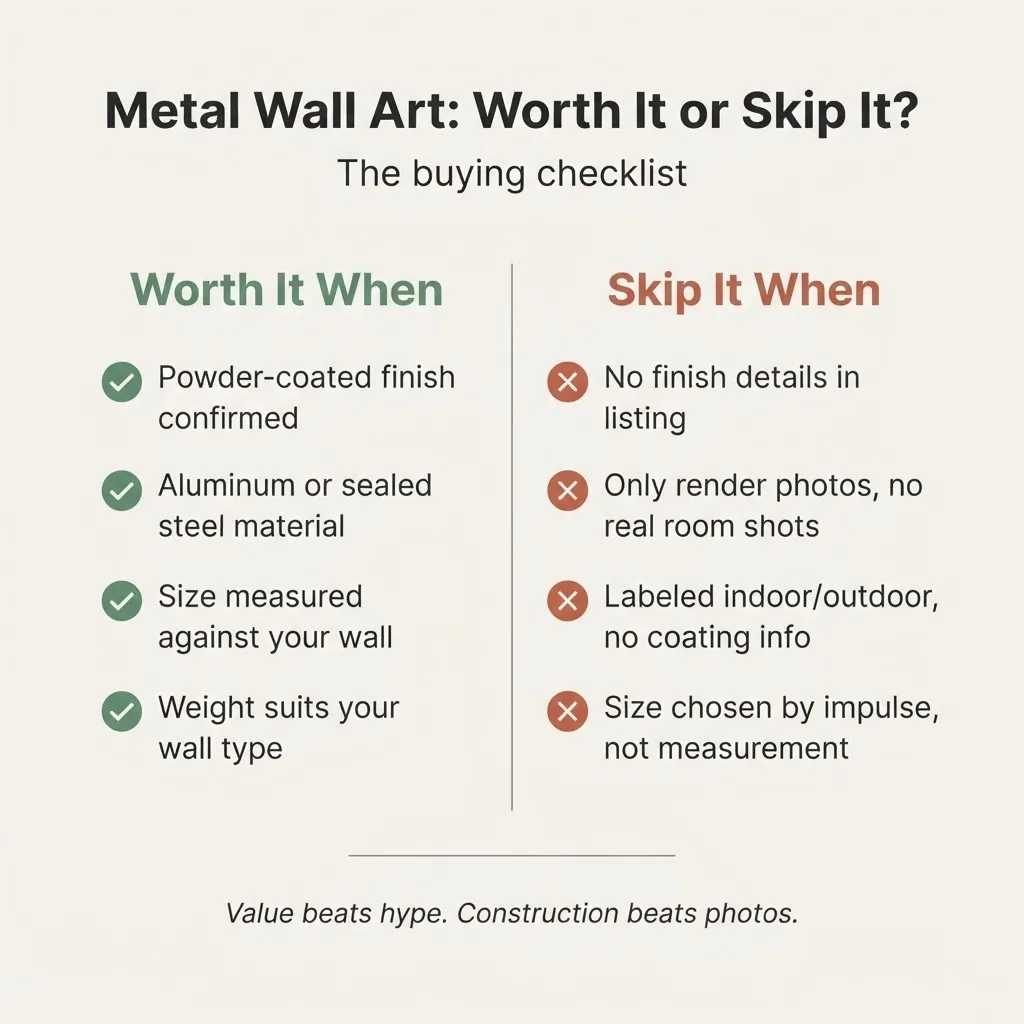
Metal wall art is worth it when the following are true: the listing specifies a powder-coated finish (or the material is aluminum, which needs less coating to stay rust-free), the piece is sized appropriately for your wall rather than picked by impulse, and the weight is manageable for your wall type and your situation as a renter or homeowner.
Metal wall art is worth skipping when: the listing is vague about the finish and only calls it “painted” or says nothing at all about the coating, the product images are entirely render-style photos with no real-room buyer photos, the piece is labeled “indoor/outdoor” but is clearly just thin painted steel with no protective coat details, or the size is not measured against your actual wall before ordering.
The honest reality is that this category has a high proportion of listings that look beautiful in the product photos and arrive looking plasticky or flimsy. The filter I run everything through, “does the construction back up the price?”, tells you more than the photos ever will. A powder-coat call-out in the listing is the clearest single indicator that a manufacturer is putting real thought into build quality.
FAQ
Is metal wall art durable enough to last?
Metal wall art with a proper powder-coated finish is highly durable indoors and can last many years without fading, chipping, or showing significant wear under normal conditions. Thin spray-painted pieces will show wear faster, especially near moisture. For long-term indoor durability, look for powder coating and aluminum or sealed steel construction.
Will metal wall art rust indoors?
Metal wall art used indoors in a dry environment is unlikely to rust in normal conditions, even if it is painted rather than powder-coated. Rust risk increases near persistent moisture sources like showers, sinks without ventilation, or humid basements. For high-moisture rooms, aluminum pieces are the safer choice because aluminum naturally resists rust without relying on a coating.
How heavy is metal wall art, and can it damage rental walls?
Small to medium pieces (under 24 inches) typically weigh 1 to 5 pounds and hang on standard small hooks with minimal wall damage. Large statement pieces in the 48 to 60-inch range can weigh 10 to 25 pounds and require proper drywall anchors or stud mounting. Always check the listed weight before buying and plan your mounting approach accordingly. For renters, damage-free mounting strips rated for the piece’s weight work for lighter pieces only.
Is the metal wall art you buy on Amazon actually good quality?
Amazon metal wall art ranges from genuinely solid construction to very thin, decorative pieces that barely pass inspection in person. The way to tell from a listing: look for a powder-coat finish mention, check real buyer photos rather than the rendered listing images, read the critical reviews specifically (3-star and below), and verify the dimensions carefully before ordering. The best-sellers with thousands of reviews tend to have a more reliable track record simply because the sample size is large enough to be meaningful.
What is the difference between metal wall art and metal prints?
Metal wall art typically refers to sculptural or cutwork decorative pieces made from shaped steel, iron, or aluminum. Metal prints are photographs or digital images printed onto flat aluminum panels using a heat-transfer process. Both are called “metal wall art” loosely, but they are very different products. If you are shopping for a sculptural 3D piece, search specifically for metal wall sculpture or 3D metal wall decor. If you want a photo displayed on metal, search specifically for metal photo prints.